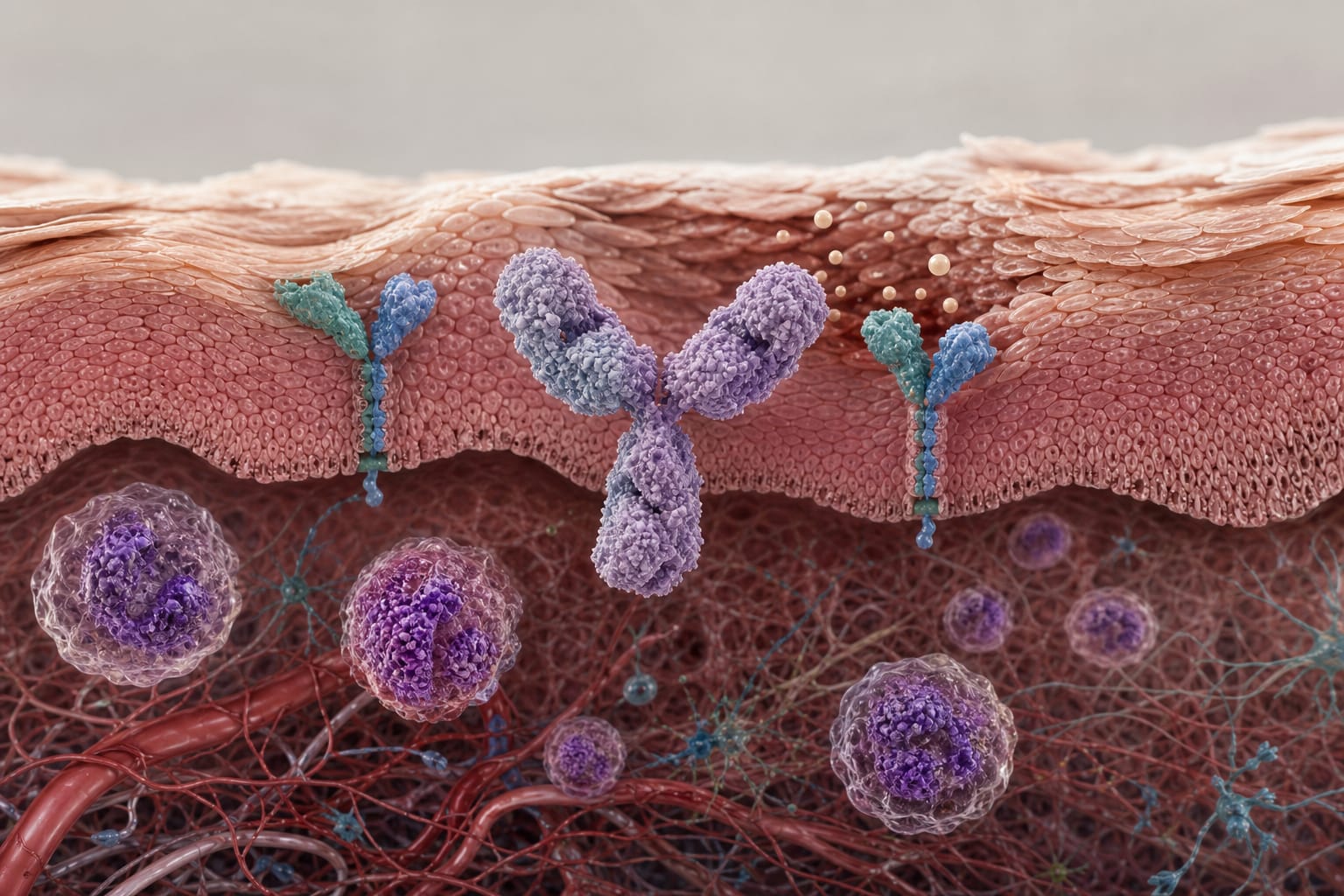
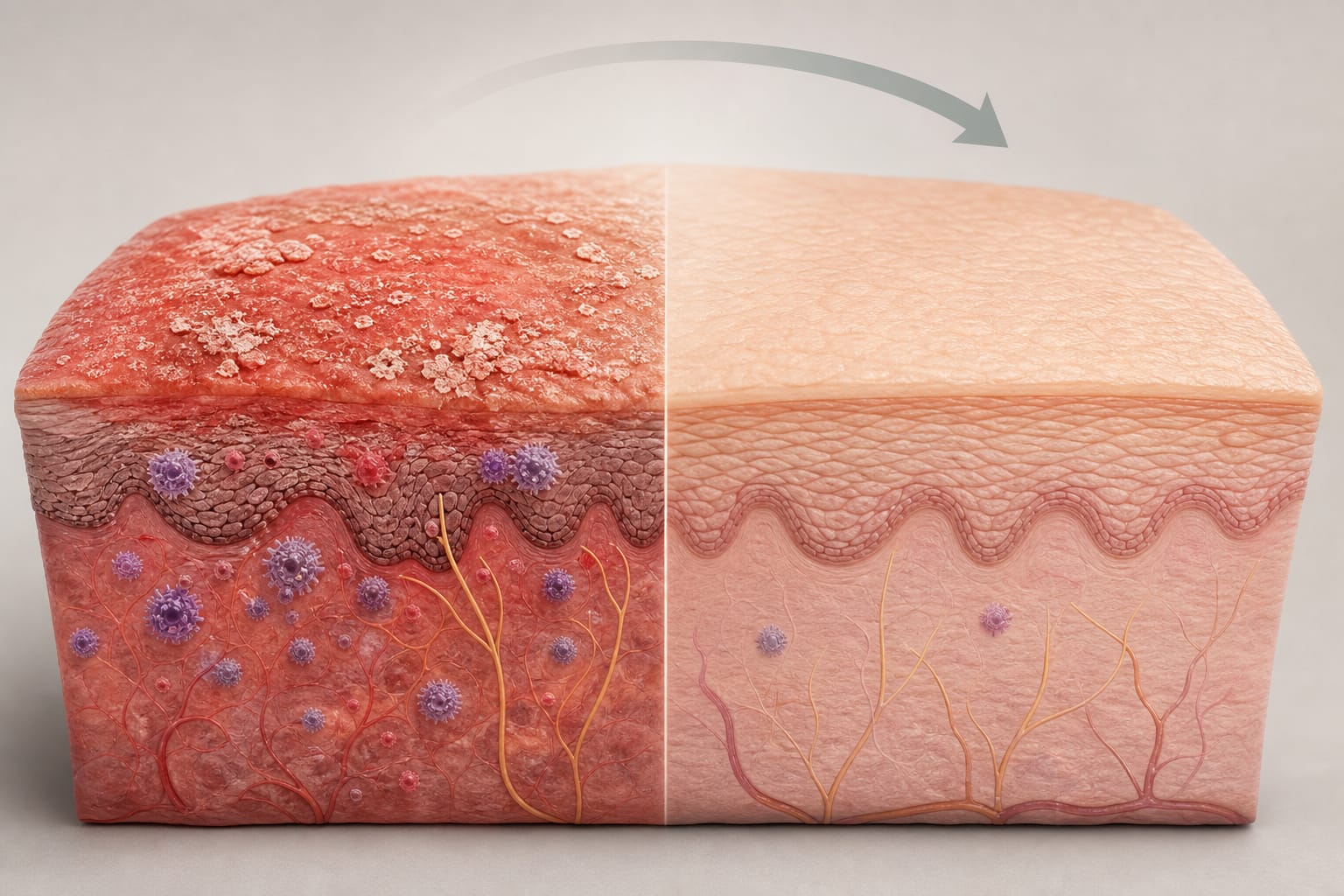
Editorial: Emerging Treatments and Clinical Perspectives in Type 2 Inflammatory Skin Disorders
-
By
-
Linfeng Li
-
June 18, 2026
Clinical Report: Emerging Treatments and Clinical Perspectives in Type 2 Inflammatory Skin Disorders
Overview
This editorial discusses the advancements in targeted therapies for type 2 inflammatory skin diseases, highlighting the efficacy of biologics and JAK inhibitors in treating conditions such as atopic dermatitis. It also addresses the association between these diseases and lymphoma risk, particularly in the context of dupilumab treatment.
Background
Type 2 inflammatory skin diseases, including atopic dermatitis, are significant concerns in dermatology due to their increasing prevalence and impact on patients' quality of life. Recent innovations in treatment, such as monoclonal antibodies and JAK inhibitors, have opened new avenues for managing these conditions. Understanding the pathogenesis and therapeutic options is crucial for optimizing patient care and outcomes.
Data Highlights
No numerical data available in the source material.
Key Findings
- JAK inhibitors provide faster early responses in atopic dermatitis compared to biologics.
- Biologics achieve greater overall improvements and longer treatment persistence over time.
- Type 2 inflammatory diseases are associated with an increased risk of lymphoma.
- Dupilumab treatment does not increase lymphoma risk and may reduce it, especially in non-dermatological T2IDs.
- Component-resolved diagnostics can enhance allergen-specific IgE detection in atopic dermatitis.
Clinical Implications
Clinicians should consider the rapid response of JAK inhibitors when treating moderate-to-severe atopic dermatitis, while also weighing the long-term benefits of biologics. Awareness of the lymphoma risk associated with type 2 inflammatory diseases is essential for informed treatment decisions, particularly regarding dupilumab therapy.
Conclusion
The evolving landscape of treatments for type 2 inflammatory skin disorders underscores the need for tailored therapeutic approaches. Continued research is necessary to address recurrence and optimize patient outcomes.
Related Resources & Content
- Frontiers in Endocrinology, 2026 -- Inflammatory biomarkers in type 1 diabetes
- Frontiers in Medicine, 2026 -- Exploring Cutaneous Drug-Related and Drug-Associated Adverse events
- Frontiers in Immunology, 2026 -- Restoring balance in atopic disorders: insights into type 2 immunity and chronic inflammation
- Atopic dermatitis clinical guideline, 2023
- Frontiers in Immunology — Editorial: Immune-related biomarkers in skin and breast cancer: innovations in immunological diagnostics and therapies
- FDA Approves Topical Eczema Rx for Ages 6 or Older
- Atopic dermatitis clinical guideline
- Two Phase 3 Trials of Lebrikizumab for Moderate-to-Severe Atopic Dermatitis | New England Journal of Medicine
- Drug Trials Snapshots: NEMLUVIO | FDA
- Dupilumab in patients with prurigo nodularis: two randomized, double-blind, placebo-controlled phase 3 trials | Nature Medicine
- Press Release: Dupixent is the first and only biologic to achieve significant improvements in disease remission and symptoms in bullous pemphigoid positive pivotal study
Based on findings from:
Editorial: Type 2 inflammatory skin diseases: novel therapies and clinical insights
Linfeng Li. Frontiers In Medicine, 2026.
https://www.frontiersin.org/journals/medicine/articles/10.3389/fmed.2026.1879881/full
This content is an AI-generated, fully rewritten summary based on a published scholarly article. It does not reproduce the original text and is not a substitute for the original publication. Readers are encouraged to consult the source for full context, data, and methodology.