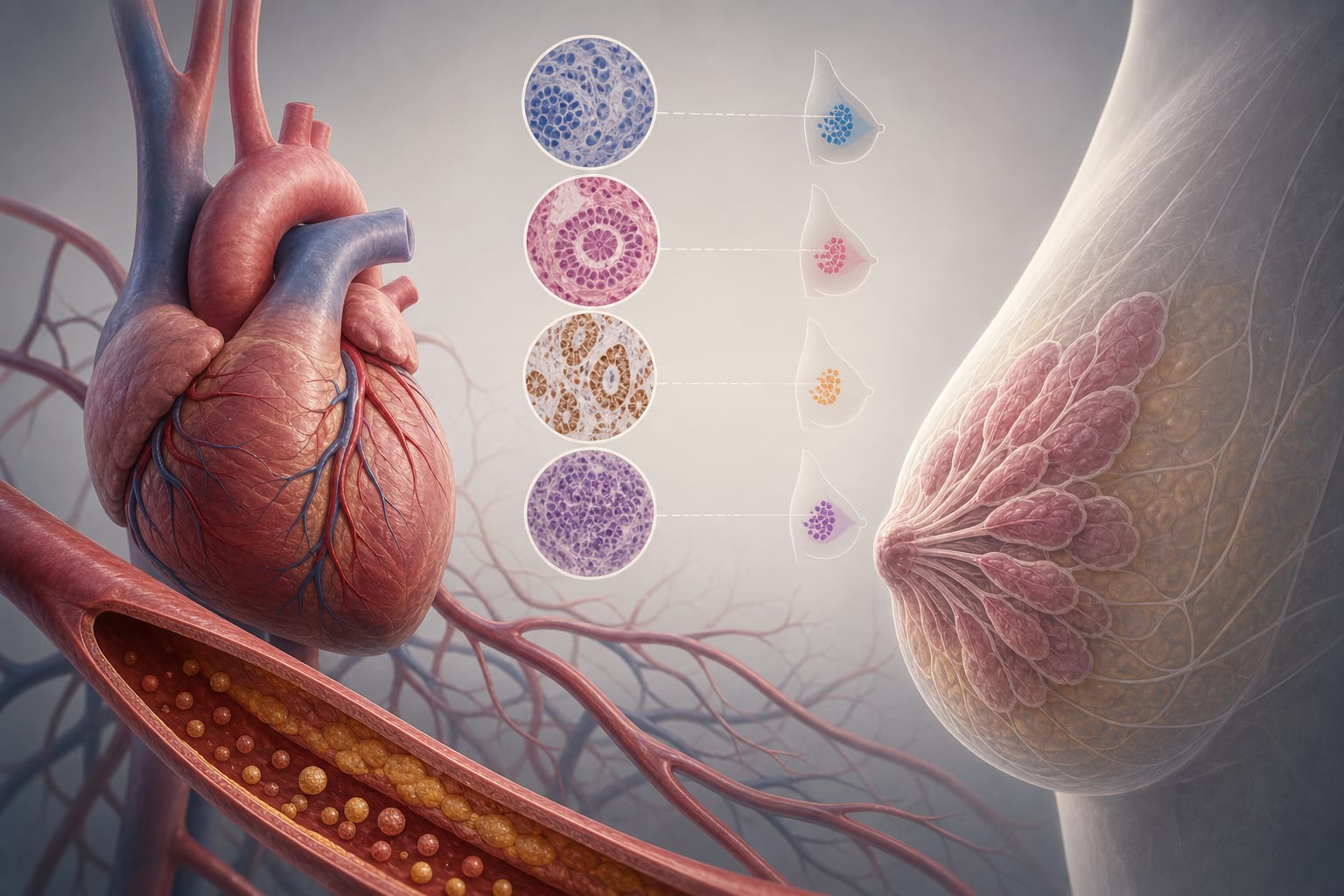
Clinical Report: Cardiometabolic Risk Factors Prior to Treatment in Breast Cancer
Overview
This study analyzes cardiometabolic risk factors in newly diagnosed breast cancer patients, revealing a high prevalence of dyslipidemia, particularly varying by molecular subtype. The findings underscore the importance of early cardiovascular risk assessment in this population.
Background
Breast cancer is the most common malignancy among women, and with improved survival rates, cardiovascular diseases have emerged as significant comorbidities. Understanding baseline cardiometabolic risk factors, such as dyslipidemia, is crucial for optimizing patient management and improving long-term outcomes. This study addresses the gap in knowledge regarding pre-treatment cardiovascular profiles across different breast cancer molecular subtypes.
Data Highlights
Molecular Subtype
Dyslipidemia Prevalence
Luminal A
Highest
Luminal B (HER2 negative)
Lowest
Key Findings
Dyslipidemia prevalence was 54.1% in newly diagnosed breast cancer patients.
Age and cardiovascular comorbidities varied significantly across molecular subtypes.
Intravascular tumor thrombus was consistently associated with dyslipidemia across all subtypes.
Lymph node metastasis correlated with dyslipidemia only in Luminal B subtypes.
Subtype-specific associations were observed for several cardiovascular risk factors.
Clinical Implications
Early screening for dyslipidemia and cardiovascular risk factors in newly diagnosed breast cancer patients is essential for optimizing cardio-oncology care. Understanding the subtype-specific profiles can aid in tailoring interventions and monitoring during treatment.
Conclusion
The study highlights the high prevalence of dyslipidemia in treatment-naive breast cancer patients and the need for early cardiovascular risk assessment, particularly given the variations across molecular subtypes.