Clinical Report: Exploring the Complex Interactions of Parasites in Cancer Biology
Overview
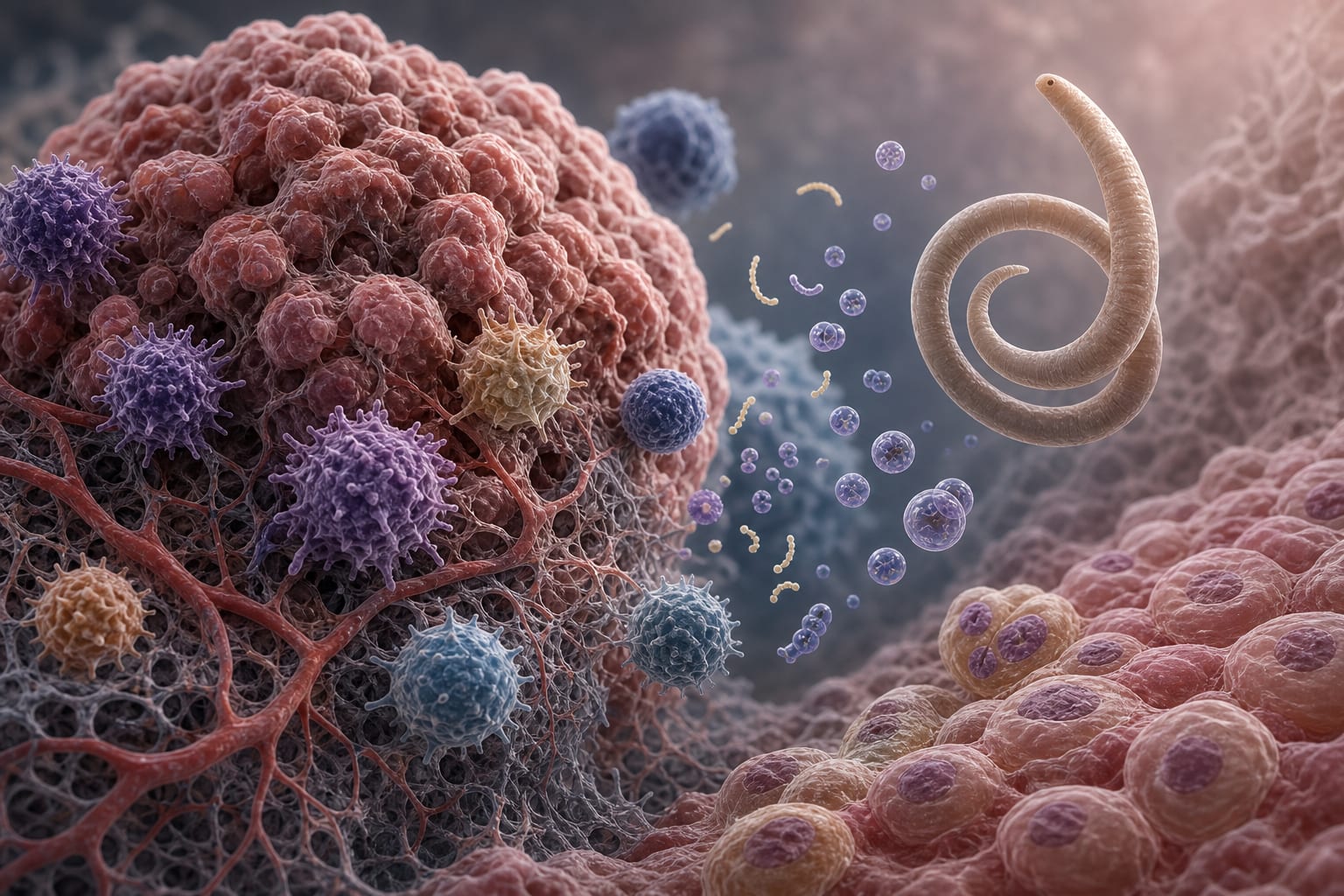
This systematic review examines the dual role of parasites and their products in cancer biology, highlighting both pro-tumour and anti-tumour effects. The findings indicate that the impact of parasites on cancer progression is dependent on the specific parasite species, the molecules involved, and the host immune response.
Background
Cancer remains a leading cause of mortality worldwide, with various factors contributing to its development. While viral and bacterial infections are well-recognized in cancer etiology, the role of human parasitic infections is less appreciated. Understanding the interactions between parasites and cancer can provide insights into the mechanisms of cancer progression.
Data Highlights
A total of 34 studies were reviewed, covering various parasite species and their effects on different cancer types.
Key Findings
Parasites can exert pro-tumour effects through mechanisms such as chronic inflammation and immune modulation.
Anti-tumour effects are associated with direct cytotoxicity and immune activation by certain parasite-derived molecules.
Specific parasites like Schistosoma haematobium and Opisthorchis viverrini are linked to cancer development due to chronic infections.
Some parasite-derived proteins may enhance immune responses against tumours, suggesting potential therapeutic relevance.
The effects of parasites on cancer are context-dependent, influenced by the host's immune response and the specific molecules involved.
Clinical Implications
Understanding the interactions between parasites and cancer is important for future research.
Conclusion
This review highlights the complex relationship between parasites and cancer.
by Faisal Minshawi, Maimonah Alghanmi, Hassan Alwafi, Amal Mohammad Dustakir, Bayan Al Zoabi, Saleha Khan, Hattan S. Gattan, Isra M. Alsaady, Sarah A. Altwaim, Tope Oyelade, Ayat Zawawi