Procedure-related vasospasm and reperfusion vulnerability during mechanical thrombectomy - Report - MDSpire

Procedure-related vasospasm and reperfusion vulnerability during mechanical thrombectomy

  • By

  • Tarek El Halabi

  • Rim Araoui

  • June 16, 2026

  • 0 min

Share

Vasospasm Associated with Procedures and Reperfusion Sensitivity in Mechanical Thrombectomy

Overview

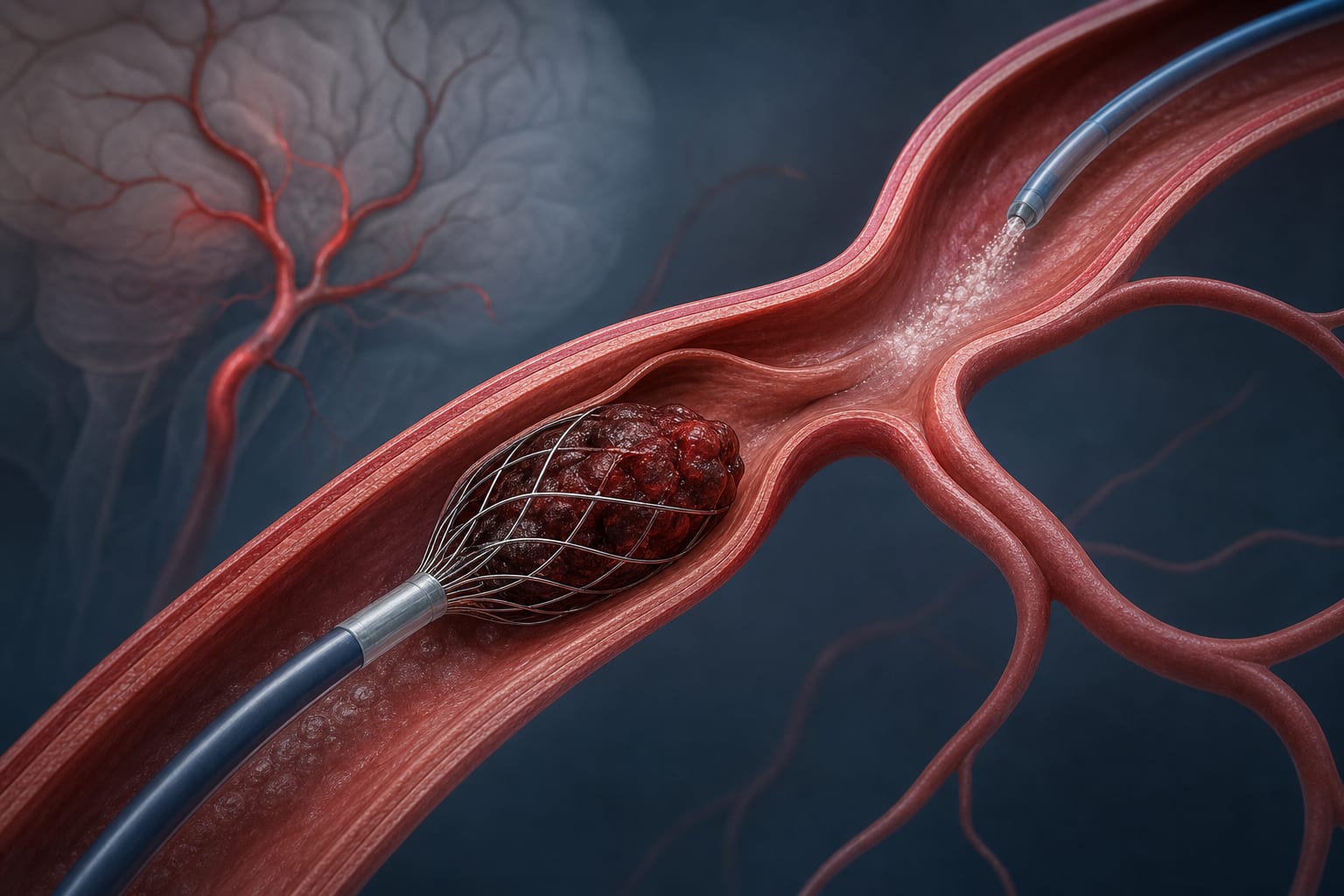
This mini-review discusses the implications of procedure-related vasospasm during mechanical thrombectomy (MT) for acute ischemic stroke.

Background

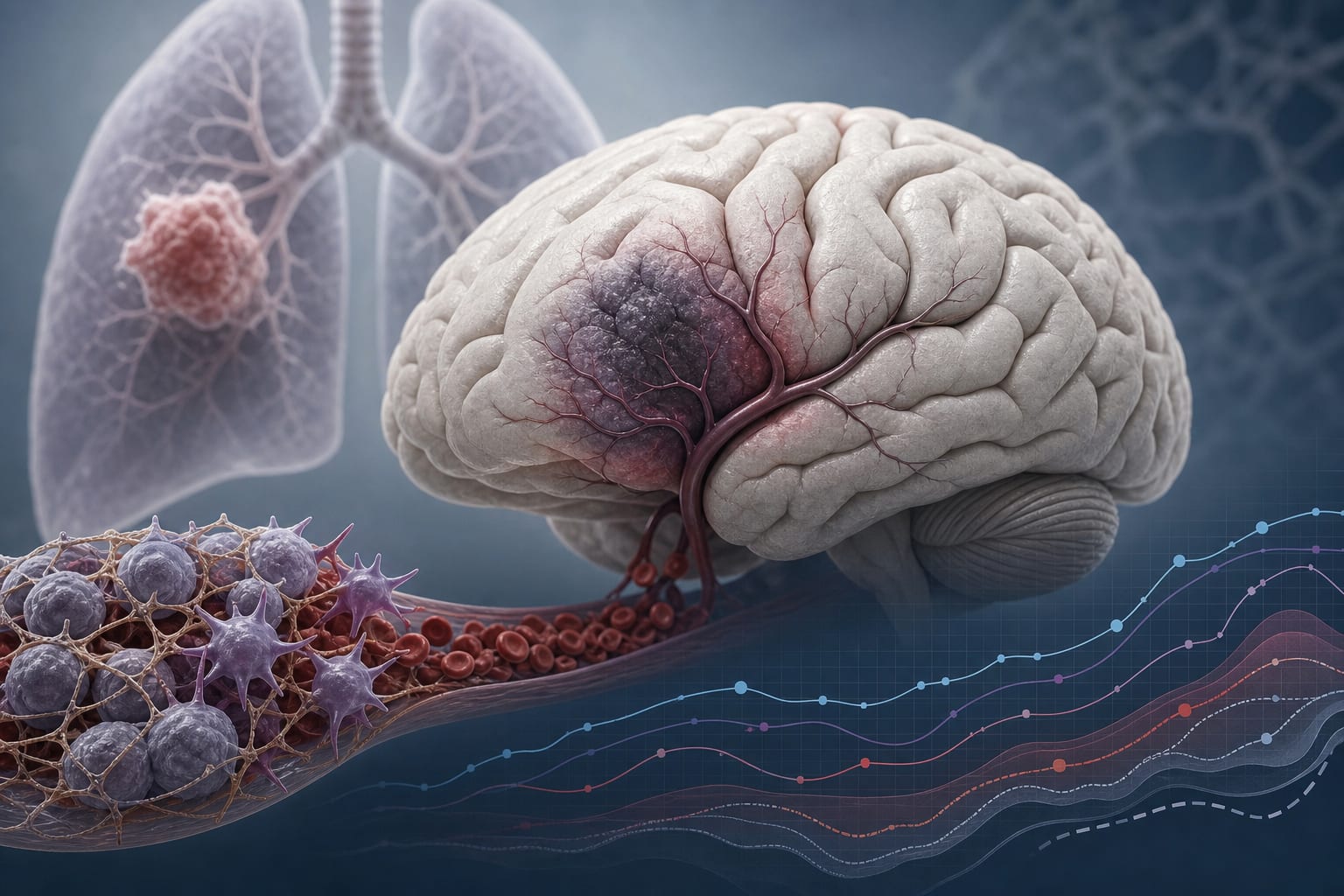
Mechanical thrombectomy has become a standard treatment for acute ischemic stroke caused by large-vessel occlusion. However, successful angiographic reperfusion does not always lead to meaningful neurological recovery.

Data Highlights

No numerical data or trial data presented in the article.

Key Findings

  • Successful angiographic reperfusion does not guarantee effective tissue salvage or neurological recovery.
  • Procedure-related vasospasm is often considered a manageable complication.
  • Vasospasm is associated with technically demanding procedures and less favorable outcomes.

Clinical Implications

Clinicians should consider the potential significance of vasospasm during mechanical thrombectomy.

Conclusion

Vasospasm during endovascular thrombectomy may serve as a marker for patients at risk of reperfusion failure, necessitating further research into vasodilator strategies to improve outcomes.

Related Resources & Content

  1. Endovascular Recanalization with Distal Protection for Symptomatic Chronic Occlusions of the Vertebrobasilar Artery, 2025 -- Springer
  2. Evaluation of Emergency Interventions for Acute Thrombosis in STA-MCA Bypass Surgery: A Review of Existing Literature, 2024 -- Springer
  3. Cerebral Vasospasm After Surgical Clipping of Unruptured Middle Cerebral Artery Aneurysms: A Case Study and Review of Existing Literature, 2025 -- Springer
  4. 2026 Guideline for the Early Management of Patients With Acute Ischemic Stroke: A Guideline From the American Heart Association/American Stroke Association, 2026 -- PubMed
  5. Evaluation of Immediate Versus Delayed Stenting Following Thrombectomy Failure in Patients with Intracranial Atherosclerosis-Induced Large Vessel Occlusion
  6. Large-Core Ischemic Stroke Endovascular Treatment - Professional Heart Daily | American Heart Association
  7. Endovascular thrombectomy after large-vessel ischaemic stroke: a meta-analysis of individual patient data from five randomised trials - PubMed
  8. European Stroke Organisation (ESO) - European Society for Minimally Invasive Neurological Therapy (ESMINT) Guidelines on Mechanical Thrombectomy in Acute Ischemic Stroke
  9. 2026 Guideline for the Early Management of Patients With Acute Ischemic Stroke: A Guideline From the American Heart Association/American Stroke Association - PubMed
  10. No-reflow after recanalization in ischemic stroke: From pathomechanisms to therapeutic strategies - PMC
  11. No-reflow after stroke reperfusion therapy: An emerging phenomenon to be explored - PubMed
  12. “Perfusion Scotoma” As an Imaging Marker for the No-Reflow Phenomenon After Thrombectomy? - Mayo Clinic
  13. Treatment practice of vasospasm during endovascular thrombectomy: an international survey - PMC
  14. Iatrogenic arterial vasospasm during mechanical thrombectomy requiring treatment with intra‐arterial nimodipine might be associated with worse outcomes - PMC
  15. Nimodipine as Vasodilator in Guide Catheter Flush to Prevent Vasospasm During Endovascular Stroke Treatment - PMC
  16. Intensive blood pressure control after endovascular thrombectomy for acute ischaemic stroke (ENCHANTED2/MT): a multicentre, open-label, blinded-endpoint, randomised controlled trial - PubMed

Original Source(s)

Related Content