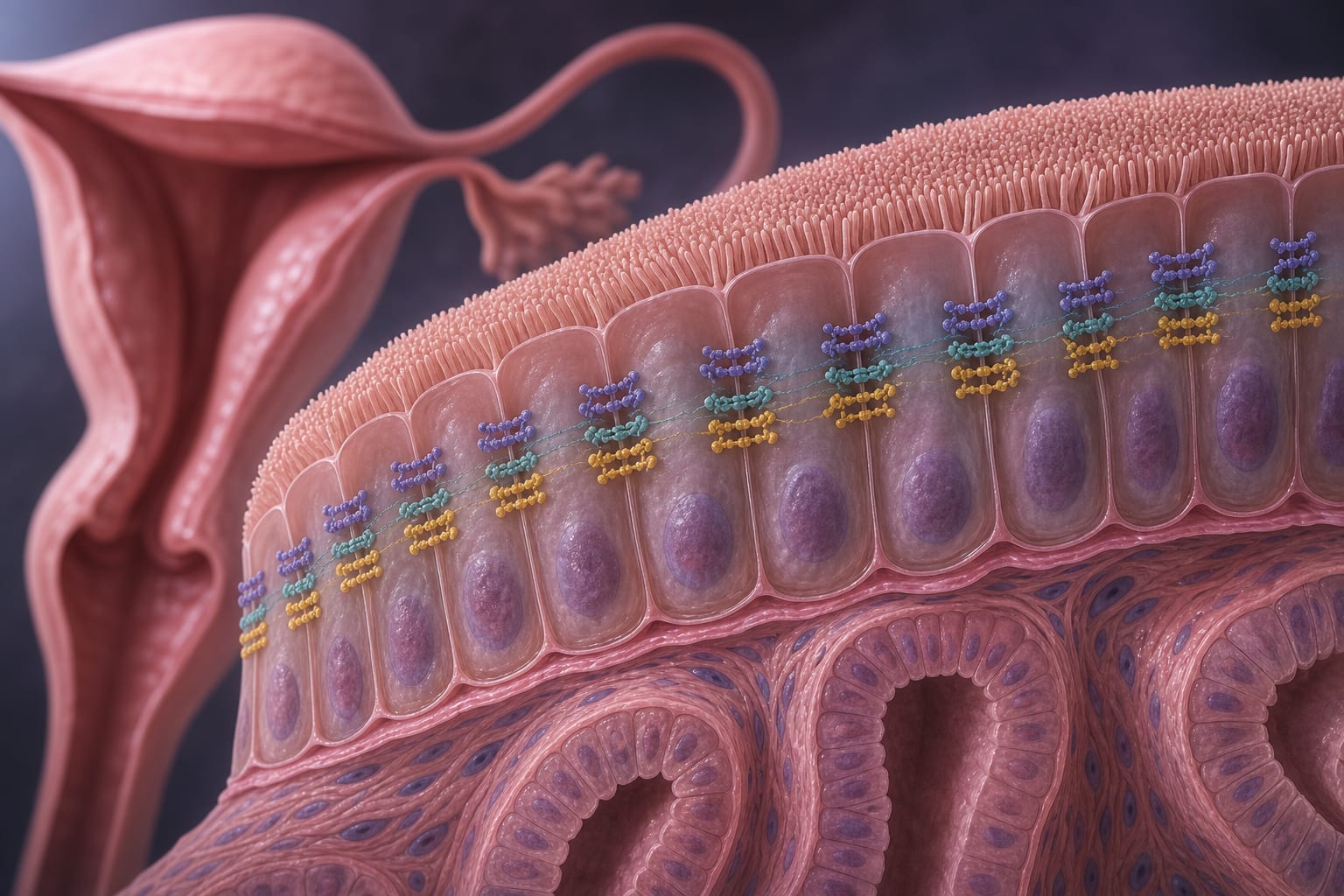
Tight junction-related proteins in the upper reproductive tract luminal and glandular epithelial cells are regionally regulated across the estrous cycle - Report - MDSpire
Clinical Report: Regional Regulation of Tight Junction Proteins in the Upper Reproductive Tract
Overview
This study evaluates the expression of tight junction proteins Claudin-3, Claudin-4, and ZO-1 in the upper reproductive tract during the estrous cycle. Significant changes in Claudin-3 and Claudin-4 expression were observed.
Background
The upper reproductive tract (URT) plays a crucial role in defending against pathogens and facilitating immune tolerance during reproduction. Understanding the regulation of tight junction proteins in this context is essential, as they are key to maintaining epithelial barrier integrity.
Data Highlights
Protein
Expression Change
Region
Stage
Claudin-4
Decreased
Distal uterine horn
Estrus vs. Diestrus
Claudin-3
Decreased
Glandular epithelium, distal uterine horn
Estrus
Claudin-3
Decreased
Cervical luminal epithelium
Estrus
ZO-1
No significant change
All examined regions
All stages
Key Findings
Claudin-4 expression decreased significantly in the distal uterine horn during estrus.
Claudin-3 showed a marked reduction in expression during estrus in multiple regions of the reproductive tract.
Expression levels of Claudin-4 remained stable in the cervix across estrous stages.
ZO-1 localization and expression were largely unaffected by the estrous cycle.
This study represents the first comprehensive examination of tight junction protein expression across the estrous cycle in the porcine reproductive tract.
Clinical Implications
The findings indicate that the expression of tight junction proteins is regulated during the estrous cycle.
Conclusion
The study highlights the remodeling of tight junction proteins in the upper reproductive tract.
Guideline recommends screening, diagnosis, positive airway pressure therapy, and postpartum reassessment while highlighting the very low certainty of available evidence.