Adjunctive regenerative therapies in hair transplantation: a comprehensive review of platelet-rich plasma, exosomes, and emerging methods - Report - MDSpire
Advertisement
Adjunctive regenerative therapies in hair transplantation: a comprehensive review of platelet-rich plasma, exosomes, and emerging methods
Clinical Report: Complementary Regenerative Approaches in Hair Transplantation
Overview
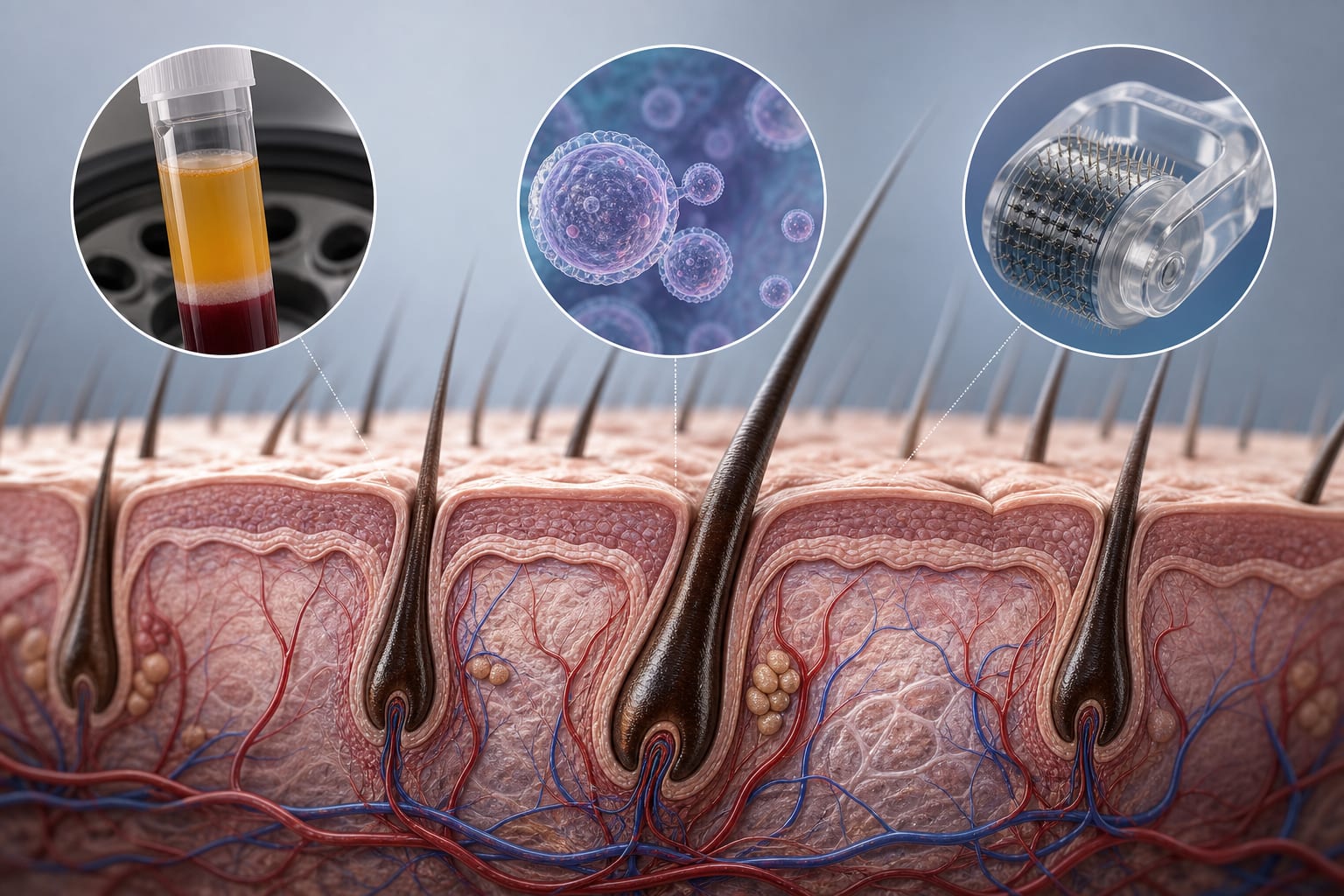
This review evaluates the efficacy of adjunctive regenerative therapies, particularly platelet-rich plasma (PRP) and exosomes, in hair transplantation. Evidence for PRP's effectiveness in improving hair density is reported, while exosome-based therapies lack robust clinical validation.
Background
Hair loss, particularly androgenetic alopecia, significantly impacts quality of life and is prevalent among diverse populations. Hair transplantation is a definitive treatment; however, it does not address the underlying causes of hair loss, leading to interest in adjunctive therapies. Regenerative approaches, including PRP and exosomes, are being explored to enhance outcomes in hair restoration.
Data Highlights
No numerical or trial data provided in the source material.
Key Findings
PRP has evidence in treating androgenetic alopecia, with reported increases in hair density of approximately 10–30 hairs/cm².
Evidence for PRP's effectiveness in hair transplantation specifically is limited and heterogeneous.
Exosome-based therapies show preclinical promise in promoting dermal papilla cell proliferation and angiogenesis.
Emerging therapies such as low-level laser therapy and microneedling-assisted application exhibit variable efficacy.
Standardization of protocols and outcome reporting is necessary to enhance clinical translation of these therapies.
Clinical Implications
PRP is currently the most evidence-supported adjunctive therapy in hair transplantation. Clinicians should be aware of the variability in preparation protocols.
Conclusion
PRP demonstrates potential in hair transplantation; however, the clinical validation of exosome-based and other emerging therapies is still under investigation.
Published evidence linked liraglutide and semaglutide to improvements in psoriasis severity, inflammatory markers, and metabolic outcomes, while evidence in psoriatic arthritis remained sparse.