A Response to: “Letter to the Editor Regarding ‘Anchored Matching-Adjusted Indirect Comparison of the Long-Term Maintenance of Efficacy of Tralokinumab and Lebrikizumab in Patients with Moderate-to-Severe Atopic Dermatitis’” - Report - MDSpire
Conexiant’s news site is now MDSpire News. Learn more
Advertisement
Clarification on the Letter Addressing the Indirect Comparison of Long-Term Efficacy Between Tralokinumab and Lebrikizumab in Moderate-to-Severe Atopic Dermatitis Patients
Clinical Report: Clarification on Indirect Comparison of Tralokinumab and Lebrikizumab
Background
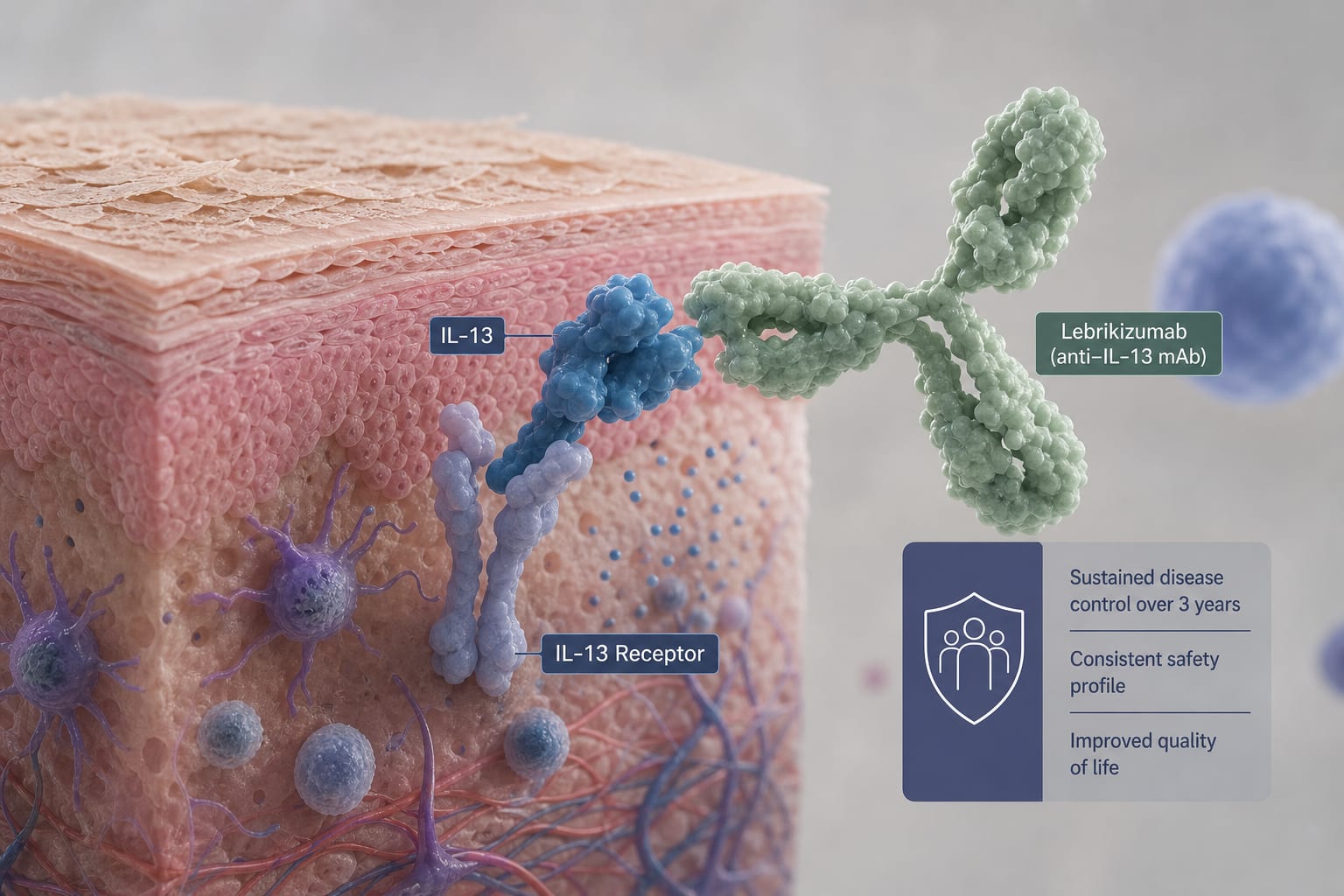
Understanding the long-term efficacy of treatments for moderate-to-severe atopic dermatitis is crucial for optimizing patient management. The comparison of biologics like tralokinumab and lebrikizumab through indirect analyses can provide insights into their relative effectiveness. However, methodological differences in clinical trials can impact the interpretation of these comparisons.
Data Highlights
No numerical data provided in the source material.
Key Findings
Both ECZTRA and ADvocate trials assessed week 52 efficacy among week 16 responders, suggesting comparability.
Differences in washout periods for topical medications may have influenced baseline disease severity in trials.
Claims regarding lebrikizumab's superior off-drug durability are based on studies that did not use the marketed formulation of tralokinumab.
Tralokinumab's mechanism does not inhibit endogenous IL-13 clearance as suggested.
Anchored analyses are preferred for mitigating bias in indirect comparisons according to NICE guidelines.
Clinical Implications
Clinicians should be aware of the methodological differences in trials when interpreting the efficacy of tralokinumab versus lebrikizumab. Understanding these nuances can aid in making informed treatment decisions for patients with moderate-to-severe atopic dermatitis.
Conclusion
The clarification provided highlights the importance of rigorous methodological standards in indirect comparisons of treatment efficacy.