Association of metabolic dysfunction-associated steatotic liver disease trajectories with incident liver cancer: a UK Biobank cohort study - Report - MDSpire
Advertisement
Association of metabolic dysfunction-associated steatotic liver disease trajectories with incident liver cancer: a UK Biobank cohort study
Clinical Report: Longitudinal Analysis of MASLD Patterns and Liver Cancer Risk
Overview
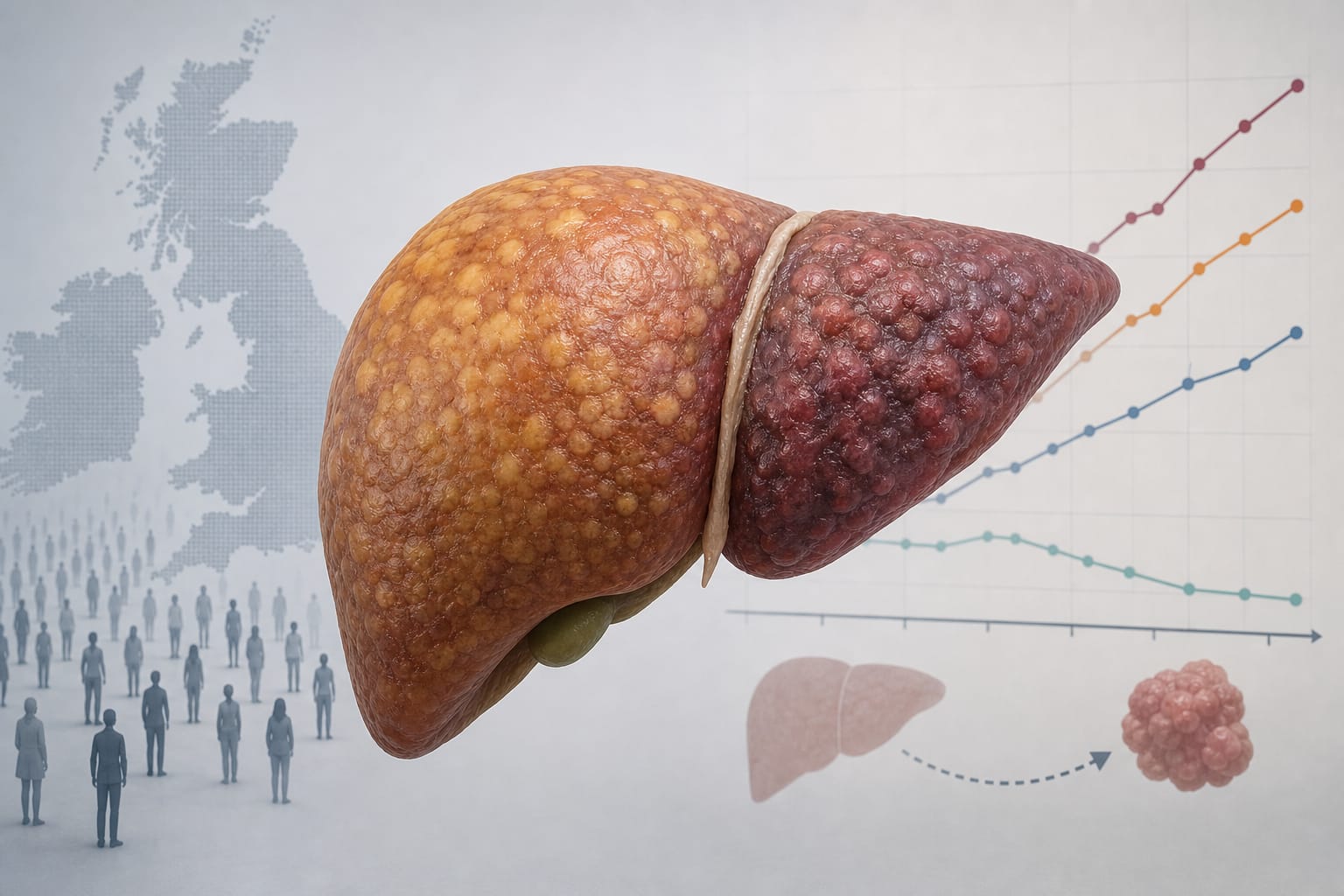
This study investigates the relationship between metabolic dysfunction-associated steatotic liver disease (MASLD) and liver cancer incidence using data from the UK Biobank.
Background
Metabolic dysfunction-associated steatotic liver disease (MASLD) is a prevalent chronic liver disorder linked to hepatocellular carcinoma (HCC). This study addresses the gap in knowledge regarding the prognostic value of repeated MASLD assessments in predicting liver cancer outcomes.
Data Highlights
Assessment
Participants with MASLD
Adjusted Hazard Ratio (aHR)
95% Confidence Interval (CI)
Baseline
4,008 (33.1%)
2.81
1.20–6.58
Period 2
Not specified
2.61
1.12–6.06
MASLD → no MASLD
Not specified
4.00
1.01–15.80
MASLD → MASLD
Not specified
3.51
1.31–9.44
Key Findings
At baseline, 33.1% of participants had MASLD.
MASLD at period 1 was associated with a higher risk of incident liver cancer (aHR, 2.81).
MASLD at period 2 also indicated increased liver cancer risk (aHR, 2.61).
Trajectory analysis showed that persistent MASLD (MASLD → MASLD) significantly increased liver cancer risk (aHR, 3.51).
Prior MASLD exposure (MASLD → no MASLD) was linked to a higher risk of liver cancer (aHR, 4.00).
Clinical Implications
The findings suggest that clinicians should consider repeated assessments of MASLD in patients to better evaluate their risk for liver cancer. Understanding the trajectory of MASLD may aid in identifying individuals who require closer monitoring and intervention.
Conclusion
The study highlights the importance of both current and past MASLD status in assessing liver cancer risk.