Body mass index, regional adipose deposition, and clinical outcomes in non-ischaemic dilated cardiomyopathy: a prospective cohort study - Report - MDSpire
Advertisement
Body mass index, regional adipose deposition, and clinical outcomes in non-ischaemic dilated cardiomyopathy: a prospective cohort study
BMI and Regional Fat Distribution Impact Outcomes in Non-Ischaemic Dilated Cardiomyopathy
Overview
In a prospective cohort of 1042 non-ischaemic dilated cardiomyopathy (DCM) patients, lower body mass index (BMI) and reduced regional adipose tissue were associated with worse cardiac function, adverse remodeling, increased myocardial fibrosis, and poorer clinical outcomes including mortality and heart transplantation. Visceral and epicardial adipose tissues independently predicted adverse events, highlighting the prognostic significance of fat distribution beyond BMI alone.
Background
Obesity is a growing global health concern linked to cardiovascular diseases, yet an 'obesity paradox' suggests overweight patients with cardiovascular disease may have better outcomes. Regional adipose tissue compartments such as epicardial, pericardial, subcutaneous, and visceral fat play distinct roles in metabolic regulation and inflammation, influencing cardiac health. Dilated cardiomyopathy (DCM) is a major cause of heart failure, but the impact of BMI and regional fat distribution on clinical features and prognosis in non-ischaemic DCM remains unclear. This study investigates how BMI and various fat depots relate to cardiac structure, function, myocardial fibrosis, and clinical outcomes in DCM patients.
Data Highlights
Parameter
Hazard Ratio (HR)
95% Confidence Interval (CI)
P-value
Body Mass Index (per unit)
0.94
0.90–0.98
0.006
Visceral Adipose Tissue Thickness (per 1 mm)
0.94
0.91–0.97
<0.001
Epicardial Adipose Tissue Volume (per 1 mL)
0.96
0.95–0.97
<0.001
Key Findings
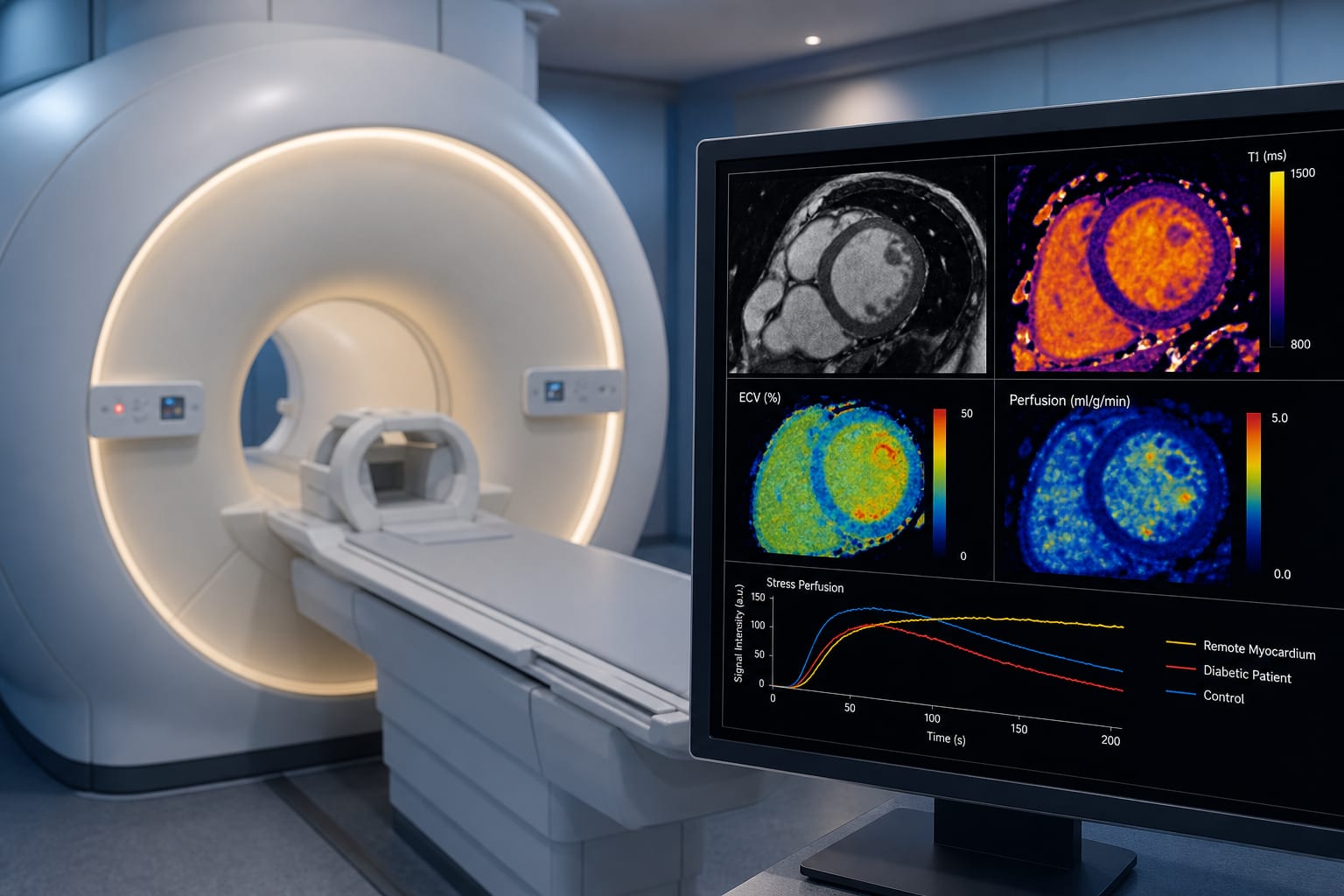
Lower BMI and thinner regional adipose tissue (SAT, VAT, EAT, PAT) correlate with worse cardiac remodeling, reduced biventricular ejection fraction, and higher myocardial fibrosis markers (native T1 and extracellular volume fraction).
Underweight DCM patients were more often female, had lower blood pressure, worse NYHA functional class, and impaired cardiac function compared to normal or overweight patients.
During a median 41-month follow-up, 237 patients reached the primary endpoint of all-cause mortality or heart transplantation.
BMI, visceral adipose tissue thickness, and epicardial adipose tissue volume independently predicted the primary endpoint, with epicardial adipose tissue volume showing the highest predictive value for heart failure death or transplantation (C-index: 0.70).
BMI was the strongest predictor of arrhythmic events (C-index: 0.64).
Reduced regional adiposity identifies a worse clinical phenotype and is associated with adverse outcomes in non-ischaemic DCM.
Clinical Implications
Assessment of BMI and regional fat distribution, particularly epicardial and visceral adipose tissue, provides valuable prognostic information in patients with non-ischaemic DCM. Clinicians should consider these parameters when stratifying risk and managing patients, as lower BMI and reduced regional adiposity identify individuals at higher risk for mortality, heart transplantation, and arrhythmias. Targeted interventions addressing nutritional status and metabolic health may improve outcomes in this population.
Conclusion
Lower BMI and diminished regional adipose tissue are linked to adverse cardiac remodeling and worse clinical outcomes in non-ischaemic DCM patients. Regional fat depots, especially epicardial adipose tissue, serve as important independent predictors of prognosis, underscoring the complex role of adiposity in DCM progression.
References
Wang et al. 2024 -- Association of Body Mass Index and Regional Fat Distribution with Clinical Outcomes in Patients with Non-Ischaemic Dilated Cardiomyopathy