Phase 1b data for ASP7317, presented at ASRS, showed a favorable safety profile, encouraging visual acuity findings, and stabilization of geographic atrophy in patients with advanced disease.
The phase 1b trial of ASP7317 demonstrated a favorable safety profile and improvements in best-corrected visual acuity (BCVA) in patients with advanced geographic atrophy (GA).
Background
Geographic atrophy (GA) represents a late stage of age-related macular degeneration (AMD) and currently approved therapies can only slow disease progression without restoring lost vision. Investigating novel therapies, such as stem cell-derived retinal pigment epithelial (RPE) cell therapy, is critical for advancing treatment options for patients with advanced GA.
Data Highlights
No numerical data available in the source material.
Key Findings
ASP7317, a human stem cell-derived RPE cell therapy, showed a favorable safety profile with no significant adverse events related to graft failure or tumor growth.
Best-corrected visual acuity (BCVA) improved in the small and medium cohorts over 52 weeks compared to the fellow eye, which experienced a loss in letters.
Geographic atrophy area showed stabilization over time in treated patients.
Most patients reported that their vision was either the same or improved according to the Patient Global Impression of Change (PGIC) questionnaire.
Clinical Implications
Continued investigation in larger trials will be essential to confirm these findings.
Conclusion
The phase 1b trial results for ASP7317 indicate promising safety and efficacy outcomes in patients with advanced geographic atrophy.
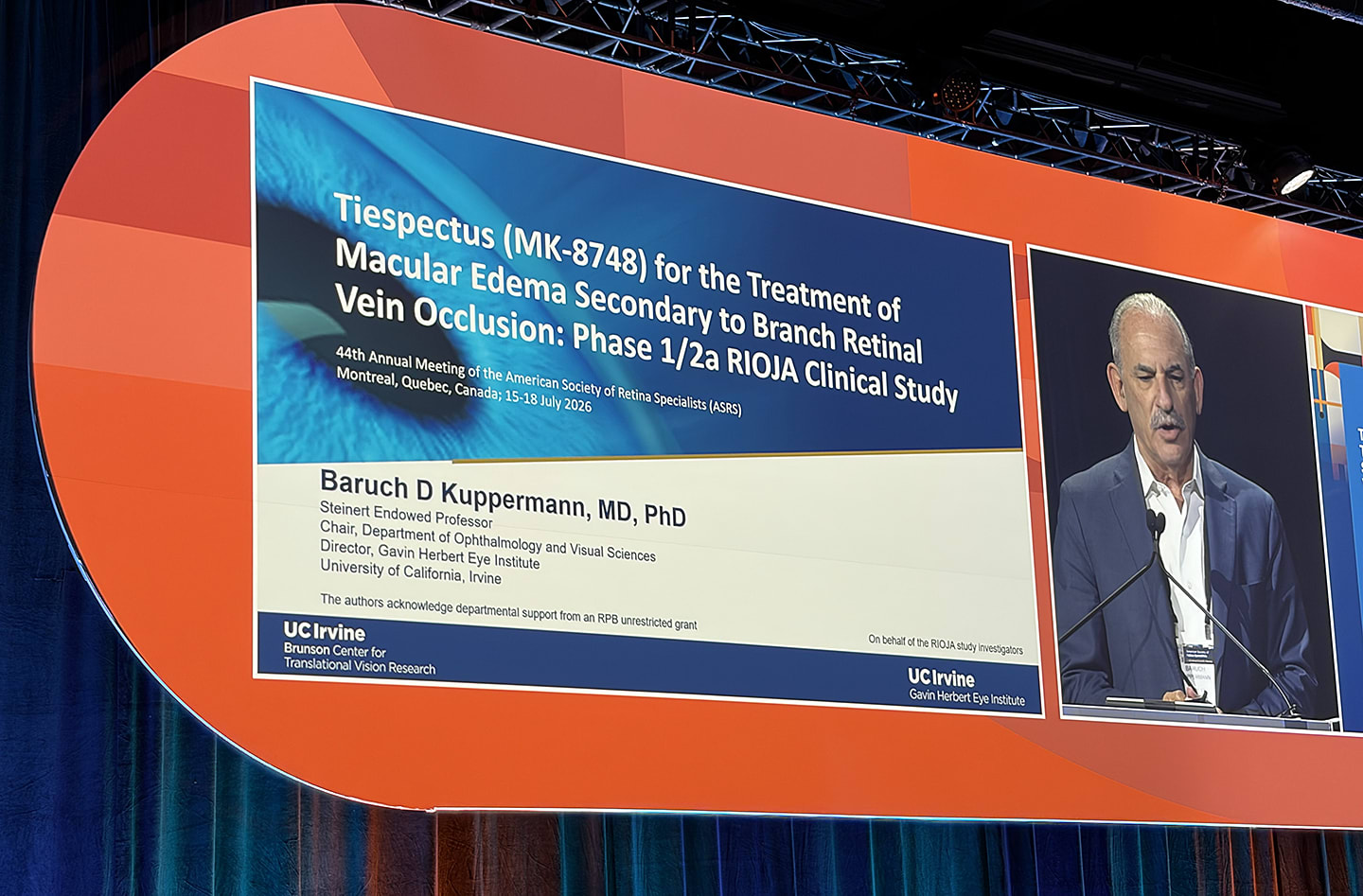
At the ASRS meeting in Montreal, Baruch D. Kuppermann, MD, PhD, presented BRVO findings from the phase 1/2a RIOJA program evaluating the investigational VEGF/Tie2 bispecific.