Pretreatment neutrophil-lymphocyte ratio and platelet-lymphocyte ratio as prognostic biomarkers for neuroblastoma risk stratification - Report - MDSpire
Advertisement
Pretreatment neutrophil-lymphocyte ratio and platelet-lymphocyte ratio as prognostic biomarkers for neuroblastoma risk stratification
Clinical Report: Prognostic Value of Pretreatment Neutrophil-Lymphocyte and Platelet-Lymphocyte Ratios in Stratifying Neuroblastoma Risk
Overview
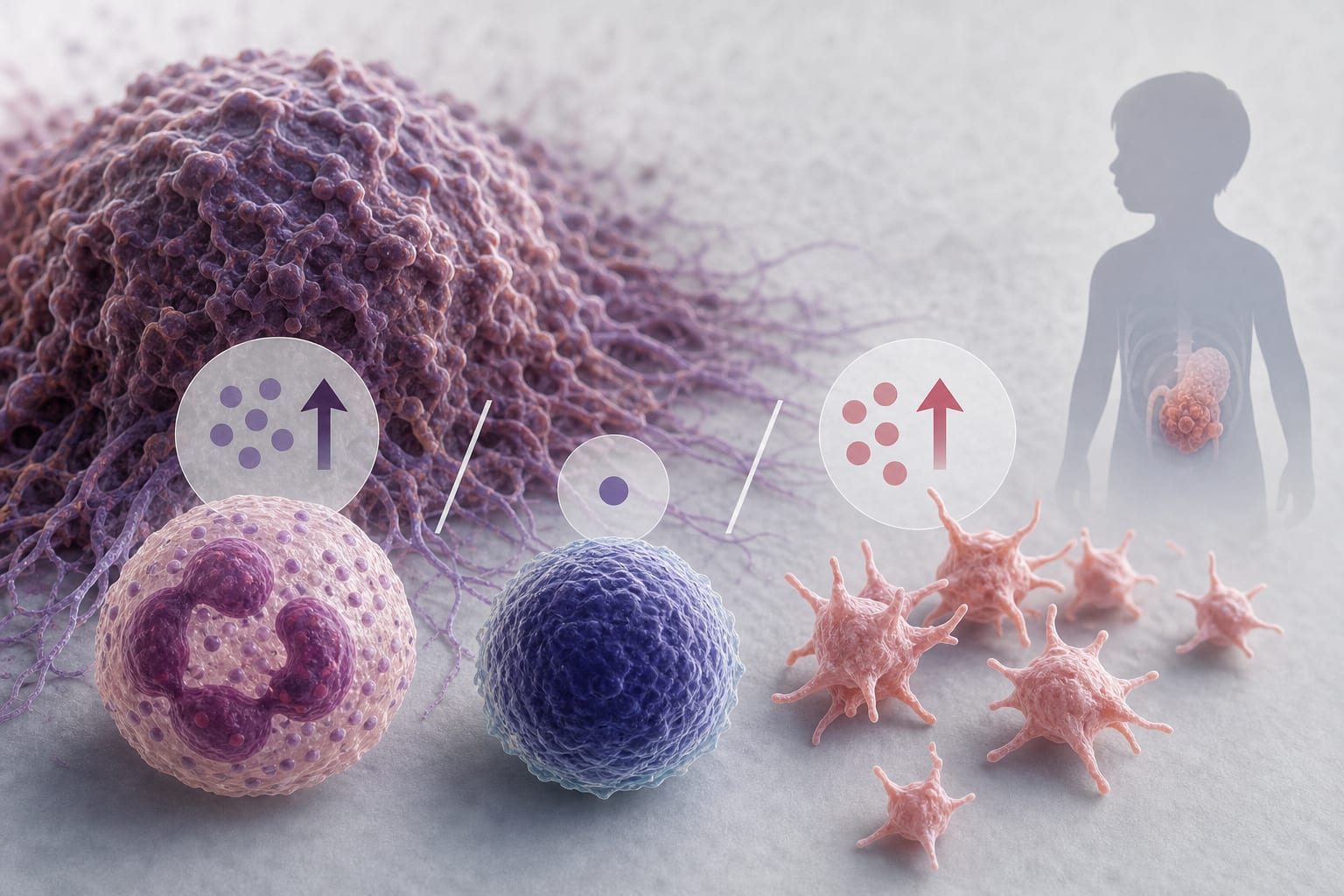
This study evaluates the prognostic significance of pretreatment neutrophil-lymphocyte ratio (NLR) and platelet-lymphocyte ratio (PLR) in pediatric neuroblastoma patients. Elevated NLR and PLR values correlate with advanced disease stages and high-risk stratification, suggesting their potential as cost-effective biomarkers for improving risk assessment.
Background
Neuroblastoma is the most common extracranial solid tumor in children and accounts for a significant proportion of pediatric cancer mortality. Current risk stratification methods do not incorporate inflammatory biomarkers, which may enhance the precision of risk assessment. Identifying reliable prognostic indicators is crucial for optimizing treatment strategies in high-risk neuroblastoma cases.
Data Highlights
{'PLR': {'AUC': 'Provide AUC value for PLR.'}}
Key Findings
Elevated NLR and PLR are significantly associated with high-risk neuroblastoma.
Optimal cutoff values for NLR and PLR were determined to be 0.98 and 104.6, respectively.
The combined NLR-PLR model achieved an AUC of 0.833 for risk stratification.
Patients with higher NLR and PLR values were more likely to present with advanced disease stages.
Incorporating NLR and PLR into standard staging may enhance risk stratification accuracy.
Clinical Implications
Clinicians should consider integrating pretreatment NLR and PLR into the risk assessment protocols for neuroblastoma. These biomarkers can provide additional insights into disease severity and help tailor treatment strategies for pediatric patients.
Conclusion
Pretreatment NLR and PLR serve as valuable prognostic biomarkers in neuroblastoma, offering a cost-effective means to improve risk stratification and guide therapeutic decisions. Further validation in prospective studies is warranted.