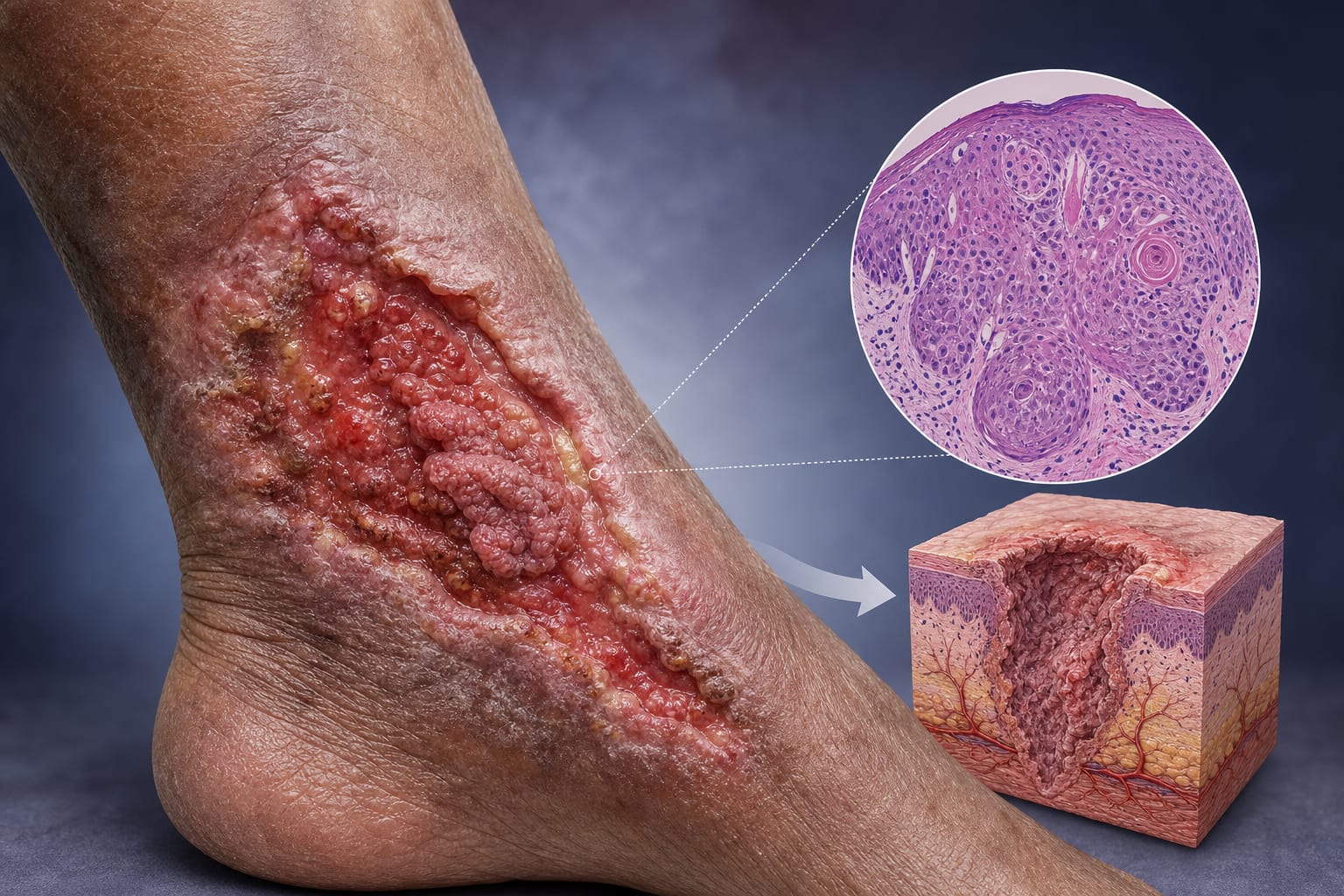
Case Report: Marjolin ulcer characterized by squamous cell carcinoma arising from chronic wounds: clinical features, diagnostic and therapeutic challenges, and insights—a report of four cases - Report - MDSpire
Conexiant’s news site is now MDSpire News. Learn more
Advertisement
Clinical Insights into Marjolin Ulcer: Squamous Cell Carcinoma Development from Chronic Wounds—A Report on Four Cases Highlighting Diagnostic and Treatment Challenges
Clinical Report: Marjolin Ulcer and Squamous Cell Carcinoma Challenges
Overview
This report details four cases of Marjolin ulcer, highlighting diagnostic delays and treatment challenges associated with cutaneous squamous cell carcinoma (cSCC) arising from chronic wounds. All patients were initially misdiagnosed, leading to escalated treatment needs, including amputations in some cases.
Background
Marjolin ulcer represents a rare but aggressive form of skin cancer that develops from chronic wounds, often leading to significant diagnostic delays and poor outcomes. Understanding the clinical features and warning signals associated with this condition is crucial for early recognition and intervention. The chronic inflammatory microenvironment plays a key role in the malignant transformation of these wounds.
Data Highlights
Patient
Initial Trigger
Wound Duration
Final Diagnosis
Bone Invasion
1
Ingrown nail
8 months
cSCC
No
2
Foreign body injury
10 years
cSCC
Yes
3
Post-surgical scar
15 years
cSCC
Yes
4
Abrasion
30 years
cSCC
No
Key Findings
All four patients had long-standing, non-healing chronic wounds on the limbs.
Initial misdiagnosis of benign chronic wounds led to significant treatment delays.
Final surgical pathology confirmed cSCC in all cases, with bone invasion in two cases.
Treatment escalated from local excision to amputation in three of the four cases.
No local recurrence was detected during short-term follow-up.
Clinical Implications
Clinicians should maintain a high index of suspicion for malignant transformation in long-standing chronic wounds, particularly in elderly male patients. Early biopsy of suspicious lesions is essential to prevent severe outcomes such as amputation.
Conclusion
The findings from these cases emphasize the importance of recognizing clinical warning signals associated with Marjolin ulcers to facilitate timely diagnosis and treatment.