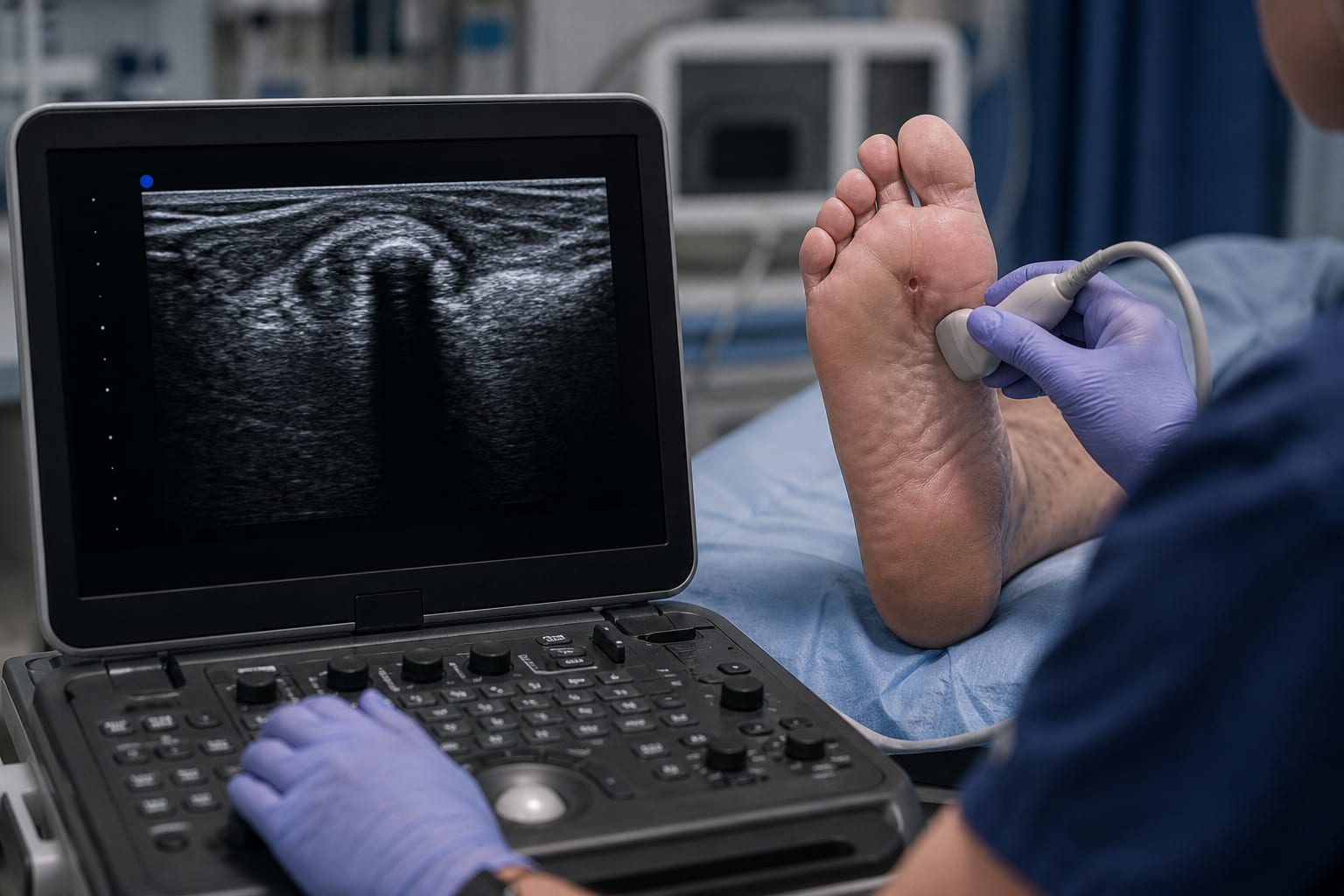
Clinical Report: Undetected Wooden Foreign Object in Imaging Studies
Background
Retained foreign bodies can lead to significant complications, particularly in patients with diabetes who may have impaired healing. Traditional imaging techniques often fail to identify wooden foreign bodies, which can result in delayed treatment. Understanding the efficacy of different imaging modalities is crucial for timely diagnosis and management.
Data Highlights
Point-of-care ultrasound demonstrated high sensitivity for detecting wooden foreign bodies, while CT and MRI showed limitations in this regard.
Key Findings
Wooden foreign bodies are undetectable in approximately 86% of patients using CT.
Ultrasound can consistently identify wooden foreign bodies measuring 2.0–2.5 mm.
Point-of-care ultrasound is preferred for suspected retained non-metallic foreign bodies.
Traditional imaging modalities like plain radiographs reveal only about 7–15% of wooden foreign bodies.
Wood may become isoechoic over time, complicating delayed detection.
Clinical Implications
Clinicians should consider point-of-care ultrasound as a primary imaging modality for suspected wooden foreign bodies, especially in patients with diabetes.
Conclusion
The case emphasizes the importance of utilizing ultrasound for the detection of wooden foreign bodies.