Key Recommendations for Hospitalists: Assessment and Treatment of Obstructive Sleep Apnea in Adult Inpatients
-
By
-
Naveed Choudry
-
September 6, 2026
Clinical Report: Key Recommendations for Hospitalists on OSA Management
Overview
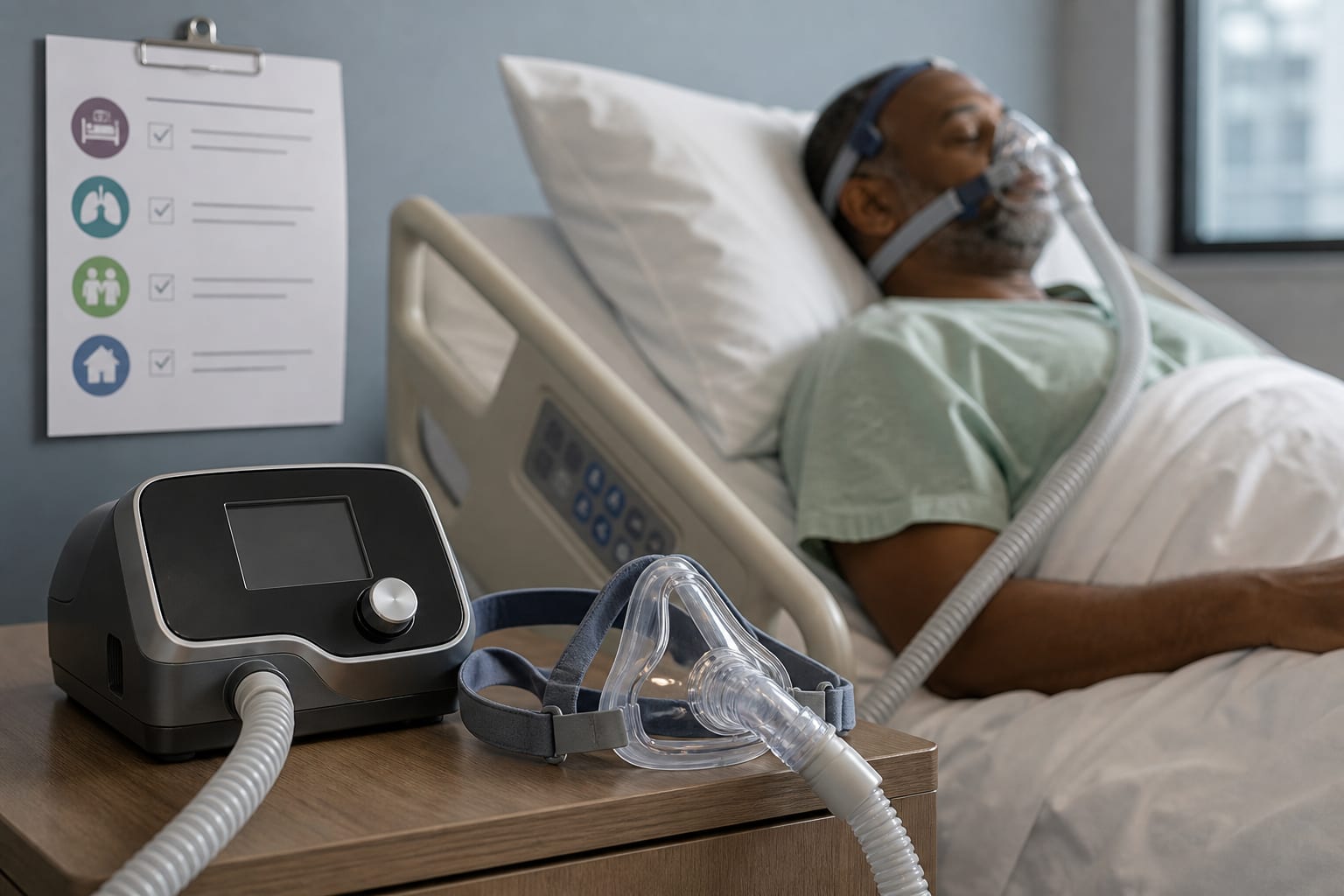
Obstructive sleep apnea (OSA) affects a significant proportion of hospitalized adults. The American Academy of Sleep Medicine has issued guidelines emphasizing the importance of screening, treatment initiation, and consultation for OSA in inpatient settings.
Background
Obstructive sleep apnea is prevalent among hospitalized adults, with estimates ranging from 25% to 77%. Unrecognized OSA is linked to longer hospital stays and increased healthcare costs. The recent guidelines from the American Academy of Sleep Medicine aim to address the evaluation and management of OSA in this population.
Data Highlights
No numerical data provided in the source material.
Key Findings
- 25%–77% of hospitalized adults may have obstructive sleep apnea (OSA).
- Patients with unrecognized OSA experience a 17% longer hospital stay and 67% higher costs.
- The AASM recommends screening at-risk hospitalized adults for OSA during admission.
- Starting positive airway pressure (PAP) treatment during hospitalization is advised for untreated OSA.
- Access to sleep medicine consultation should be available for patients with suspected or confirmed OSA.
- Continuing existing OSA treatment during hospitalization is recommended unless contraindicated.
Clinical Implications
Hospitalists should prioritize screening for OSA in at-risk patients to facilitate timely diagnosis and treatment. Implementing the AASM guidelines can help improve patient outcomes and reduce hospital costs associated with untreated OSA.
Conclusion
The AASM's guidelines represent a significant step toward improving the management of obstructive sleep apnea in hospitalized adults, emphasizing the need for proactive screening and treatment.
Related Resources & Content
- American Academy of Sleep Medicine, AASM, 2025 -- Clinical practice guideline for managing inpatient OSA
- Evaluation and management of obstructive sleep apnea in adults hospitalized for medical care: an American Academy of Sleep Medicine systematic review, meta-analysis, and GRADE assessment, Journal of Clinical Sleep Medicine, 2025
- Respiratory Care — Understanding the Barriers to Care for Individuals Receiving In-Patient Polysomnography: A Retrospective Cohort Study
- compendium — Diagnostic, Evaluation, and Treatment Approaches Used in Dental Sleep Medicine
- compendium — Incorporating Dental Sleep Medicine into a Practice: Avoiding the “7 Deadly Sins”
- compendium — Hypoglossal Nerve Stimulation Therapy for Obstructive Sleep Apnea
- Understanding the Barriers to Care for Individuals Receiving In-Patient Polysomnography
- Diagnostic, Evaluation, and Treatment Approaches Used in Dental Sleep Medicine
- Incorporating Dental Sleep Medicine into a Practice: Avoiding the “7 Deadly Sins”
- Hypoglossal Nerve Stimulation Therapy for Obstructive Sleep Apnea
- CPAP for Prevention of Cardiovascular Events in Obstructive Sleep Apnea
- https://aasm.org/wp-content/uploads/2026/02/inpatient-sleep-apnea-guideline-AASM-2025.pdf
- Evaluation and management of obstructive sleep apnea in adults hospitalized for medical care: an American Academy of Sleep Medicine systematic review, meta-analysis, and GRADE assessment | Journal of Clinical Sleep Medicine | Springer Nature Link
Based on findings from:
Clinical guideline highlights for the hospitalist: Evaluation and management of obstructive sleep apnea in adults hospitalized for medical care
Naveed Choudry. Journal Of Hospital Medicine, 2026.
https://shmpublications.onlinelibrary.wiley.com/doi/10.1002/jhm.70439
This content is an AI-generated, fully rewritten summary based on a published scholarly article. It does not reproduce the original text and is not a substitute for the original publication. Readers are encouraged to consult the source for full context, data, and methodology.