Association between circulating biomarkers of endothelial glycocalyx degradation and postoperative acute kidney injury in patients undergoing cardiac surgery with cardiopulmonary bypass - Report - MDSpire
Advertisement
Association between circulating biomarkers of endothelial glycocalyx degradation and postoperative acute kidney injury in patients undergoing cardiac surgery with cardiopulmonary bypass
Clinical Report: Link Between Circulating Biomarkers of Endothelial Glycocalyx Breakdown and Postoperative Acute Kidney Injury in Cardiac Surgery Patients Undergoing Cardiopulmonary Bypass
Overview
This study investigates the association between biomarkers of endothelial glycocalyx degradation and postoperative acute kidney injury (AKI) in cardiac surgery patients.
Background
Postoperative acute kidney injury is a significant complication following cardiac surgery, particularly with cardiopulmonary bypass. Identifying biomarkers that can predict renal risk is crucial.
Data Highlights
Parameter
AKI Group (n=43)
Non-AKI Group (n=109)
Incidence of AKI
28.3%
71.7%
Age
Older
Younger
Baseline Renal Function
Worse
Better
Cardiopulmonary Bypass Time
Longer
Shorter
Aortic Clamp Time
Longer
Shorter
Syndecan-1 Levels
Higher
Lower
Heparan Sulfate Levels
Higher
Lower
Key Findings
Postoperative AKI occurred in 28.3% of patients undergoing cardiac surgery with cardiopulmonary bypass.
Patients with AKI were older and had worse baseline renal function.
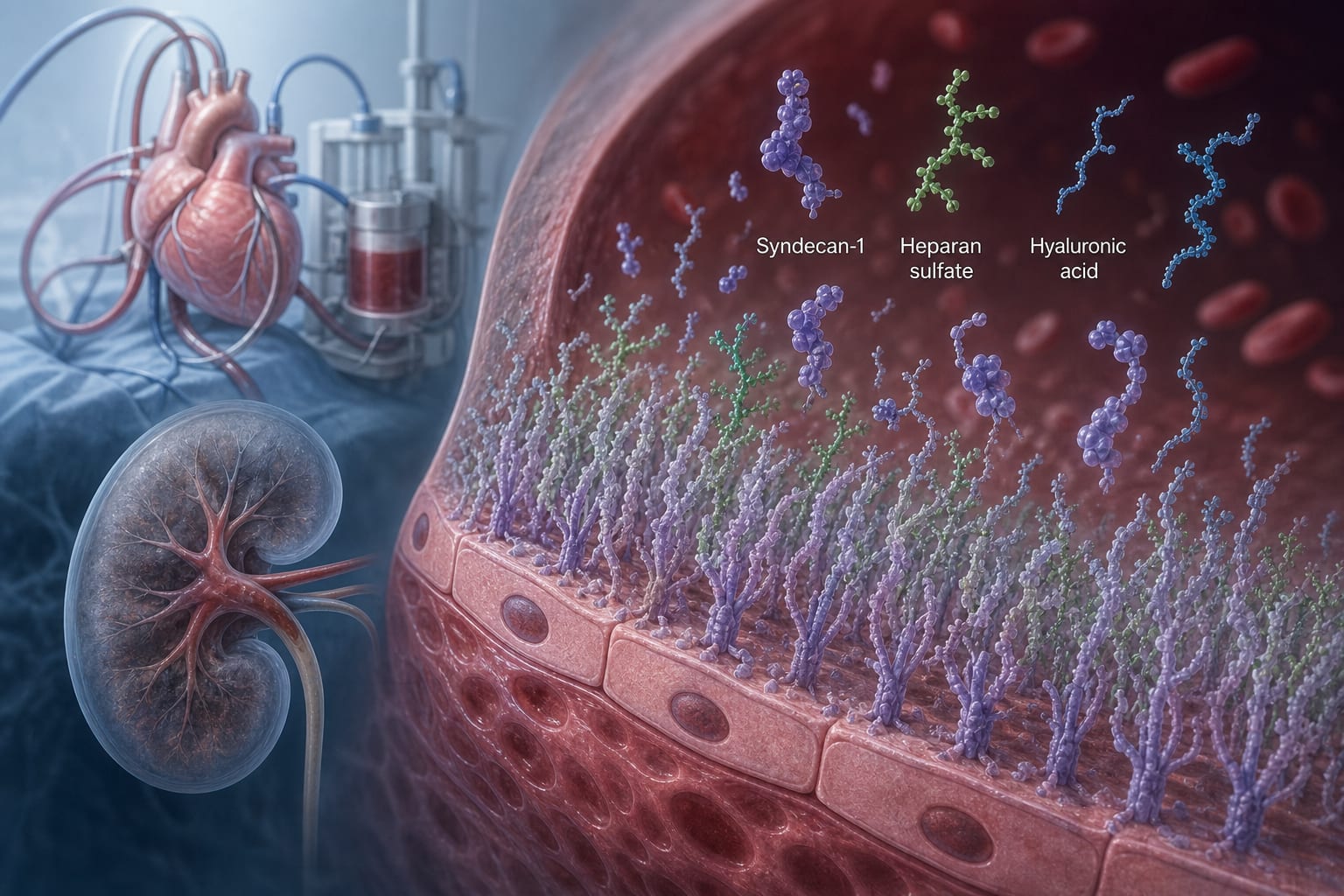
Syndecan-1 and heparan sulfate levels increased significantly from baseline to the end of cardiopulmonary bypass, particularly in the AKI group.
Multivariable analysis identified older age, longer aortic clamp time, and higher syndecan-1 levels as associated with postoperative AKI.
Syndecan-1 demonstrated the best discriminatory performance for predicting AKI with an area under the curve of 0.743.
Clinical Implications
Monitoring circulating biomarkers of endothelial glycocalyx degradation may assist in identifying patients at higher risk for postoperative AKI.
Conclusion
The study highlights the potential role of glycocalyx degradation biomarkers in predicting postoperative acute kidney injury in cardiac surgery patients.