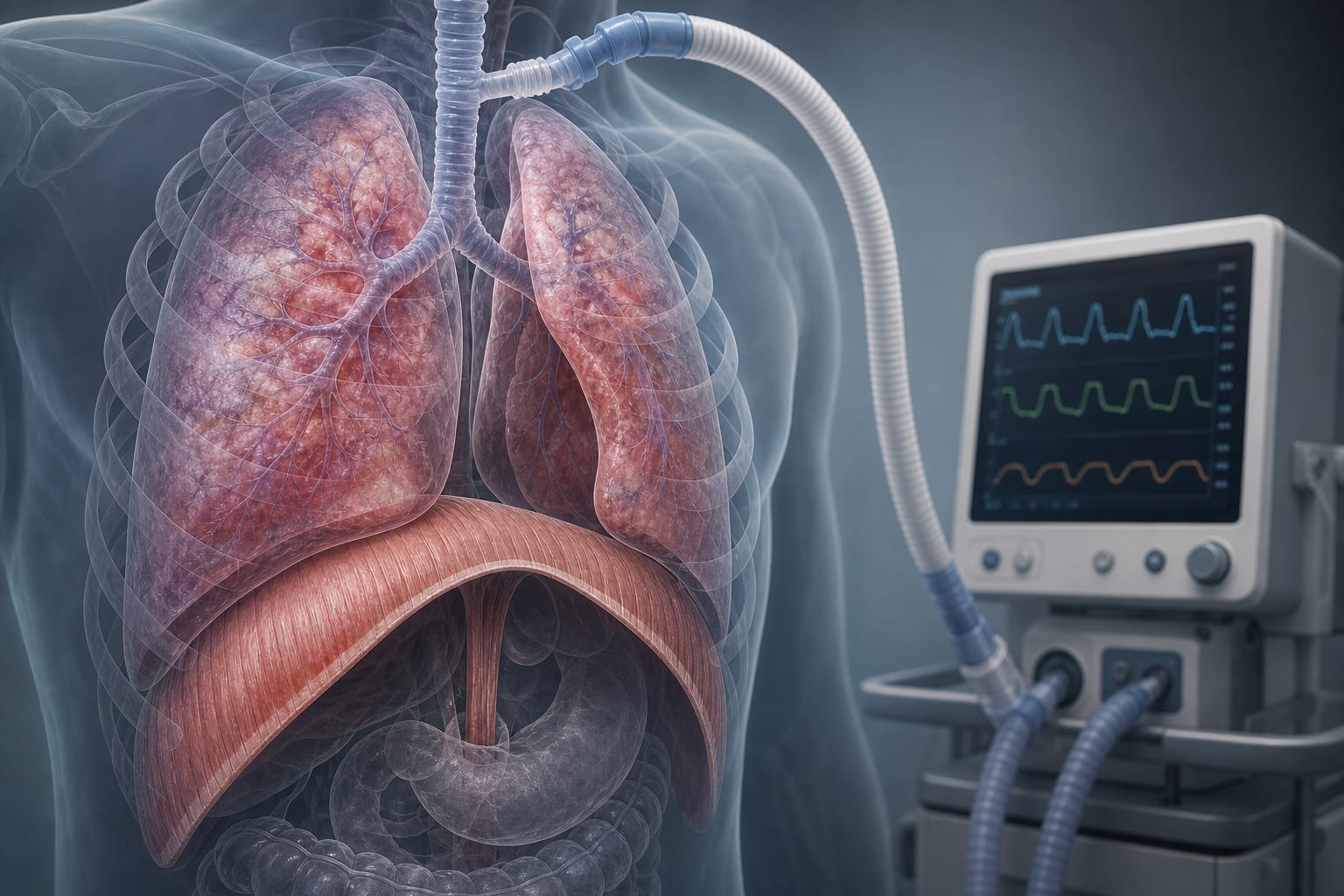
Diagnosis model for obstructive sleep apnea combining artificial immune system and logistic regression: A case study in Taiwan
-
By
-
Kun-Huang Chen
-
July 5, 2026
-
0 min
Clinical Report: A Diagnostic Approach for Obstructive Sleep Apnea Utilizing AI
Overview
This study presents a novel diagnostic approach for obstructive sleep apnea (OSA) using an artificial immune system (AIS) and logistic regression (LR). The method utilizes simple clinical data and a questionnaire.
Background
Obstructive sleep apnea (OSA) is a prevalent disorder with significant health implications, including increased risk for cardiovascular and metabolic diseases. Traditional diagnostic methods like polysomnography (PSG) are often limited by cost and accessibility, particularly in resource-limited settings.
Data Highlights
No numerical data or trial results were provided in the source material.
Key Findings
- The study developed a risk prediction model for OSA using AIS for feature selection and LR for classification.
- Combining patient physiological characteristics with a simple questionnaire may improve diagnostic accuracy.
- Current diagnostic tools like PSG are limited by cost and patient compliance issues.
- Home Sleep Testing (HST) offers a less intrusive alternative but lacks comprehensive physiological data.
Clinical Implications
The proposed diagnostic tool could facilitate earlier identification of OSA in clinical settings, particularly in areas lacking access to traditional diagnostic methods. Utilizing easily obtainable clinical data may enhance screening efficiency.
Conclusion
The integration of AIS and LR presents a promising approach to improve OSA diagnosis, potentially addressing existing barriers in accessibility and cost.
Related Resources & Content
- JMIR Medical Informatics, 2026 -- Machine Learning–Based Multidimensional Oximetry for Obstructive Sleep Apnea Screening: Development and External Validation
- Frontiers in Medicine, 2026 -- Early identification of risk factors for obstructive sleep apnea hypopnea syndrome based on large language models
- BMC Psychiatry (Springer), 2025 -- Investigating the role of depression in obstructive sleep apnea and predicting risk factors for OSA in depressed patients: machine learning-assisted evidence from NHANES
- Clinical Practice Guideline for Diagnostic Testing for Adult Obstructive Sleep Apnea: An American Academy of Sleep Medicine Clinical Practice Guideline - PMC
- Clinical use of a home sleep apnea test - AASM
- conexiant — A Smarter Screen for Sleep Apnea Stimulation
- U.S. Preventive Services Taskforce Recommendation on OSA Screening
- Clinical Practice Guideline for Diagnostic Testing for Adult Obstructive Sleep Apnea: An American Academy of Sleep Medicine Clinical Practice Guideline - PMC
- Clinical use of a home sleep apnea test - AASM
- Evaluation and management of obstructive sleep apnea in adults hospitalized for medical care: an American Academy of Sleep Medicine clinical practice guideline
- Augmented home sleep apnea testing: bridging the gap between comfort and diagnostic precision with single-lead electro-encephalogram | SLEEP | Oxford Academic
- Artificial Intelligence | American Academy of Sleep Medicine
- Diagnostic accuracy of artificial intelligence for obstructive sleep apnea detection: a systematic review - PMC
- Radar-Based Detection of Obstructive Sleep Apnea: A Systematic Review and Network Meta-Analysis of Diagnostic Accuracy Across Frequency Bands - PMC
- Accuracy of deep learning in diagnosis of apnea syndrome: a systematic review and meta-analysis
- Artificial intelligence in imaging for obstructive sleep apnea: A comprehensive review - ScienceDirect
This content is an AI-generated, fully rewritten summary based on a published scholarly article. It does not reproduce the original text and is not a substitute for the original publication. Readers are encouraged to consult the source for full context, data, and methodology.