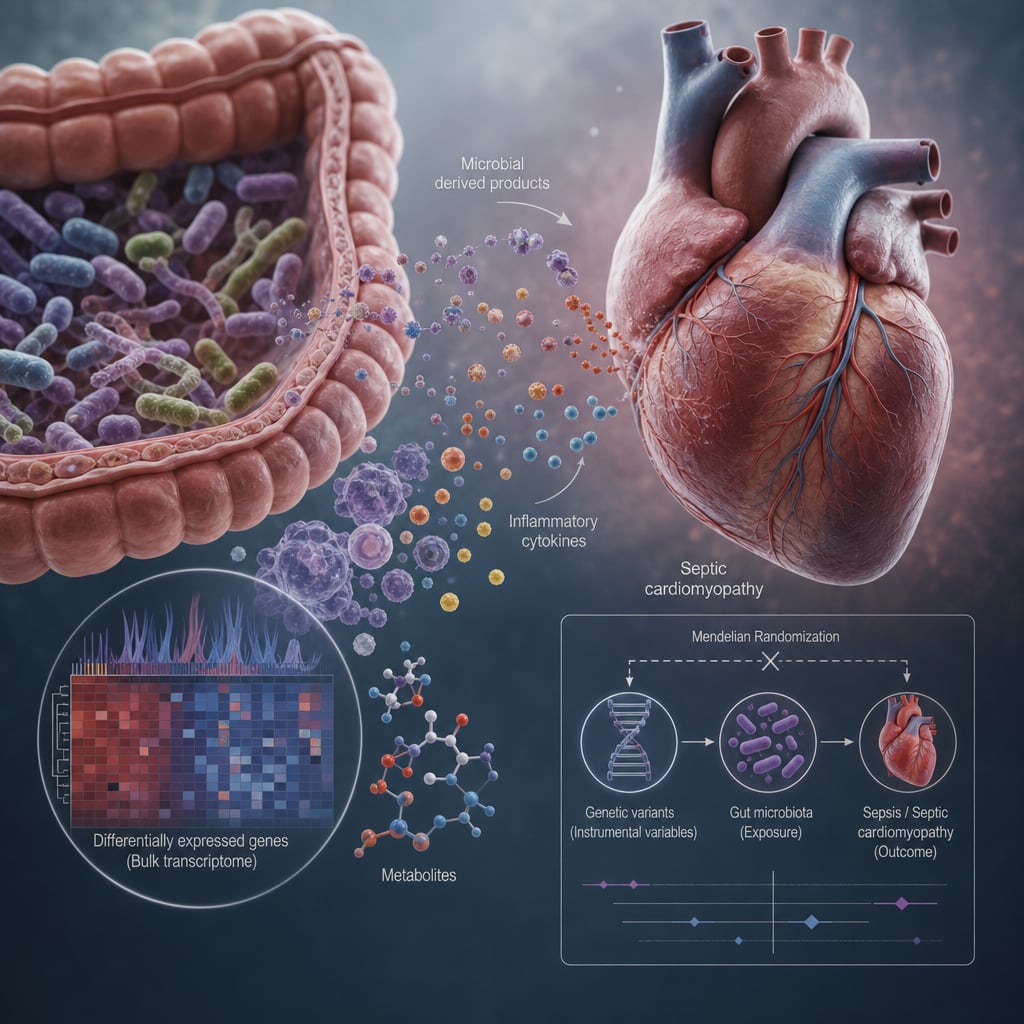
Gut-Derived Phenylacetylglutamine and Coronary Heart Disease Risk in Women
Overview
Higher plasma levels of the gut microbial metabolite phenylacetylglutamine (PAGln) are associated with an increased risk of incident coronary heart disease (CHD) in women. This association is particularly pronounced in women with low adherence to a plant-based diet, suggesting dietary patterns may modify PAGln's impact on CHD risk.
Background
Phenylacetylglutamine (PAGln) is produced via gut microbial metabolism of dietary phenylalanine and has been implicated in cardiovascular disease risk through interactions with adrenergic receptors. Prior studies have linked elevated PAGln to coronary artery disease severity, but prospective data on PAGln and incident CHD in general populations are limited. Diet influences gut microbial metabolite production, and plant-based dietary patterns may modulate the relationship between PAGln and cardiovascular outcomes. This study investigates the prospective association of plasma PAGln with incident CHD and the modifying effect of plant-based diet adherence in women.
Data Highlights
Parameter
Value
Study population
1520 women (760 incident CHD cases, 760 controls)
Follow-up duration
11 to 16 years
Relative risk of CHD per 1 SD increase in PAGln (low plant-based diet adherence)
Higher PAGln linked to greater red/processed meat intake and lower vegetable intake (P < .05)
Key Findings
Elevated plasma PAGln levels are significantly associated with increased risk of incident CHD in women.
The association between PAGln and CHD risk is stronger among women with low adherence to a plant-based diet.
Higher PAGln concentrations correlate with greater consumption of red and processed meats and lower vegetable intake.
Adherence to a plant-based dietary pattern attenuates the adverse association between PAGln and CHD risk.
Gut microbial metabolism of dietary phenylalanine to PAGln may influence cardiovascular risk via adrenergic receptor pathways.
Clinical Implications
Measurement of plasma PAGln could serve as a novel biomarker to identify women at higher risk for CHD, especially those consuming diets rich in animal-based foods. Encouraging adherence to plant-based dietary patterns may mitigate the cardiovascular risks associated with elevated PAGln levels. These findings support dietary modification as a potential strategy to influence gut microbial metabolites and reduce CHD risk.
Conclusion
Higher circulating levels of the gut-derived metabolite phenylacetylglutamine are linked to increased CHD risk in women, particularly among those with low plant-based diet adherence. Promoting plant-based diets may attenuate this risk by modulating gut microbial metabolism.
References
Nurses’ Health Study and Women's Lifestyle Validation Study -- Association Between Gut-Derived Metabolite Phenylacetylglutamine and the Development of Coronary Heart Disease in Women
by Yoriko Heianza, Saumya Tiwari, Xuan Wang, Jeramie D Watrous, Kathryn M Rexrode, Frank B Hu, Mona Alotaibi, Mohit Jain, Qi Sun, JoAnn E Manson, Lu Qi