Clinical Report: Interpretable Machine Learning Techniques in Arthritis Risk Prediction
Overview
This study developed a machine learning framework for predicting arthritis risk, identifying key physical and psychosocial factors influencing disease development. The best-performing model achieved an AUROC of 0.8007.
Background
Arthritis affects a significant portion of the adult population in the USA, with over 54 million individuals diagnosed. This study leverages machine learning to enhance prediction accuracy and interpretability, addressing challenges such as missing data and class imbalance.
Data Highlights
No numerical data table available.
Key Findings
The stacked ensemble model with GAN imputation and random undersampling achieved the highest AUROC of 0.8007.
Model performance was consistent across genders, with AUROC values of 0.808 for males and 0.800 for females.
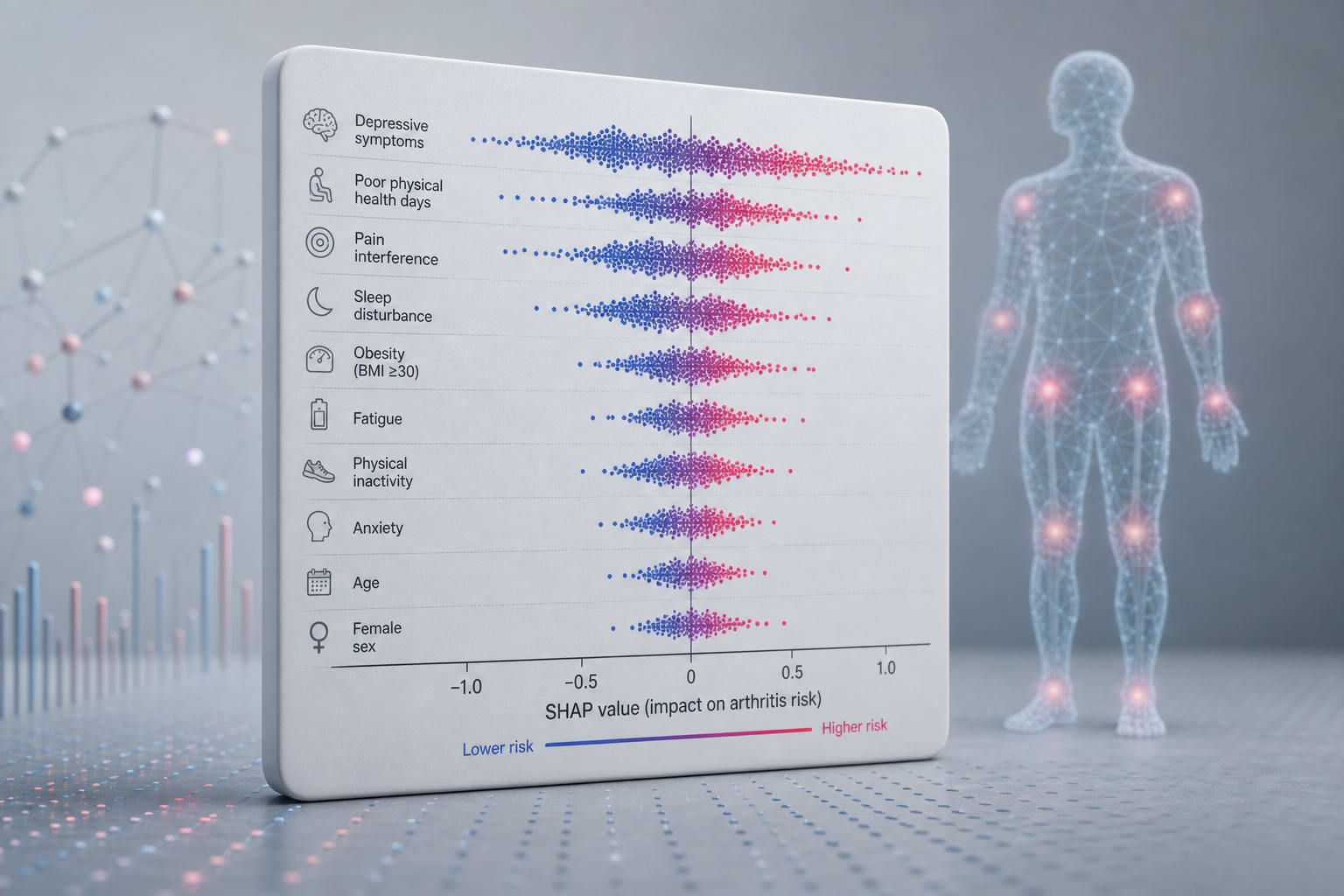
SHAP analysis identified age, walking difficulty, and high BMI as significant physical risk factors for arthritis.
Parental separation was highlighted as a notable psychosocial factor influencing arthritis risk.
The study utilized four datasets, including BRFSS and NHIS, to validate the machine learning models.
Clinical Implications
The findings emphasize the need for healthcare providers to consider both physical and psychosocial factors when assessing arthritis risk. Incorporating machine learning tools can enhance predictive capabilities and inform preventive strategies.
Conclusion
This research establishes a robust framework for future studies in disease prediction and prevention.