Catheter Fracture in an Implantable Venous Access Port in a Severely Obese Patient
Overview
This case study highlights a rare instance of catheter fracture in a severely obese patient undergoing chemotherapy for lung cancer. The findings suggest that extreme obesity may increase mechanical stress on implantable venous access ports, necessitating enhanced monitoring and management strategies.
Background
Implantable venous access ports (IVAPs) are essential for long-term chemotherapy administration, yet they are susceptible to mechanical complications, including catheter fractures. With rising obesity rates, understanding the impact of body habitus on device durability is increasingly important, particularly as obesity can obscure early signs of complications. This case underscores the need for tailored surveillance protocols for patients with high BMI.
Data Highlights
No numerical data provided in the article.
Key Findings
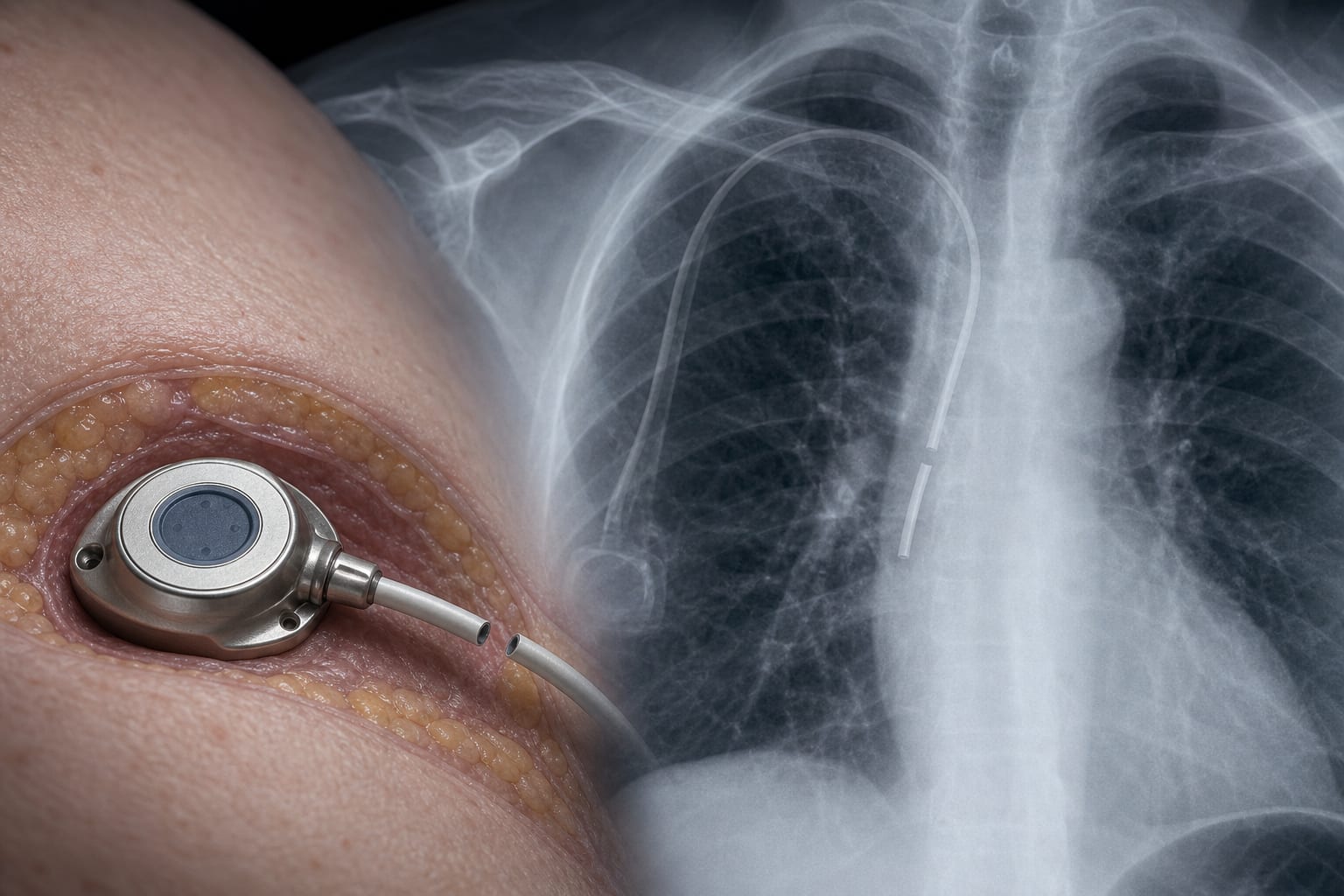
A 33-year-old male with class III obesity developed catheter fracture in an IVAP.
Diagnostic imaging revealed structural failure of the catheter within the port mechanism.
Prompt retrieval of the device was achieved through a multidisciplinary approach.
Extreme obesity may exacerbate mechanical stress on IVAPs, leading to complications.
Enhanced surveillance is recommended for patients with high BMI to prevent catheter-related issues.
Clinical Implications
Healthcare providers should be vigilant in monitoring patients with high BMI who have IVAPs, as they may be at increased risk for mechanical complications. Implementing individualized assessment and management strategies can help mitigate risks associated with catheter fractures.
Conclusion
This case illustrates the critical need for enhanced monitoring of IVAPs in obese patients to prevent serious complications. Adhering to best practices in device management can improve patient outcomes.