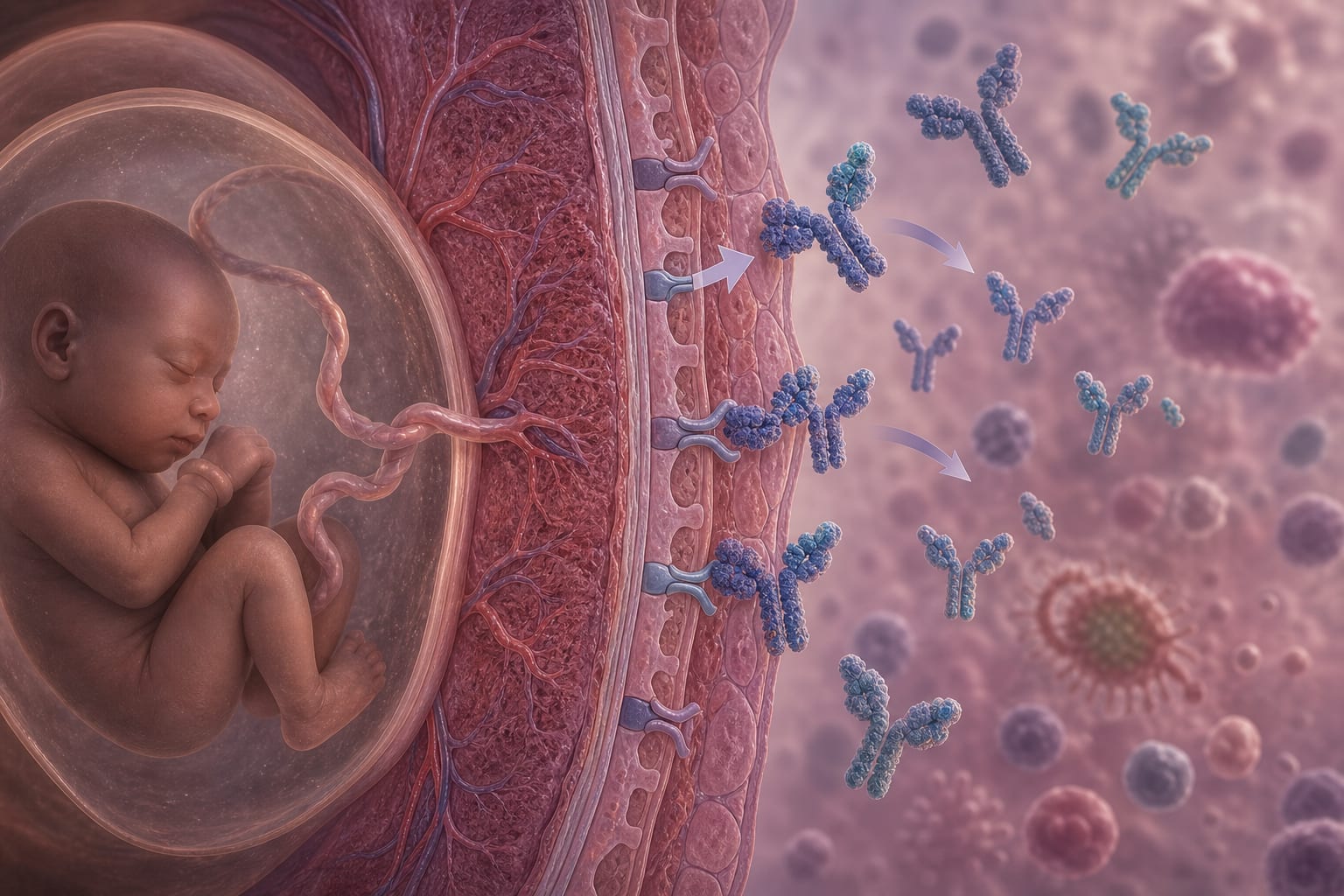
Clinical Report: Systematic Review of Transplacental Antibody Transfer Against Malaria
Overview
This systematic review evaluates the transplacental transfer of malaria antibodies from mothers to newborns, focusing on the transfer based on antibody subclass and antigen type.
Background
Malaria poses a significant risk to pregnant women and young children, leading to increased morbidity and mortality. Understanding the mechanisms of transplacental antibody transfer is crucial.
Data Highlights
Parameter
Pooled Prevalence
95% Confidence Interval
Peripheral Malaria
31.27%
(24.9, 38.45)
Placental Malaria
30.65%
(20.29, 43.43)
Newborn Malaria
9.53%
(4.18, 20.29)
Key Findings
The pooled prevalence of peripheral malaria among mothers was 31.27%.
The pooled prevalence of placental malaria was 30.65%.
The pooled prevalence of malaria in newborns was 9.53%.
IgG1 and IgG3 were the predominant subclasses that transferred efficiently to newborns.
Factors associated with reduced maternal transfer of antibodies included HIV infection and low birth weight.
Antibodies against circumsporozoite protein were transferred more efficiently than those against merozoite surface protein 3.
Clinical Implications
Healthcare providers should be aware of factors that can hinder the transplacental transfer of malaria antibodies.
Conclusion
The efficiency of transplacental antibody transfer against malaria is influenced by antibody subclass and maternal factors.