Clinical Report: Exploring the Immune Landscape in Ovarian Cancer
Overview
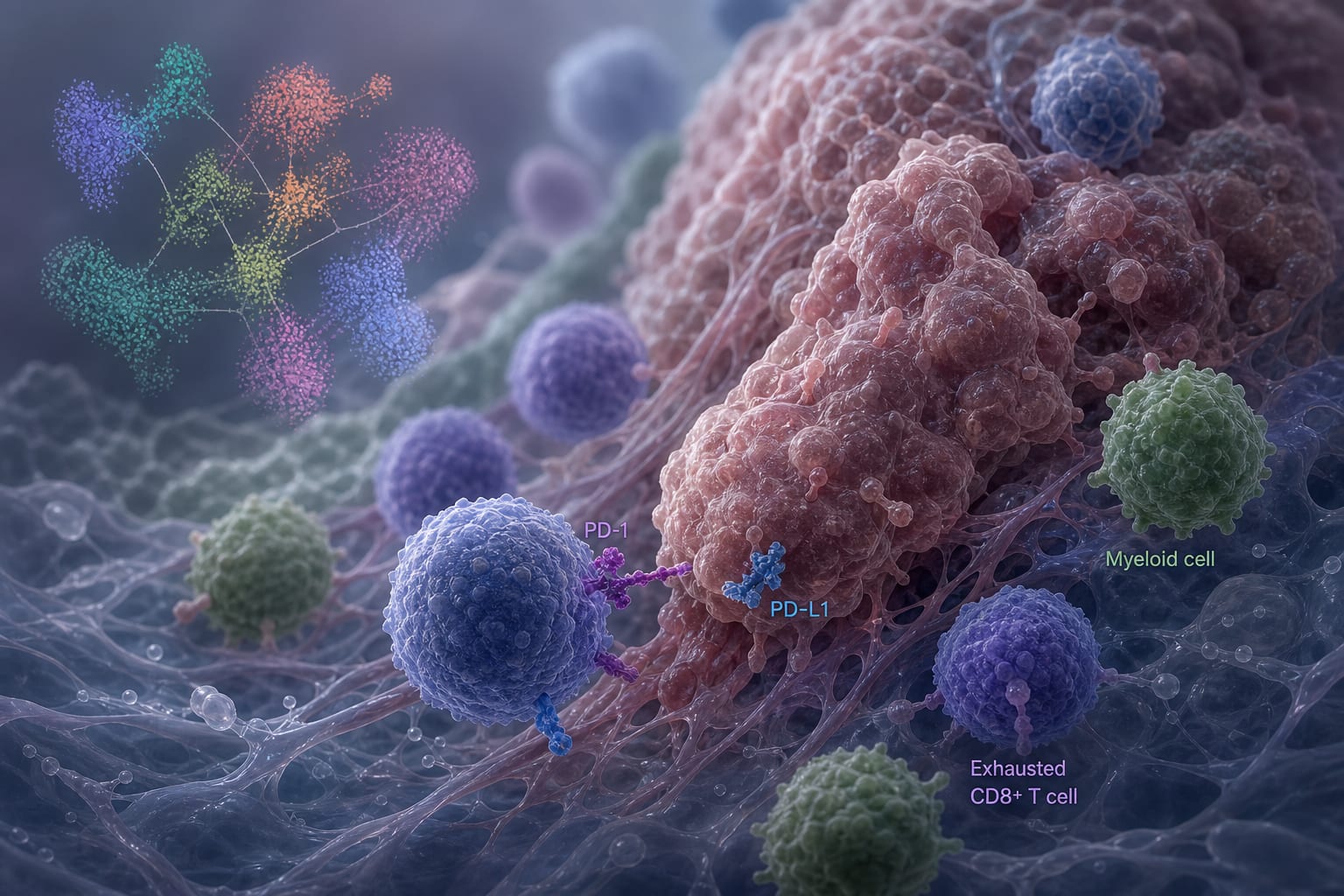
Ovarian cancer presents significant challenges in treatment due to immune checkpoint inhibitors' limited efficacy, attributed to CD8+ T cell exhaustion in a heterogeneous tumor immune microenvironment. Single-cell RNA sequencing has advanced our understanding of this complexity, revealing insights into immune dynamics and potential therapeutic strategies.
Background
Ovarian cancer is the most lethal gynecological malignancy, with immune checkpoint inhibitors showing modest benefits. Understanding the tumor immune microenvironment (TME) is crucial, as it influences anti-tumor immune responses and can lead to therapeutic resistance. Recent advancements in single-cell RNA sequencing provide a detailed view of the TME, highlighting the need for refined immunotherapeutic approaches.
Data Highlights
No numerical data provided in the source material.
Key Findings
Single-cell RNA sequencing reveals the evolution of terminally exhausted T cells from GZMK+ progenitor populations.
Ascitic fluid serves as an immunomodulatory reservoir, shaping intratumoral immune dynamics.
Myeloid-lymphoid crosstalk contributes to localized immunosuppression and therapeutic resistance.
High-resolution molecular insights can predict immune checkpoint inhibitor responsiveness.
Single-cell technologies are essential for characterizing the ovarian cancer immune microenvironment.
Clinical Implications
The findings underscore the importance of understanding the TME in ovarian cancer to enhance the efficacy of immunotherapies. Clinicians should consider the role of immune dynamics in treatment planning and explore combinatorial regimens that target identified immunosuppressive mechanisms.
Conclusion
Advancements in single-cell RNA sequencing are pivotal for unraveling the complexities of the ovarian cancer immune microenvironment, offering a pathway to improve precision immunotherapy strategies.