Conexiant’s news site is now MDSpire News. Learn more
Advertisement
Evaluation of the Safety and Effectiveness of Retromuscular-Onlay Dual-Mesh Repair for Significant Abdominal Wall Defects Following Resection of Abdominal Wall Endometriosis
Clinical Report: Evaluation of Retromuscular-Onlay Dual-Mesh Repair for AWE
Overview
This study evaluates the safety and effectiveness of a retromuscular-onlay dual-mesh repair technique for significant abdominal wall defects following the resection of abdominal wall endometriosis (AWE). The findings indicate a promising safety profile with manageable postoperative complications in a small cohort of patients.
Background
Abdominal wall endometriosis is a rare condition that often necessitates radical surgical intervention, leading to substantial abdominal wall defects. Traditional repair methods have been associated with high rates of complications and recurrence, highlighting the need for improved surgical techniques. The dual-mesh approach aims to enhance structural support and reduce complications in patients undergoing reconstruction after AWE resection.
Data Highlights
No numerical data available in the provided text.
Key Findings
The study included nine female patients with an average age of 32 years and a history of cesarean sections.
All patients presented with type III AWE and had an average lesion size of 7.73 cm.
Postoperative complications were monitored, including surgical site infections and seromas.
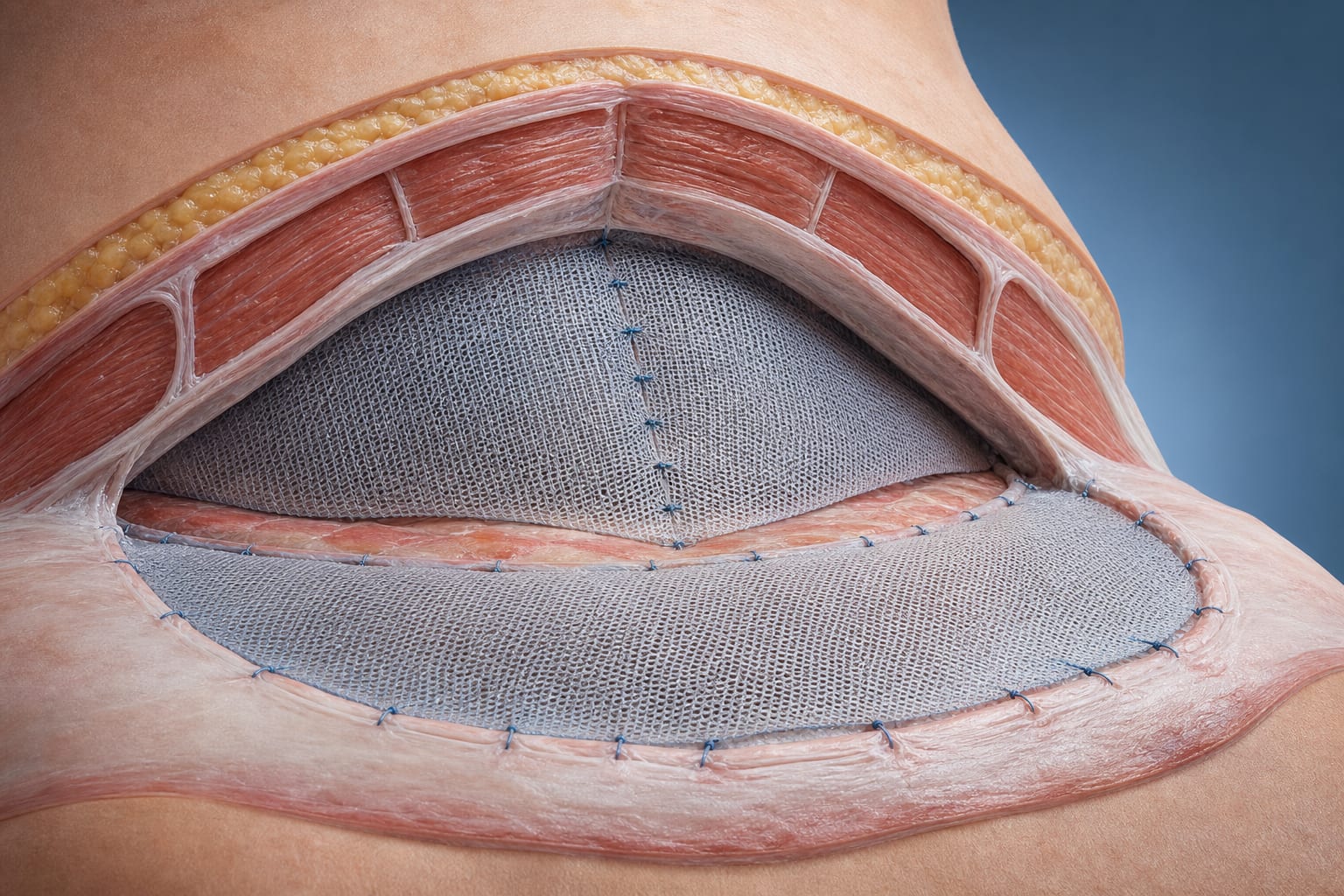
The dual-mesh technique involved a retromuscular mesh followed by an onlay mesh for fascial defect coverage.
Short-term outcomes suggest a favorable safety profile for the dual-mesh approach.
Clinical Implications
The retromuscular-onlay dual-mesh technique may provide a viable option for reconstructing significant abdominal wall defects post-AWE resection. Surgeons should consider this method to potentially reduce complication rates associated with traditional repair techniques.
Conclusion
The dual-mesh repair technique shows promise for safely addressing abdominal wall defects following AWE resection, warranting further investigation in larger cohorts.
The evolution of breast cancer care is increasingly challenging a long-standing assumption in oncology: that greater treatment intensity necessarily translates into better outcomes.