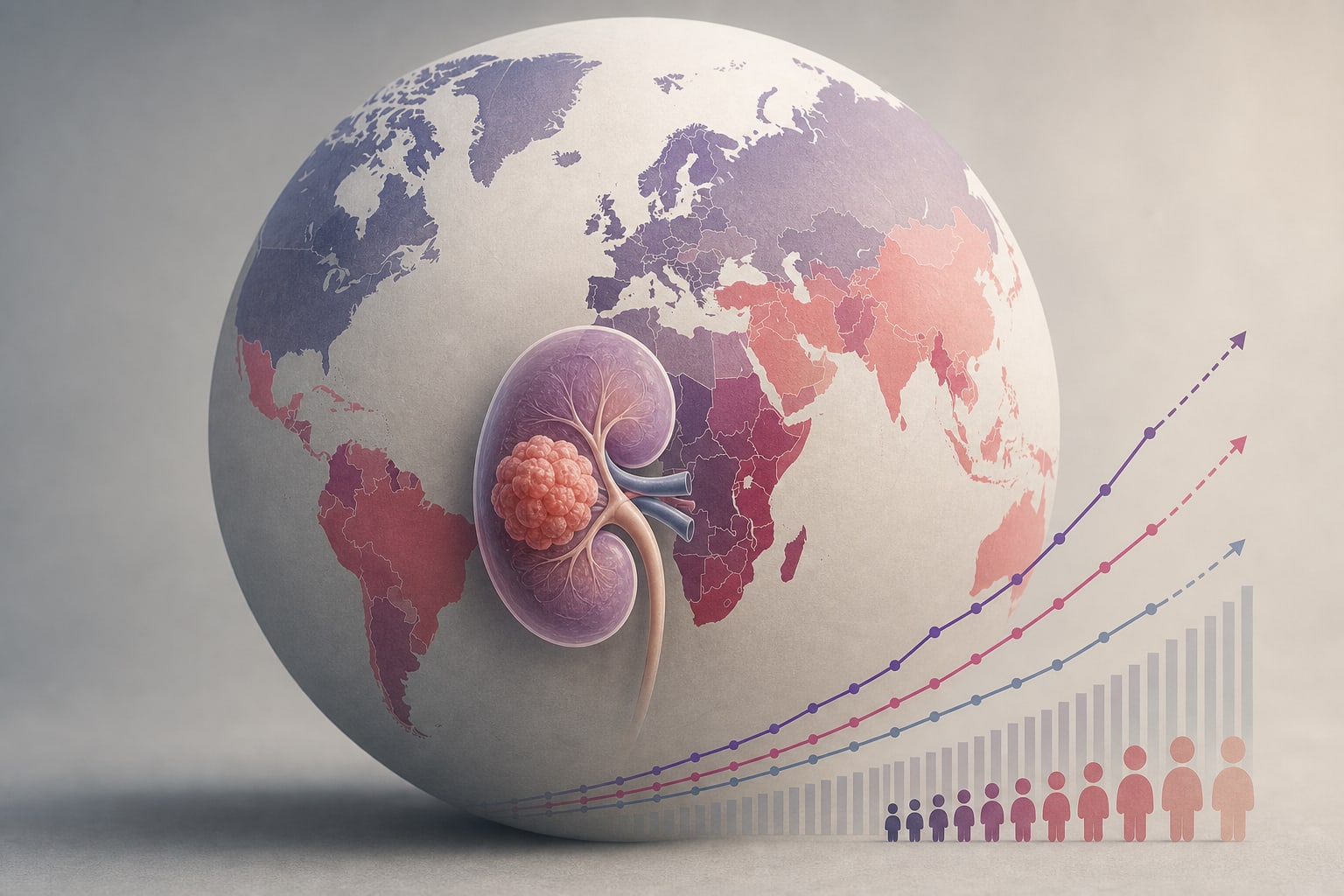
Worldwide Impact and Trends in Pediatric Kidney Cancer from 1990 to 2021
Overview
This study analyzes global trends and inequalities in childhood kidney cancer (KC) from 1990 to 2021, revealing a decline in incidence and mortality rates. Disparities in disease burden persist, particularly in lower socio-demographic index (SDI) countries.
Background
Childhood kidney cancer is the third most prevalent pediatric solid malignancy, accounting for a notable percentage of pediatric cancers globally. Understanding its epidemiological patterns is important for addressing health inequities and improving management strategies.
Data Highlights
Year
Incident Cases
Deaths
DALYs
ASIR
ASMR
ASDR
2021
9,576
3,063
268,049
0.48
0.15
13.32
Key Findings
In 2021, there were 9,576 incident cases and 3,063 deaths from childhood KC globally.
The age-standardized incidence rate (ASIR) of childhood KC decreased by 4.87% per year from 2018 to 2021.
Mortality rates (ASMR) and disability-adjusted life years (ASDR) decreased by 5.12% and 5.23% per year, respectively, from 2019 to 2021.
The burden of childhood KC is concentrated among children aged 0–4 years, with higher incidence and mortality rates compared to older age groups.
Health inequities are evident, with a concentration of mortality and DALYs in lower-SDI countries.
Future projections indicate declines in incidence and mortality for both sexes over the next 15 years.
Clinical Implications
Understanding the epidemiological trends can inform healthcare policies and resource allocation for better management of pediatric kidney cancer.
Conclusion
While the overall burden of childhood KC has decreased, persistent health inequities exist.