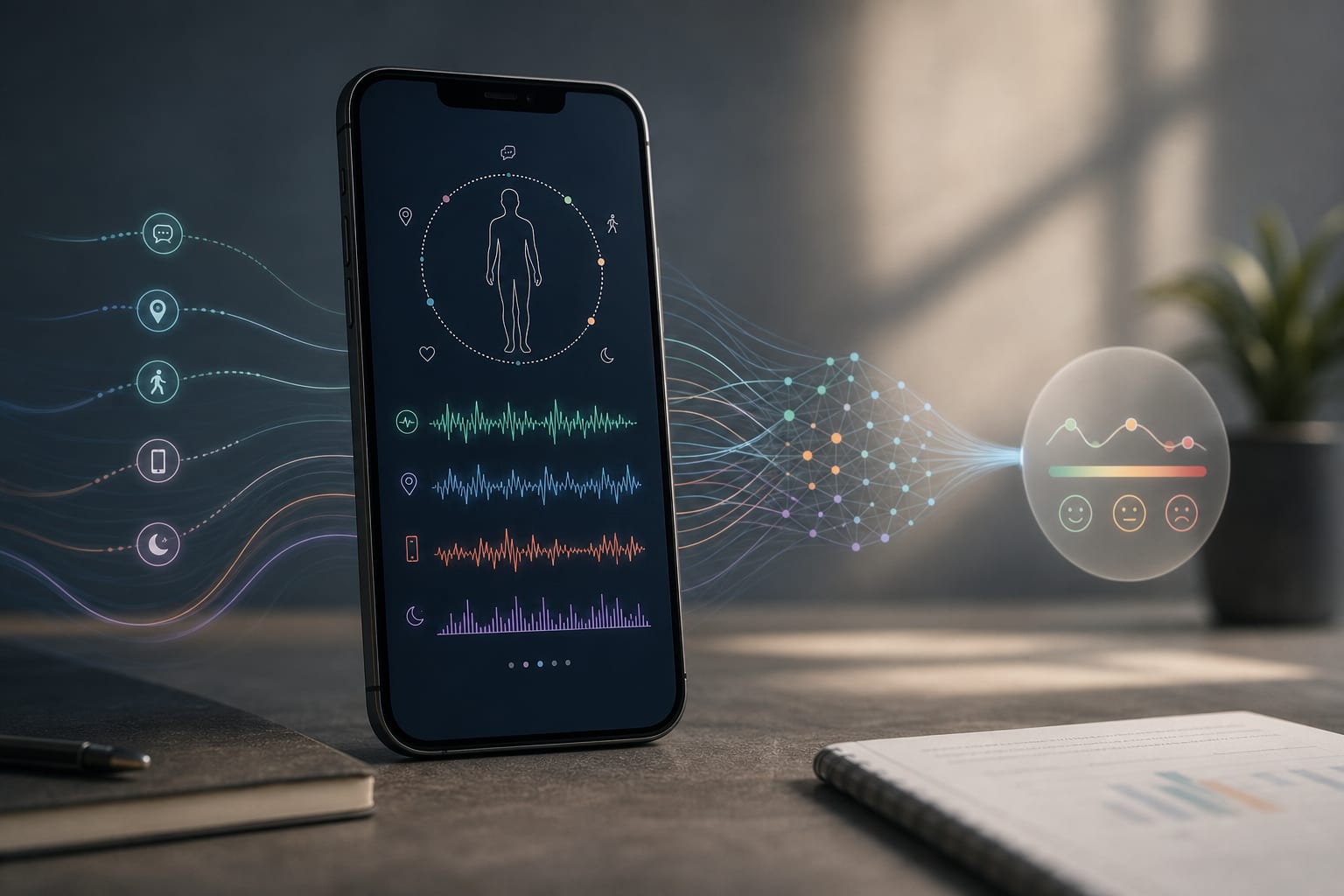
Clinical Report: Real-Time Monitoring of Mood and Stress in Young Adults
Overview
This study investigates the use of digital phenotyping to monitor mood and stress in emerging adults over a one-year period. It compares various machine learning models to predict daily affect and stress based on smartphone sensor data, revealing that personalized models outperform general models in predictive accuracy.
Background
Depression is prevalent among emerging adults, with a significant burden on mental health resources. Traditional monitoring methods often rely on retrospective self-reports, which can be biased and infrequent. Digital phenotyping offers a promising alternative for real-time monitoring of depressive symptoms, potentially facilitating timely interventions.
Data Highlights
No numerical data available in the source material.
Key Findings
Digital phenotyping can effectively track behaviors and predict mood and stress in emerging adults.
Three machine learning models were compared: Group General, Group Personalized, and Within-Person Personalized.
Group Personalized model provided the best balance of accuracy and stability, but was influenced heavily by individual differences.
Within-Person Personalized model revealed individual-specific behavioral patterns but had limited reliability.
Findings highlight the need for further research to refine personalized and hybrid modeling strategies.
Clinical Implications
The study underscores the potential of digital phenotyping as a tool for real-time monitoring of mood and stress, which can enhance early intervention strategies. Clinicians should consider integrating personalized modeling approaches to better understand individual patient behaviors and needs.
Conclusion
The findings demonstrate the complementary strengths of different machine learning models in predicting affect and stress. Future research should focus on optimizing these models for practical applications in mental health monitoring.
In a target-trial emulation of more than 600,000 veterans, GLP-1 RA initiators saw fewer new substance use disorders—and patients with existing SUDs had fewer overdoses, hospitalizations, and deaths.