Clinical and pathological characteristics, diagnosis, and surgical treatment of uterine angioleiomyoma: a retrospective cohort study - Report - MDSpire
Advertisement
Clinical and pathological characteristics, diagnosis, and surgical treatment of uterine angioleiomyoma: a retrospective cohort study
Clinical Features, Diagnostic Approaches, and Surgical Interventions for Uterine Angioleiomyoma
Overview
This study analyzes the clinical characteristics and surgical management of uterine angioleiomyoma (ALM) based on a retrospective cohort of 20 patients treated between August 2015 and August 2023. It highlights the challenges in preoperative diagnosis, intraoperative bleeding risks, and recurrence rates following surgical intervention.
Background
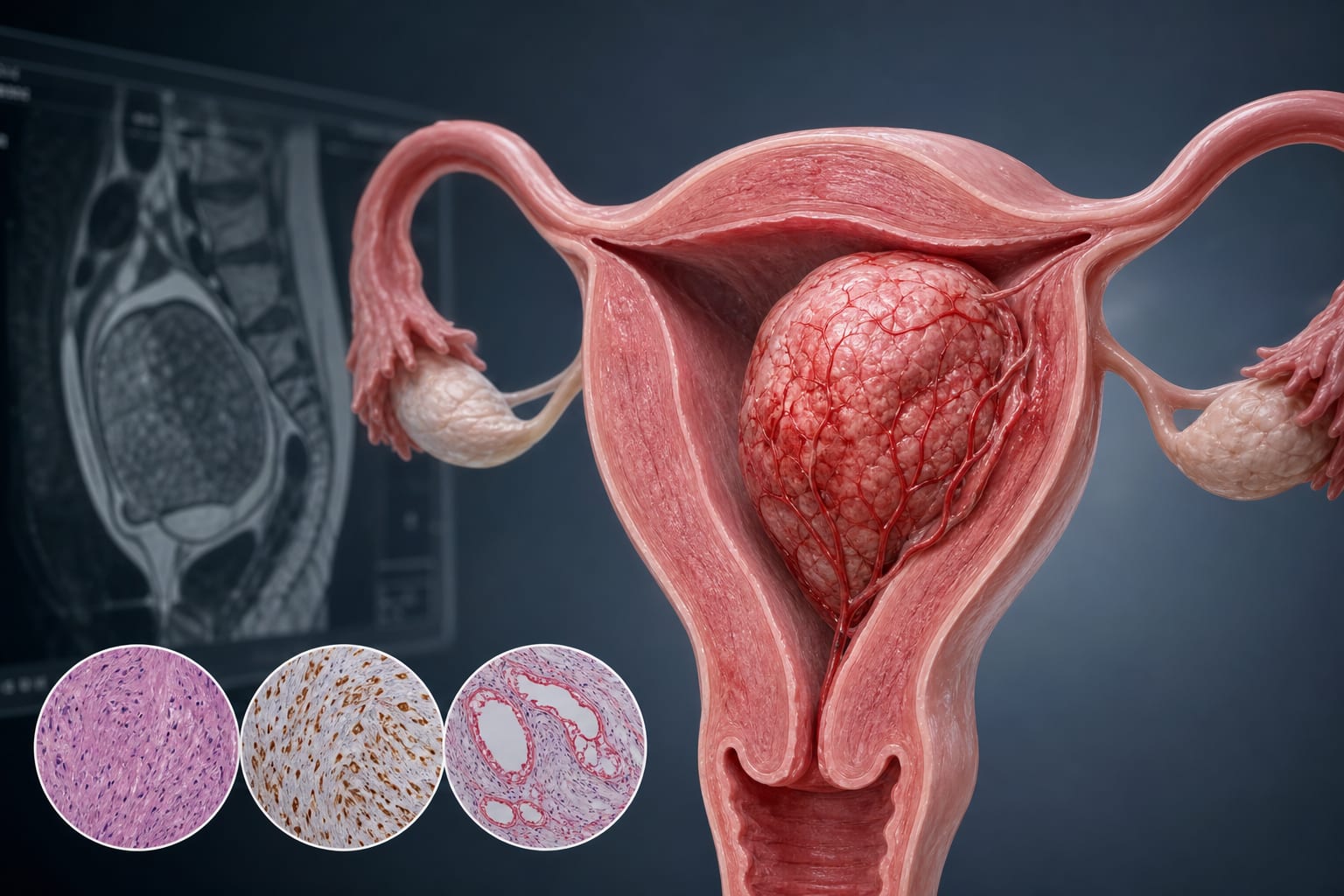
Uterine angioleiomyoma is a rare benign tumor, accounting for approximately 0.5%–1.0% of all uterine leiomyomas, complicating clinical management due to its vascular nature and diagnostic challenges. It often mimics typical leiomyomas, leading to misdiagnosis. Understanding its clinical features and effective surgical strategies is crucial for improving patient outcomes.
Data Highlights
Procedure
Intraoperative Blood Loss (mL)
Number of Patients
Hysteroscopy
15
10
Open Surgery
300
5
Laparoscopy
17
5
Key Findings
Only one case was preoperatively suspected as ALM based on ultrasound.
The median intraoperative blood loss varied significantly by surgical approach, with open surgery resulting in the highest loss.
Pathological analysis revealed 14 cases of common type ALM, 3 cases of degenerative type, and 3 cases of cellular type.
During follow-up, one case of cellular type ALM recurred, and two patients achieved spontaneous pregnancy, highlighting the need for careful monitoring.
A standardized diagnostic workflow is recommended, including transvaginal ultrasound and MRI.
Clinical Implications
Surgeons should be prepared for significant intraoperative bleeding when operating on ALM due to its vascularity. A tailored surgical approach based on tumor characteristics and patient fertility considerations, such as using hemostatic techniques, is essential for optimal outcomes.
Conclusion
The study underscores the need for improved preoperative diagnostic strategies for uterine angioleiomyoma and highlights the importance of individualized surgical management to minimize complications and recurrence.