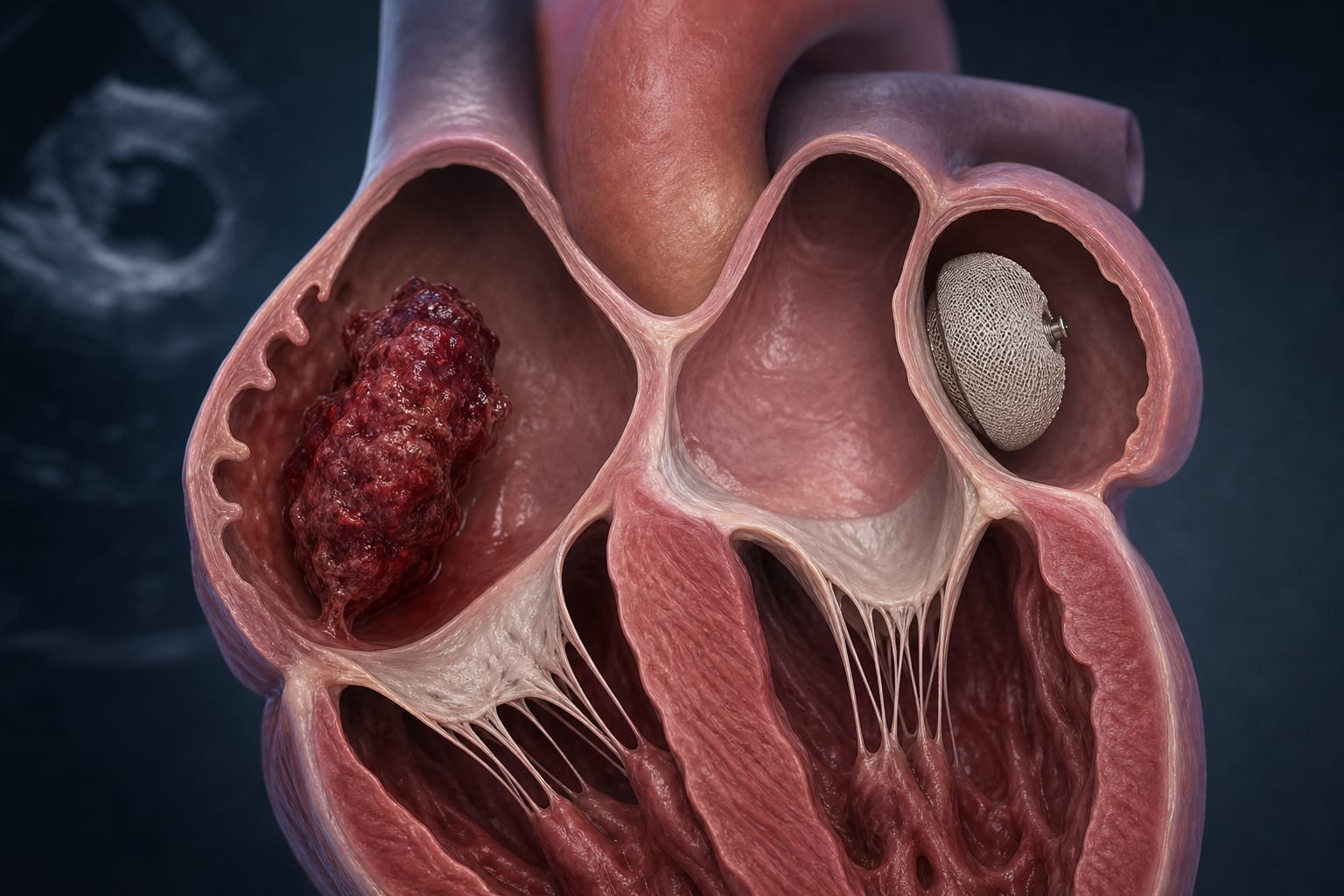
Thrombosis of the Right Atrial Appendage Following LAAO: A Case Study
Overview
This case report details the development of right atrial appendage (RAA) thrombosis in a 72-year-old man with atrial fibrillation after percutaneous left atrial appendage occlusion (LAAO). The patient was successfully treated with rivaroxaban, highlighting the need for vigilance regarding thrombus formation in the right atrium post-LAAO.
Background
Left atrial appendage occlusion (LAAO) is a recognized method for stroke prevention in patients with atrial fibrillation (AF) who cannot use long-term anticoagulation. While LAAO effectively reduces the risk of left-sided thromboembolic events, it does not eliminate the risk of thrombus formation in other cardiac chambers, particularly the right atrial appendage (RAA). Understanding the potential for RAA thrombosis is crucial for managing patients post-LAAO, especially those with additional risk factors.
Data Highlights
No numerical data or trial data presented in the article.
Key Findings
RAA thrombosis can occur in patients with AF following LAAO, particularly in those with heart failure and enlarged cardiac chambers.
The patient in this case study developed RAA thrombosis one year after LAAO with an Amplatzer Cardiac Plug.
Transthoracic echocardiography and cardiac CT confirmed the presence of a mobile thrombus in the RAA.
Anticoagulation with rivaroxaban led to the complete resolution of the thrombus within two weeks.
Clinicians should monitor for right-sided intracardiac thrombi in patients post-LAAO, even after successful procedures.
Clinical Implications
Healthcare professionals should remain alert to the risk of RAA thrombosis in patients with AF who have undergone LAAO, particularly those with heart failure. The decision to discontinue anticoagulation after LAAO must be individualized based on the patient's risk factors and clinical status.
Conclusion
This case underscores the importance of ongoing monitoring for thrombus formation in the right atrium following LAAO. Vigilance in anticoagulation management is essential to mitigate the risk of thromboembolic events.