Atrial volumetrics and recurrence after catheter ablation for atrial fibrillation - Report - MDSpire

Atrial volumetrics and recurrence after catheter ablation for atrial fibrillation

  • By

  • Hyunho Ryu

  • Soonil Kwon

  • Seokmoon Han

  • Jae-Hyun Kim

  • Hyo-Jeong Ahn

  • So-Ryoung Lee

  • Seil Oh

  • Eue-Keun Choi

  • June 22, 2026

  • 0 min

Share

Clinical Report: Atrial Volume Measurements and Their Impact on AF Recurrence

Overview

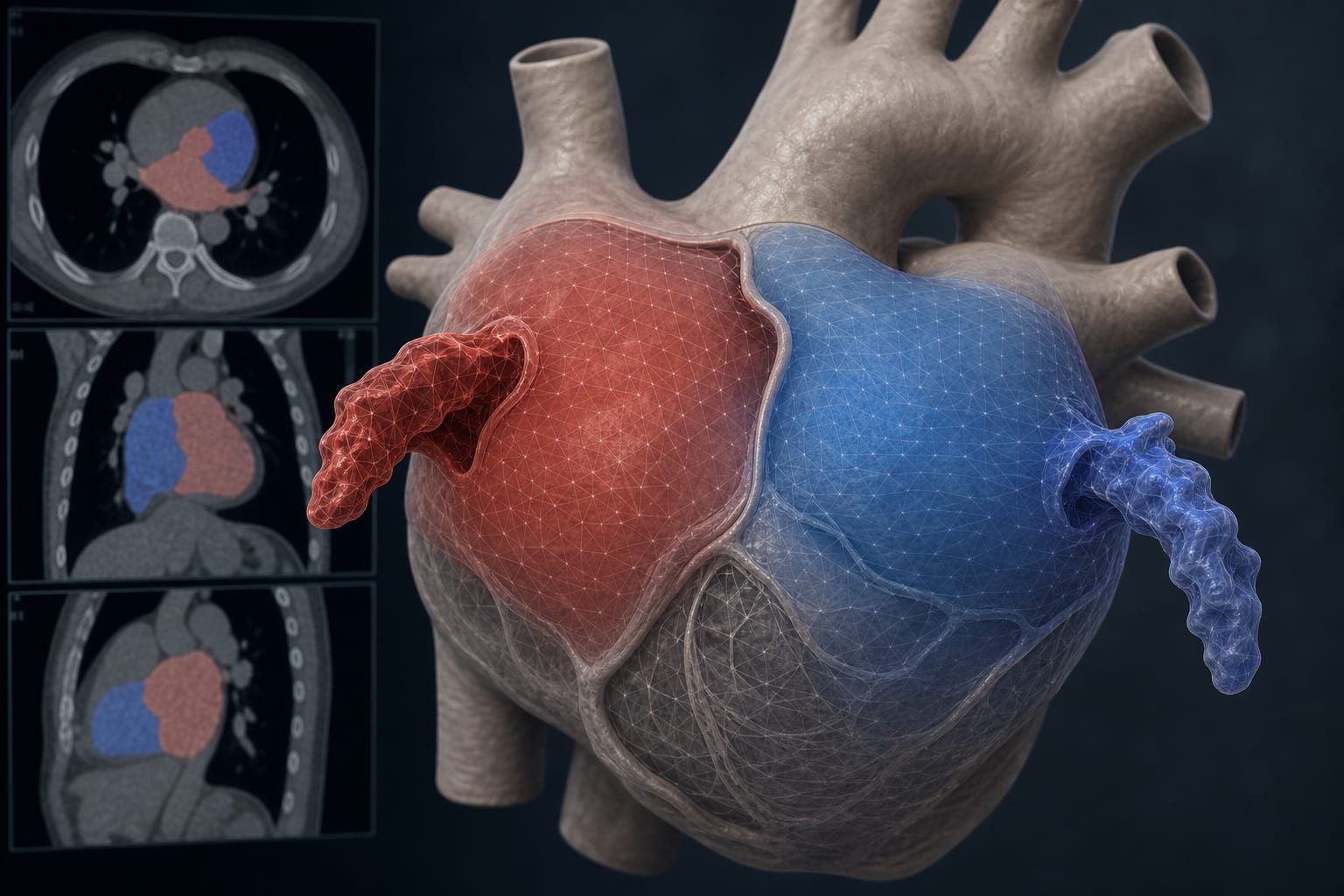
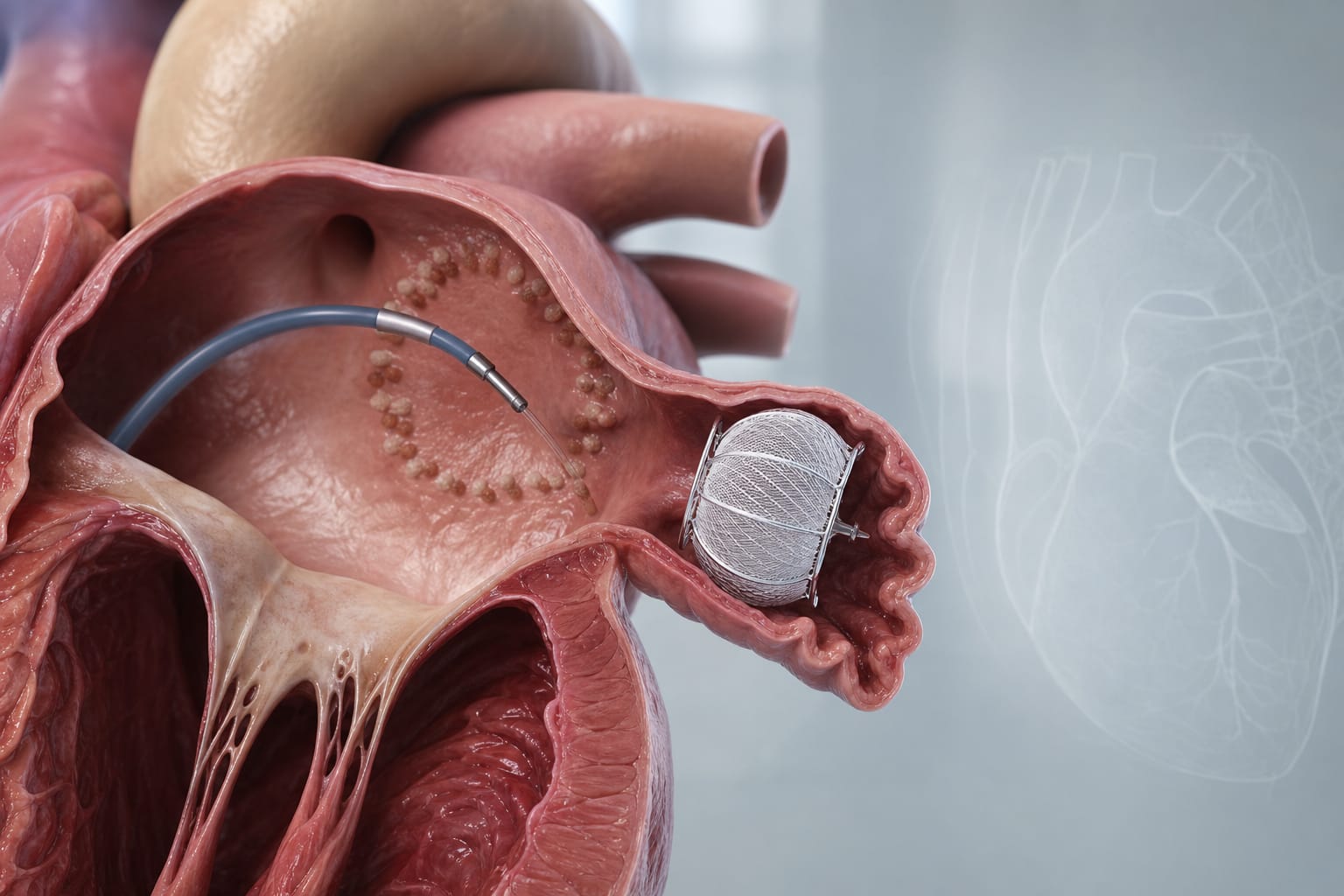
This study investigates the association between various atrial volumetrics and the recurrence of atrial fibrillation (AF) within 12 months following catheter ablation. Key findings indicate that left atrial appendage volume and right atrial body volume are associated with AF recurrence post-ablation.

Background

Atrial fibrillation (AF) is the most prevalent cardiac arrhythmia, significantly increasing the risk of mortality and morbidity. Despite advancements in catheter ablation techniques, recurrence rates remain high, necessitating further exploration of predictive factors.

Data Highlights

Atrial Volume MetricOptimal Cutoff (mL)Adjusted Hazard Ratio (aHR)P-value
Total LA≥129.1
LA Body≥112.0
LAA≥15.31.970.038
Total RA≥123.0
RA Body≥82.12.390.042
RAA≥13.2

Key Findings

  • Among 199 patients, 22.6% experienced AF recurrence within 12 months post-ablation.
  • All atrial volumetrics were significantly higher in the recurrence group compared to the non-recurrence group.
  • LAA volume ≥15.3 mL was associated with an aHR of 1.97 for recurrence.
  • RA body volume ≥82.1 mL was associated with an aHR of 2.39 for recurrence.
  • Most atrial volumetrics were significantly associated with 12-month AA recurrence after AFCA.

Clinical Implications

The findings indicate that measuring specific atrial volumes, particularly LAA and RA body volumes, may help identify patients at higher risk for AF recurrence post-ablation.

Conclusion

The study highlights the association of various atrial volumetrics with AF recurrence after catheter ablation, with specific volumes linked to recurrence.
Related Resources & Content

  1. Clinical Research in Cardiology, 2020 -- Post-Ablation Sinus Heart Rate and Long-Term Recurrence Risks in Patients with Atrial Fibrillation
  2. Clinical Research in Cardiology, 2010 -- Frequency and Determinants of Atrial Fibrillation After Transcatheter Interatrial Septal Closure with Modern Devices
  3. Frontiers in Cardiovascular Medicine, 2026 -- Atrial Fibrillation Type-Specific Prediction of Recurrence After Catheter Ablation: The Pivotal Role of Right Atrial Remodeling Revealed by Explainable Machine Learning
  4. Clinical Research in Cardiology, 2024 -- Link Between Atrial Mechanical Dispersion and Recurrence of Atrial Fibrillation After Catheter Ablation: Findings from the ASTRA-AF Pilot Study
  5. 2024 EHRA/HRS/APHRS/LAHRS Expert Consensus Statement on Catheter and Surgical Ablation of Atrial Fibrillation
  6. Association between left atrial appendage volume and atrial fibrillation recurrence after catheter ablation: a systematic review and meta-analysis - PubMed
  7. Atrial fibrillation type-specific prediction of recurrence after catheter ablation: the pivotal role of right atrial remodeling revealed by explainable machine learning - PubMed
  8. 2024 EHRA/HRS/APHRS/LAHRS Expert Consensus Statement on Catheter and Surgical Ablation of Atrial Fibrillation
  9. Association between left atrial appendage volume and atrial fibrillation recurrence after catheter ablation: a systematic review and meta-analysis - PubMed
  10. Atrial fibrillation type-specific prediction of recurrence after catheter ablation: the pivotal role of right atrial remodeling revealed by explainable machine learning - PubMed

Original Source(s)

Related Content