Clinical Report: Stratification of Inflammatory Activity Enhances Liver Stiffness Measurement Accuracy for Fibrosis Diagnosis in Autoimmune Hepatitis
Overview
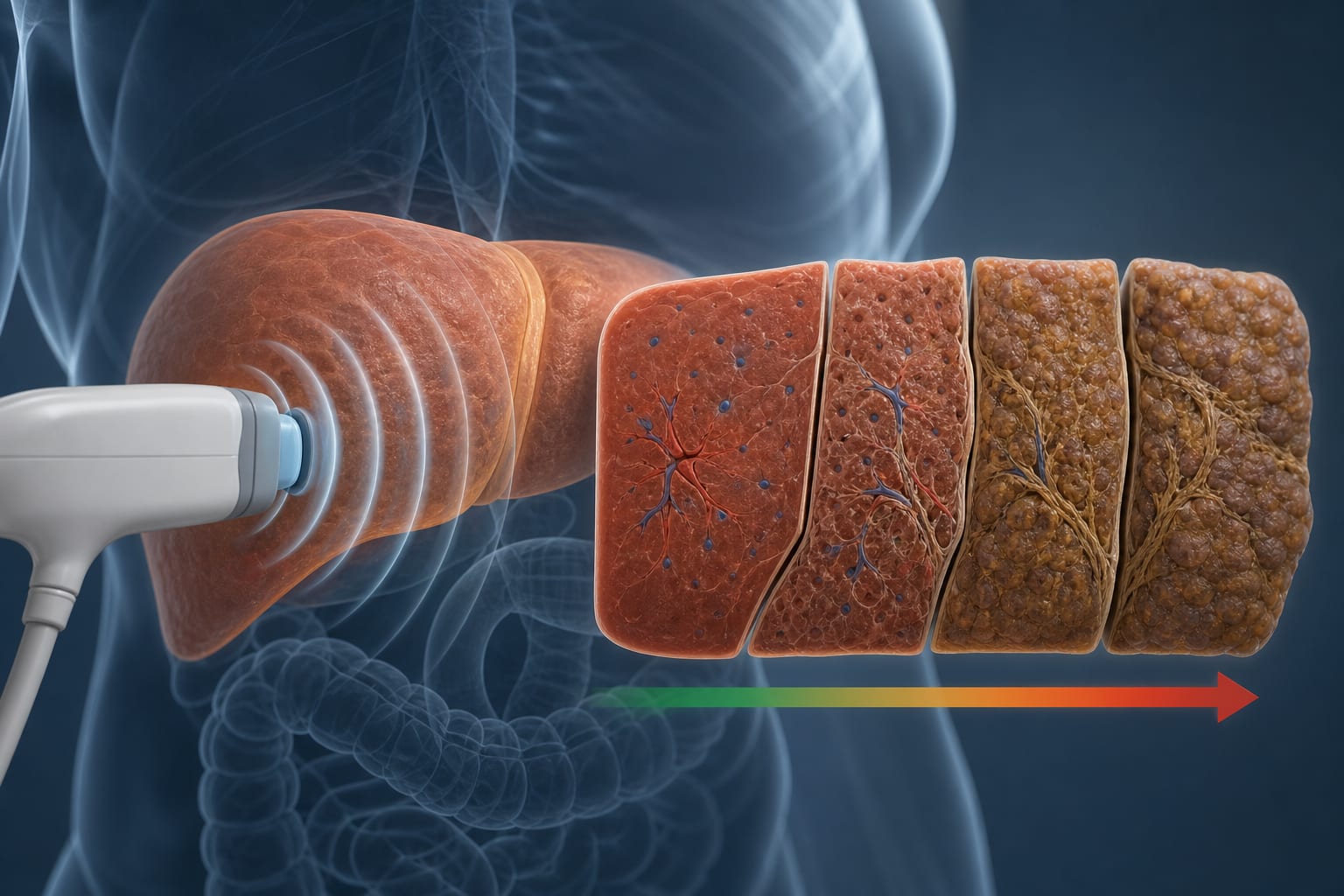
This study investigates the impact of inflammatory activity stratification on the accuracy of liver stiffness measurement (LSM) for diagnosing hepatic fibrosis in autoimmune hepatitis (AIH) patients. The findings indicate that stratification significantly improves diagnostic performance, particularly in patients with severe inflammation.
Background
Autoimmune hepatitis (AIH) is characterized by chronic liver inflammation and can lead to significant fibrosis and cirrhosis if not managed properly. Accurate assessment of hepatic fibrosis is crucial for determining treatment strategies and monitoring disease progression. Traditional diagnostic methods, including liver biopsy, carry risks and may not always provide accurate staging, highlighting the need for improved non-invasive techniques like LSM.
Data Highlights
Group
AUC
Optimal Cutoff (kPa)
Sensitivity (%)
Specificity (%)
Overall
0.73
8.2
-
-
G1–G2
0.85
7.8
-
-
G3–G4
0.69
9.1
55.0
88.5
G3–G4 (corrected)
0.85
-
86.7
69.2
Key Findings
The AUC for diagnosing S≥2 fibrosis was 0.73 in the overall cohort.
Stratification of inflammatory activity improved AUC to 0.85 in the G1–G2 group.
The optimal cutoff for the G1–G2 group was 7.8 kPa, while for the G3–G4 group it was 9.1 kPa.
After correction for inflammation, sensitivity increased from 55.0% to 86.7% in the G3–G4 group.
Specificity decreased from 88.5% to 69.2% after correction in the G3–G4 group.
Clinical Implications
The findings suggest that incorporating inflammatory activity stratification into LSM can enhance diagnostic accuracy for fibrosis in AIH patients. Clinicians should consider this approach to avoid misclassification of fibrosis stages, particularly in patients with severe inflammation.
Conclusion
Stratifying inflammatory activity significantly improves the diagnostic performance of LSM for fibrosis assessment in AIH patients. Further validation is necessary before clinical implementation of this correction model.