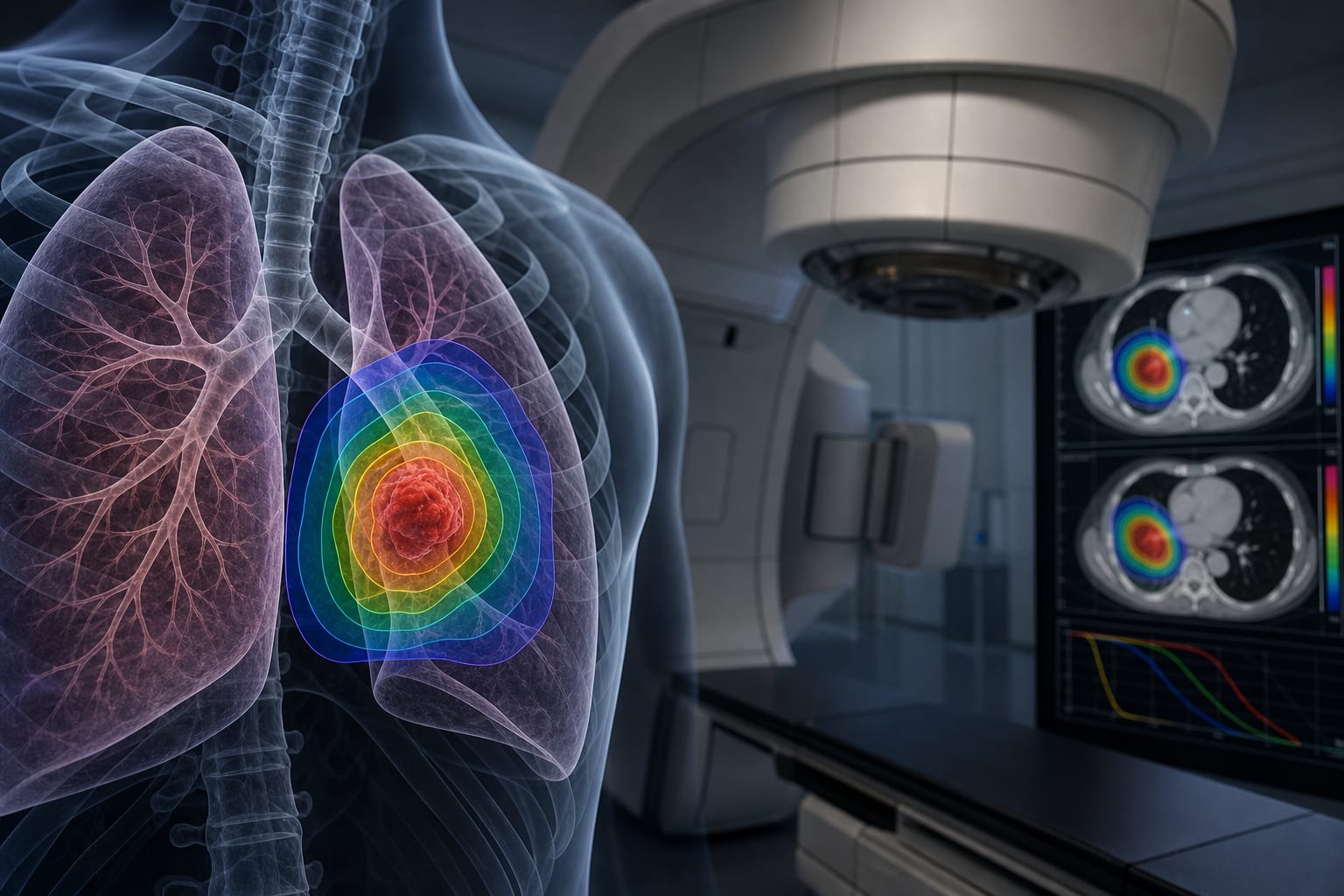
Dosimetric and clinical outcomes of stereotactic body radiotherapy for primary lung cancer: isocenter-based vs. volume-based prescription - Report - MDSpire
Advertisement
Dosimetric and clinical outcomes of stereotactic body radiotherapy for primary lung cancer: isocenter-based vs. volume-based prescription
Comparative Analysis of Dosimetric and Clinical Results in SBRT for Lung Cancer
Overview
This study compares isocenter-based and volume-based dose prescriptions in SBRT for early-stage NSCLC. Volume-based prescriptions demonstrated superior dosimetric outcomes and improved clinical efficacy without increasing pulmonary toxicity.
Background
Stereotactic body radiotherapy (SBRT) is the standard treatment for medically inoperable early-stage non-small cell lung cancer (NSCLC). The choice of dose prescription method is crucial, as it can significantly impact treatment outcomes and toxicity profiles. Understanding the differences between isocenter-based and volume-based prescriptions is essential for optimizing patient care.
Data Highlights
Outcome
Isocenter-Based
Volume-Based
P-Value
3-Year Overall Survival
64.0%
95.0%
0.01
Local Control Rate
72.0%
93.0%
0.025
Grade 2-5 Pneumonitis Incidence
6.5%
7.1%
0.617
Key Findings
Volume-based prescriptions improved planning target volume (PTV) coverage to 95%.
Higher minimum, mean, and maximum doses were achieved with volume-based prescriptions (p < 0.01).
Volume-based planning reduced lung radiation exposure, indicated by lower mean lung doses (p < 0.01).
Three-year overall survival was significantly higher in the volume-based group (95.0% vs. 64.0%, p = 0.01).
Local control rates were also superior in the volume-based group (93.0% vs. 72.0%, p = 0.025).
Incidence of Grade 2–5 radiation pneumonitis was comparable between both groups (p = 0.617).
Clinical Implications
The findings support the adoption of volume-based dose prescriptions in SBRT for early-stage NSCLC, as they enhance both dosimetric quality and clinical outcomes. Clinicians should consider this approach to optimize treatment efficacy while minimizing toxicity.
Conclusion
Volume-based SBRT prescriptions represent a significant advancement in the treatment of early-stage NSCLC, offering improved outcomes without increasing the risk of radiation pneumonitis. This approach should be prioritized in clinical practice.