Efficacy, long-term survival and safety of different PD-1 inhibitors plus chemotherapy in recurrent or metastatic nasopharyngeal carcinoma: a systematic review and meta-analysis - Report - MDSpire
Advertisement
Efficacy, long-term survival and safety of different PD-1 inhibitors plus chemotherapy in recurrent or metastatic nasopharyngeal carcinoma: a systematic review and meta-analysis
Clinical Report: Efficacy and Safety of PD-1 Inhibitors in RM-NPC
Overview
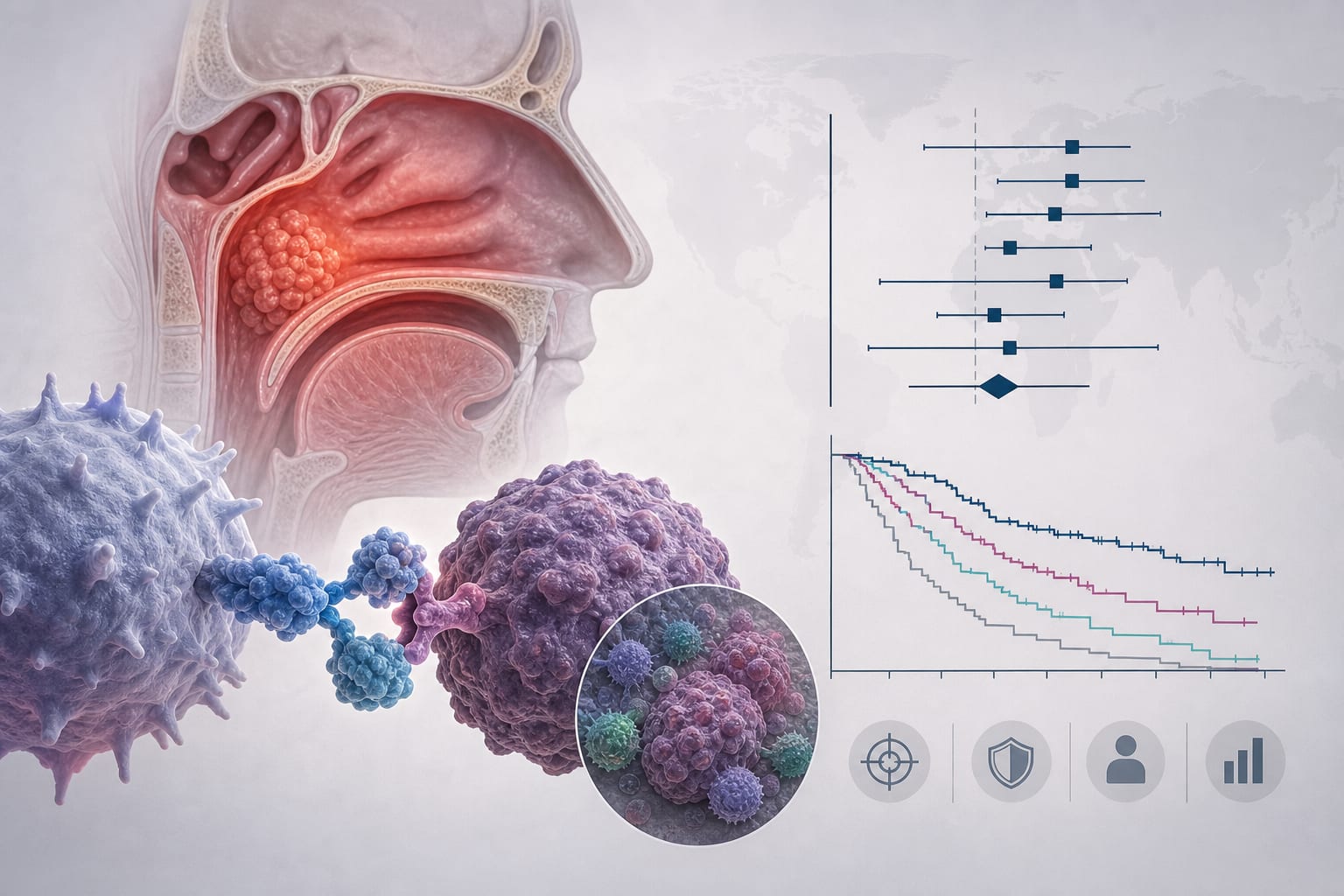
This systematic review and meta-analysis evaluated the efficacy, long-term survival, and safety of various PD-1 inhibitors combined with chemotherapy in recurrent or metastatic nasopharyngeal carcinoma (RM-NPC).
Background
Recurrent or metastatic nasopharyngeal carcinoma (RM-NPC) presents a significant clinical challenge due to its poor prognosis and limited treatment options. The introduction of PD-1 inhibitors has changed treatment approaches, yet comparative efficacy and safety data among different PD-1 inhibitors remain insufficient.
Data Highlights
Outcome
Pooled Result
Objective Response Rate (ORR)
64%
Disease Control Rate (DCR)
94%
Median Progression-Free Survival (PFS)
21.4 months (toripalimab)
Median Overall Survival (OS)
45.3 months (tislelizumab)
Incidence of Grade ≥3 TRAEs
13%
Key Findings
The pooled objective response rate (ORR) was 64% and disease control rate (DCR) was 94% across all regimens.
Toripalimab-based regimens achieved the highest ORR and longest median PFS of 21.4 months.
Tislelizumab plus chemotherapy yielded the most favorable median OS of 45.3 months.
Camrelizumab plus chemotherapy showed a median OS of 34.5 months.
The pooled incidence of grade ≥3 treatment-related adverse events (TRAEs) was 13%, with comparable safety profiles across all PD-1 inhibitors.
Clinical Implications
The findings suggest that PD-1 inhibitors combined with chemotherapy can provide substantial efficacy and long-term survival benefits in RM-NPC. Clinicians may consider individualizing PD-1 inhibitor selection based on the observed therapeutic effects of toripalimab, tislelizumab, and camrelizumab.
Conclusion
This systematic review and meta-analysis confirm the efficacy and safety of PD-1 inhibitors in RM-NPC, highlighting the importance of agent selection in clinical practice.