Evolution of advanced revascularization strategies for high-risk pulmonary embolism: a physiology-guided single-center experience - Report - MDSpire

Evolution of advanced revascularization strategies for high-risk pulmonary embolism: a physiology-guided single-center experience

  • By

  • L. W. Greenspon

  • S. Whealon

  • J. Bonn

  • M. Caroline

  • E. Gnall

  • June 10, 2026

  • 0 min

Share

Clinical Report: Advancements in Revascularization Techniques for High-Risk PE

Overview

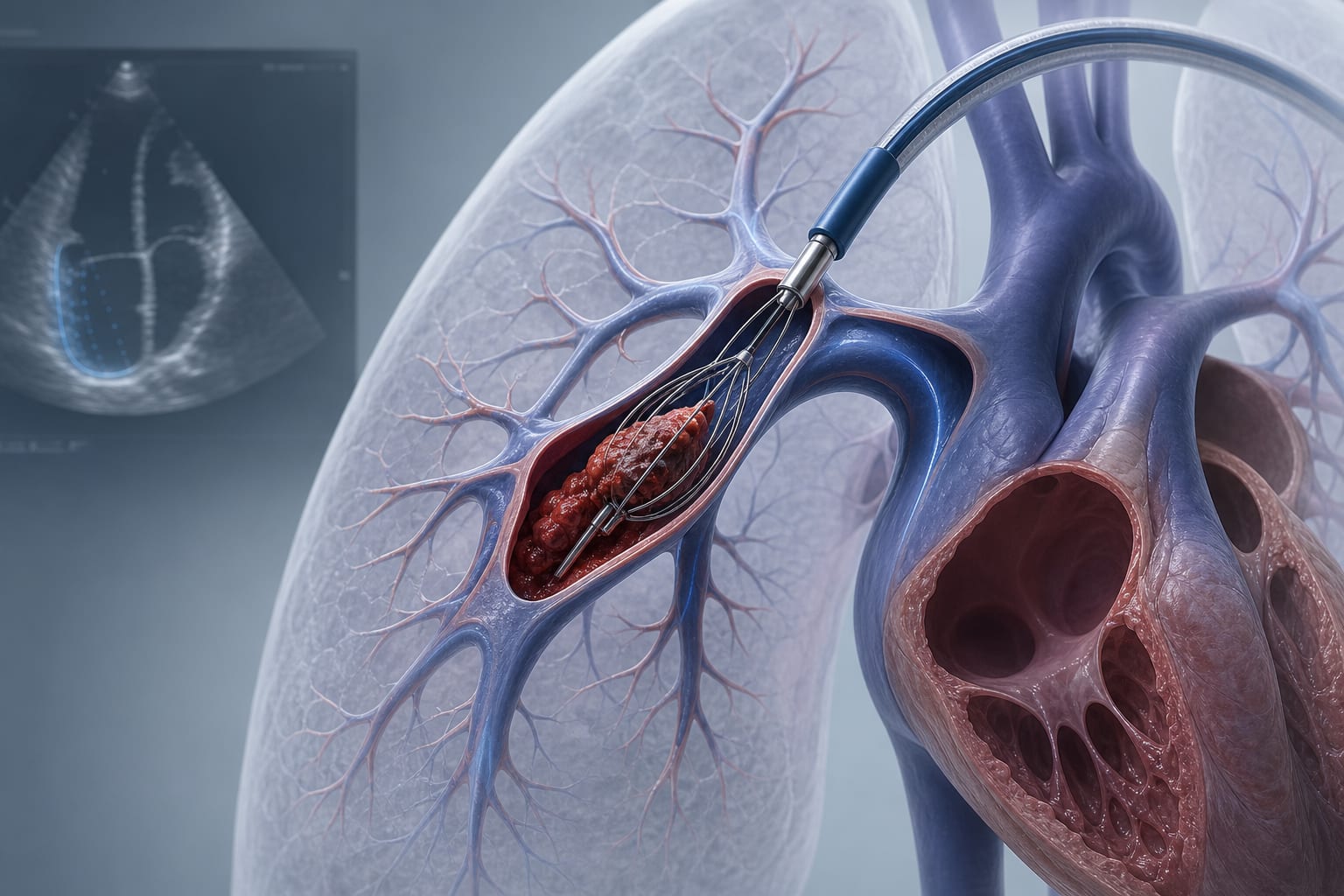
This report details a four-decade experience in managing high-risk pulmonary embolism (PE) through evolving revascularization techniques, emphasizing the importance of physiological assessment and multidisciplinary care. The integration of catheter-directed therapies and mechanical thrombectomy has improved outcomes for patients with high-risk PE.

Background

High-risk pulmonary embolism is a significant cause of morbidity and mortality, primarily due to acute right ventricular failure. The management of PE has evolved with advancements in therapeutic options, yet optimal integration of these therapies remains a challenge. Understanding the physiological implications of PE is crucial for timely intervention and improved patient outcomes.

Data Highlights

No specific numerical data provided in the article.

Key Findings

  • Transition from systemic thrombolysis to catheter-directed therapies and mechanical thrombectomy has been observed over four decades.
  • Physiological assessment of right ventricular function and pulmonary artery pressures is critical in managing high-risk PE.
  • Development of a pulmonary embolism response team (PERT) has enhanced early recognition and coordination of care.
  • Emerging evidence supports the selective use of reperfusion therapies based on clinical experience and patient-specific factors.
  • Integration of artificial intelligence detection systems has improved the identification of high-risk PE cases.

Clinical Implications

Healthcare professionals should prioritize physiological assessments in patients with high-risk PE to guide treatment decisions. The establishment of multidisciplinary teams can facilitate timely interventions and improve patient outcomes in this critical condition.

Conclusion

The evolution of revascularization techniques for high-risk PE underscores the importance of a tailored, physiologically informed approach to management. Continued advancements in therapy and care coordination are essential for improving patient survival and quality of life.

Related Resources & Content

  1. Intensive Care Medicine, 2025 -- Pulmonary Embolism at High Risk: Importance and Future Directions of Pulmonary Reperfusion Strategies
  2. Intensive Care Medicine, 2025 -- Tailored Approaches for Managing High-Risk Acute Pulmonary Embolism: A Response to the 'Catastrophic' Subgroup Discussion
  3. European Radiology, 2025 -- Revolutionizing Interventional Approaches and Collaborative Management in Acute Pulmonary Embolism
  4. Frontiers in Cardiovascular Medicine, 2026 -- Detected residual venous thrombi and catheter-directed management of intermediate-risk pulmonary thromboembolism
  5. 2019 ESC Guidelines for Acute Pulmonary Embolism - American College of Cardiology
  6. Large-Bore Mechanical Thrombectomy Versus Catheter-Directed Thrombolysis in the Management of Intermediate-Risk Pulmonary Embolism: Primary Results of the PEERLESS Randomized Controlled Trial - PMC
  7. Mechanical Thrombectomy Versus Anticoagulation in Intermediate-Risk Pulmonary Embolism: A Systematic Review and Meta-Analysis - PMC
  8. 2019 ESC Guidelines for Acute Pulmonary Embolism - American College of Cardiology
  9. Large-Bore Mechanical Thrombectomy Versus Catheter-Directed Thrombolysis in the Management of Intermediate-Risk Pulmonary Embolism: Primary Results of the PEERLESS Randomized Controlled Trial - PMC
  10. Mechanical Thrombectomy Versus Anticoagulation in Intermediate-Risk Pulmonary Embolism: A Systematic Review and Meta-Analysis - PMC

Original Source(s)

Related Content