Clinical Report: Phased Management of Chronic Mesh Infections Post-Hernia Surgery
Overview
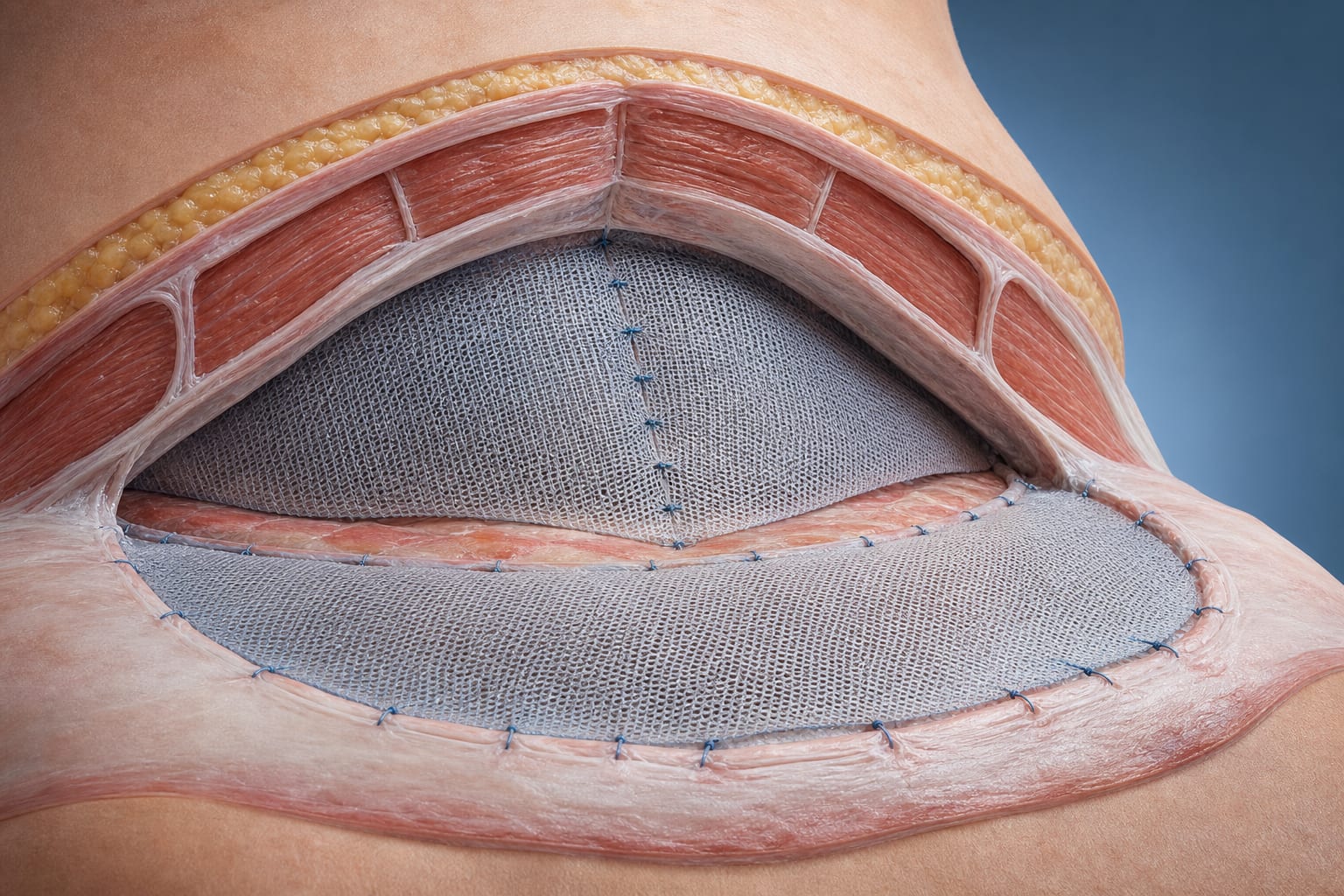
This single-center retrospective study evaluated 64 patients with chronic mesh infections following inguinal or ventral hernia repair. The majority underwent staged mesh explantation with favorable wound healing and low surgical site complications, highlighting the complexity and necessity of specialized care in managing these infections.
Background
Hernia repair commonly utilizes prosthetic mesh to reduce recurrence rates, but mesh implantation carries a risk of postoperative infection. Infection rates vary by hernia type and surgical approach, with ventral hernia repairs showing higher rates than inguinal repairs. Chronic mesh infections can lead to serious complications such as enterocutaneous fistulas and often require complex, multidisciplinary management. Current guidelines for managing infected mesh are limited and inconsistent, underscoring the need for evidence-based treatment protocols.
Data Highlights
Characteristic
Value
Number of patients
64
Mean age (years)
46.5 ± 13.45
Male (%)
64%
Mean BMI
26.7 ± 4.38
BMI > 30 (%)
17.85%
Ventral hernia mesh infections (%)
61%
Inguinal hernia mesh infections (%)
39%
Elective index repair (%)
95.3%
Open repair (%)
81.3%
Polypropylene mesh used (%)
76.5%
Mean time to symptom onset (months)
21.7 ± 36
Pus discharge presenting symptom (%)
87.5%
Sinus discharging pus (%)
71.9%
Gram-positive cultures (%)
26.5%
No organisms isolated (%)
29.7%
Staged surgery approach (%)
98.4%
Complete mesh explantation (%)
65%
Partial mesh explantation (%)
27%
Mean wound healing time (weeks)
6.7 ± 4.34
Key Findings
Chronic mesh infection presented predominantly with pus discharge (87.5%) and sinus formation (71.9%).
Most infections occurred after elective, open, polypropylene mesh repairs for ventral hernias (61%).
The mean time from mesh repair to symptom onset was approximately 22 months, indicating delayed presentation.
Staged surgical management was employed in 98.4% of cases, with 65% undergoing complete mesh explantation.
Wound healing after mesh explantation averaged 6.7 weeks with no reported surgical site complications such as seroma or hematoma.
Microbiological cultures were positive for gram-positive organisms in 26.5% of cases, while nearly 30% had no organisms isolated.
Clinical Implications
Management of chronic mesh infections after hernia repair requires a multidisciplinary approach often involving staged mesh explantation to optimize outcomes. Early recognition of symptoms such as pus discharge and sinus formation is critical. Given the prolonged time to symptom onset and complexity of treatment, referral to specialized centers is advisable for effective management and minimizing complications.
Conclusion
Chronic mesh infections following hernia repair pose significant clinical challenges but can be effectively managed with a staged surgical approach. This study supports the use of complete or partial mesh explantation combined with careful wound management to achieve favorable healing and reduce morbidity.
References
Shubinets et al. 2018 -- Enterocutaneous fistulas in chronic mesh infections
General Hernia Repair Literature 2011-2019 -- Mesh infection rates and management