Comparative study of triple intravenous chemotherapy versus dual chemotherapy combined with hepatic arterial infusion in patients with liver metastases from colorectal cancer - Report - MDSpire
Advertisement
Comparative study of triple intravenous chemotherapy versus dual chemotherapy combined with hepatic arterial infusion in patients with liver metastases from colorectal cancer
Clinical Report: Evaluation of Triplet Intravenous Chemotherapy Versus Dual Chemotherapy
Overview
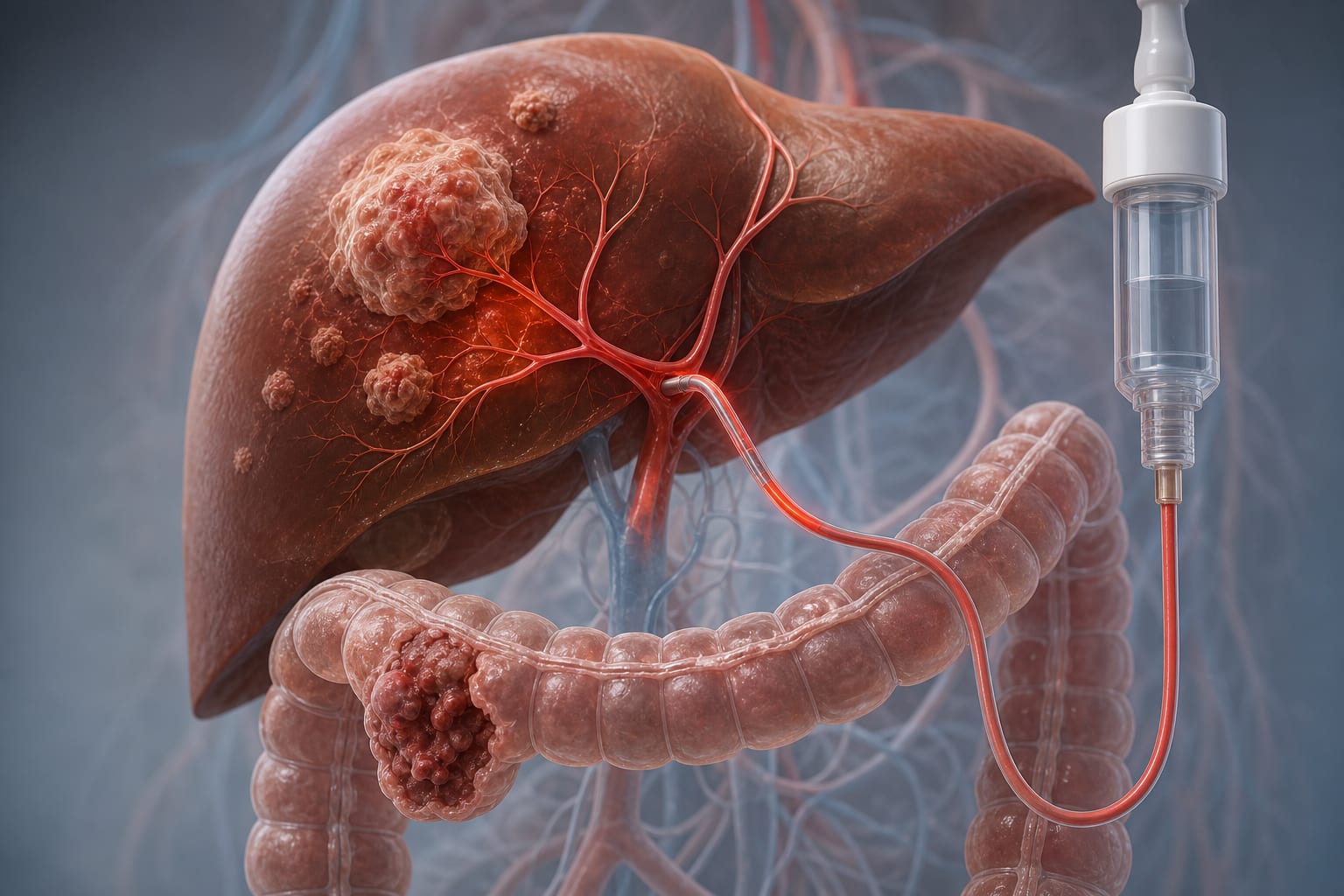
This study compares the efficacy and safety of FOLFOXIRI triplet chemotherapy with FOLFIRI combined with hepatic arterial infusion chemotherapy (HAIC) in patients with unresectable colorectal liver metastases.
Background
Colorectal cancer is a leading cause of cancer-related morbidity and mortality globally, with liver metastases presenting significant treatment challenges. Current systemic chemotherapy regimens often yield limited effectiveness against liver-dominant metastatic disease.
Data Highlights
Outcome
FOLFOXIRI (n=67)
FOLFIRI + HAIC (n=65)
p-value
Objective Response Rate
30/67 (44.8%)
37/65 (56.9%)
0.163
Disease Control Rate
46/67 (68.7%)
58/65 (89.2%)
0.004
Progression-Free Survival (months)
8.2
10.3
0.038
Median Overall Survival (months)
17.9
19.5
0.150
R0 Resection Rate
6/67 (9.0%)
14/65 (21.5%)
0.044
Grade 3/4 Adverse Events
26/67 (38.8%)
20/65 (30.8%)
0.333
Key Findings
The FOLFIRI plus HAIC group had a higher disease control rate compared to the FOLFOXIRI group (89.2% vs. 68.7%, p = 0.004).
Progression-free survival was significantly longer in the FOLFIRI plus HAIC group (10.3 months vs. 8.2 months, p = 0.038).
The R0 resection rate was higher in the FOLFIRI plus HAIC group (21.5% vs. 9.0%, p = 0.044).
Median overall survival was numerically longer in the FOLFIRI plus HAIC group (19.5 months vs. 17.9 months), but not statistically significant (p = 0.150).
Grade 3/4 adverse events were comparable between the two groups, indicating a manageable safety profile.
Clinical Implications
The findings suggest that FOLFIRI combined with HAIC may offer improved disease control and progression-free survival for patients with unresectable colorectal liver metastases. Clinicians should consider these results when evaluating treatment options for this patient population.
Conclusion
Further validation through prospective studies is warranted.