Rare Case report and Literature Review of Peripheral T-Cell Lymphoma Presenting as Massive Gastrointestinal Hemorrhage: An Unusual Etiology Demanding Emergency Surgical Intervention - Report - MDSpire
Advertisement
Rare Case report and Literature Review of Peripheral T-Cell Lymphoma Presenting as Massive Gastrointestinal Hemorrhage: An Unusual Etiology Demanding Emergency Surgical Intervention
Clinical Report: Uncommon Presentation of Peripheral T-Cell Lymphoma
Overview
This report details a rare case of peripheral T-cell lymphoma (PTCL) presenting as severe gastrointestinal bleeding, initially misdiagnosed as ulcers. The patient required urgent surgical intervention after conservative treatments failed, highlighting the critical need for awareness of PTCL's atypical presentations.
Background
Peripheral T-cell lymphoma is a rare and aggressive form of lymphoma that can present with various symptoms, including gastrointestinal bleeding. Early recognition and intervention are crucial, as misdiagnosis can lead to severe complications, including hemorrhagic shock. Understanding the clinical manifestations of PTCL can improve patient outcomes through timely surgical and oncological management.
Data Highlights
Remove HTML tags; consider adding qualitative data or case specifics if available.
Key Findings
The patient presented with recurrent gastrointestinal hemorrhage misidentified as ulcers.
Conservative treatments, including corticosteroids, were ineffective in managing the bleeding.
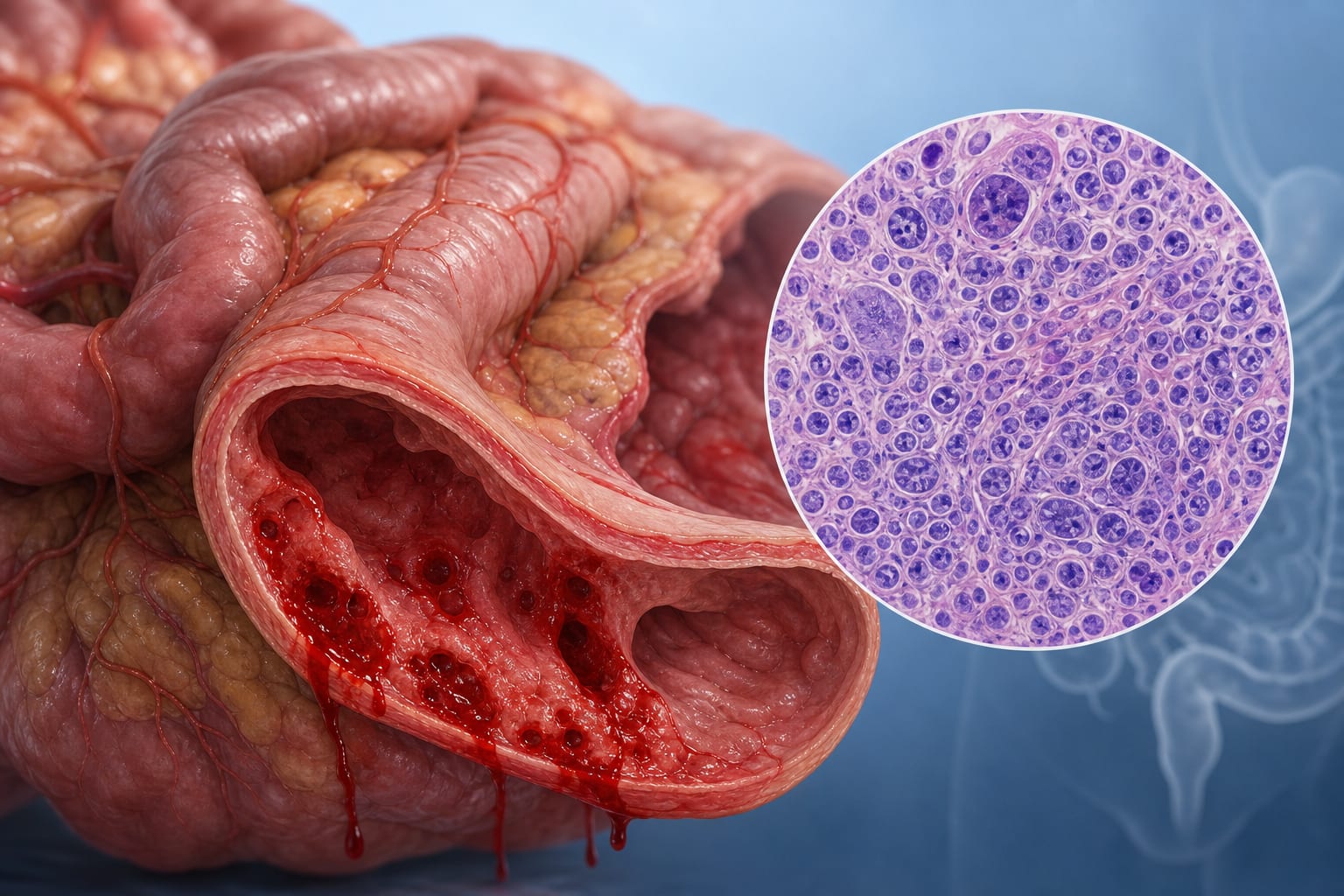
An emergency exploratory laparotomy revealed multiple longitudinal ulcers and active bleeding sites.
Histopathological analysis confirmed the diagnosis of peripheral T-cell lymphoma.
Postoperative management led to significant improvement in gastrointestinal bleeding.
Clinical Implications
Suggest specific diagnostic tests or criteria for PTCL to improve clinical guidance.
Conclusion
Reiterate the importance of differential diagnosis in cases of gastrointestinal bleeding.