Is it time for a systematic and objective assessment of knee laxity? The impact of objective knee laxity after TKA on patient-reported outcomes: a comprehensive review - Report - MDSpire
Advertisement
Is it time for a systematic and objective assessment of knee laxity? The impact of objective knee laxity after TKA on patient-reported outcomes: a comprehensive review
Clinical Report: Evaluating Knee Laxity and Patient-Reported Outcomes After TKA
Overview
This review evaluates the relationship between objective knee laxity measurements and patient-reported outcomes following total knee arthroplasty (TKA).
Background
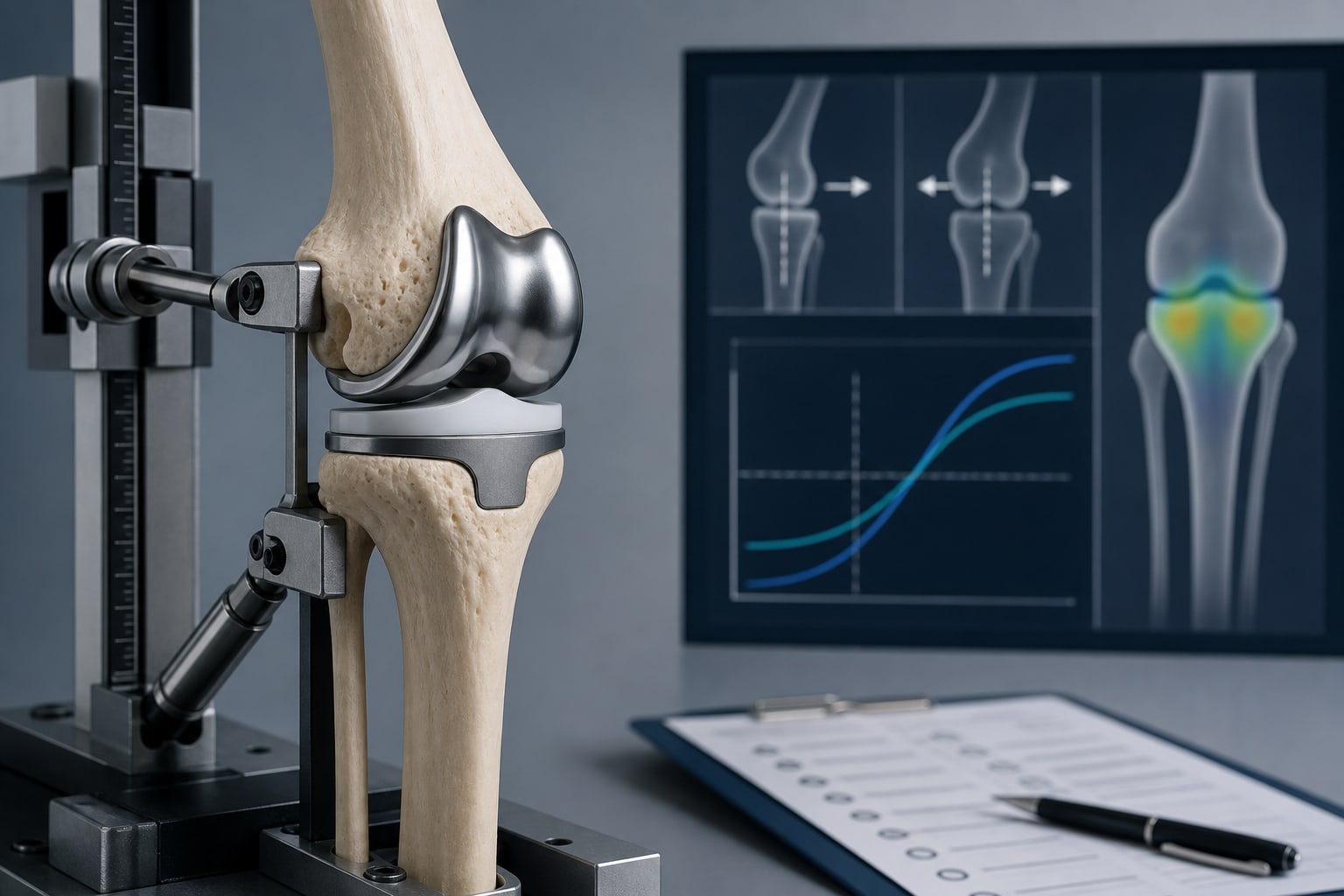
Total knee arthroplasty (TKA) is a common procedure for end-stage knee osteoarthritis, yet many patients report dissatisfaction postoperatively. Knee stability, influenced by the laxity between the tibia and femur, is critical for outcomes. Understanding the link between knee laxity and patient-reported outcomes is explored.
Data Highlights
No numerical or trial data was provided in the source material.
Key Findings
Knee stability is crucial for postoperative outcomes after TKA.
Excessive knee laxity is correlated with inferior patient-reported outcome measures (PROMs).
Surgeons currently assess knee laxity manually, which lacks accuracy and reproducibility.
Objective measurement tools for knee laxity may help personalize surgical approaches.
There is no consensus on the ideal ranges for knee laxity in the coronal and sagittal planes.
Clinical Implications
Surgeons should consider the importance of knee stability and objective laxity measurements when performing TKA.
Conclusion
The review summarizes the relationship between objective assessment of knee laxity and outcomes following TKA.