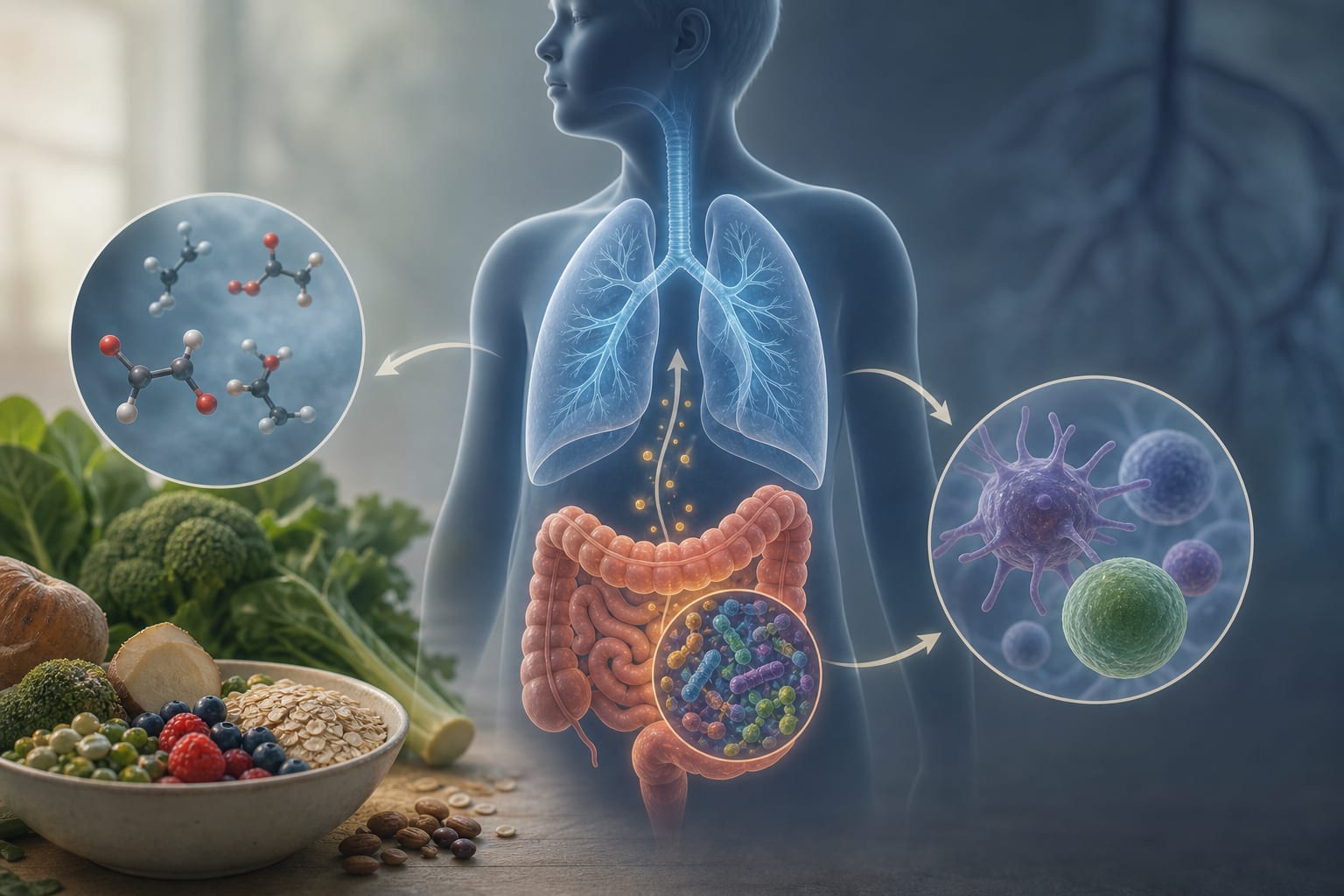
Influence of High-Fiber Diets on the Gut–Lung Axis and Inflammation in Asthma
Overview
High-fiber diets significantly reshape gut microbiota and enhance short-chain fatty acid (SCFA) production, which may alleviate airway inflammation in asthma.
Background
The gut microbiota plays a crucial role in regulating host immunity and systemic inflammation, with dietary fiber emerging as a key factor influencing microbial composition and metabolic output. Understanding the gut-lung axis is essential as dysregulation in this communication network has been implicated in asthma pathogenesis.
Data Highlights
No specific numerical data provided in the article.
Key Findings
High-fiber diets enhance the production of SCFAs, which mediate communication along the gut-lung axis.
SCFAs promote regulatory T-cell expansion and restore Th1/Th2 balance.
Different types of dietary fibers have distinct effects on gut microbiota composition and metabolite production.
Inulin increases the abundance of beneficial bacteria such as Bifidobacterium and Lactobacillus.
Further investigation is needed regarding the efficacy of high-fiber diets in improving asthma symptoms.
Clinical Implications
Healthcare professionals should consider the role of dietary interventions, particularly high-fiber diets, in managing asthma.
Conclusion
High-fiber diets may influence asthma pathogenesis through the gut-lung axis, but more research is needed.
A systematic review and meta-analysis found small, consistent reductions in craving across substance use disorders, while evidence for withdrawal symptoms and substance dependence remained limited.