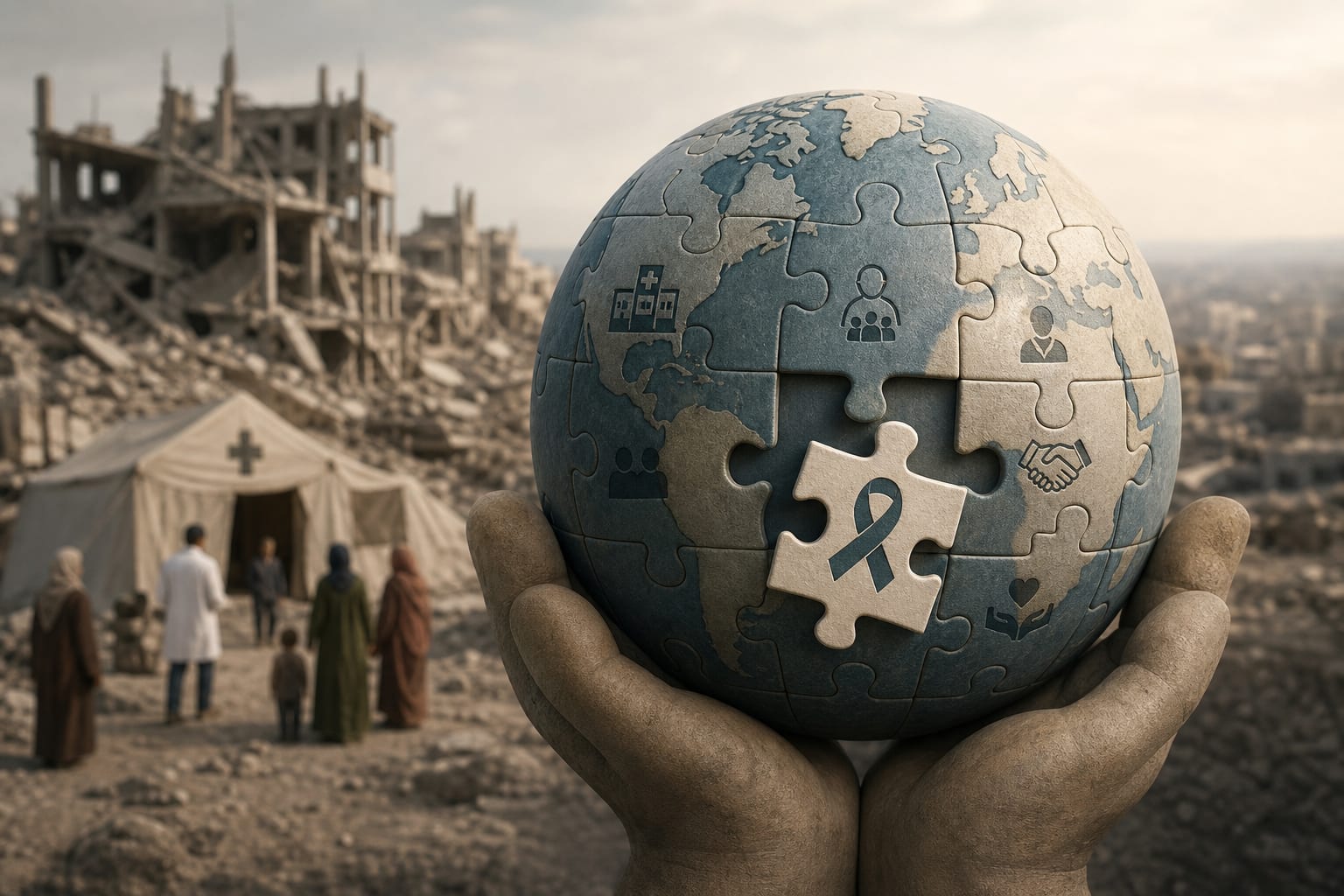
Stocktaking of the progress towards the implementation of the global manifesto on improving cancer care in conflict-impacted populations - Report - MDSpire
Advertisement
Stocktaking of the progress towards the implementation of the global manifesto on improving cancer care in conflict-impacted populations
Clinical Report: Assessment of Progress in Implementing the Global Manifesto
Overview
This report evaluates the progress made in implementing the Global Manifesto aimed at enhancing cancer care in conflict-affected populations. It highlights significant challenges, including ongoing attacks on healthcare and the lack of effective implementation strategies for the manifesto's recommendations.
Background
The Global Manifesto for improving cancer care in conflict-impacted populations was established to address the urgent need for equitable cancer care in humanitarian settings. With cancer incidence and mortality rates rising globally, particularly in conflict zones, the manifesto's recommendations are critical for ensuring that cancer care is integrated into emergency responses. Understanding the progress and barriers in implementing these recommendations is essential for advancing global health equity.
Data Highlights
No specific numerical data was provided in the article.
Key Findings
Over 1,000 attacks on healthcare have been recorded since the manifesto's publication, violating the Geneva Conventions.
These attacks resulted in over 1,200 deaths and significant injuries to healthcare personnel.
Despite calls for action, many proposed protection strategies for healthcare workers in conflict zones remain unimplemented.
The manifesto outlines seven key recommendations, yet lacks a concrete action plan for their implementation.
There is a pressing need for national and international mechanisms to hold perpetrators accountable for attacks on healthcare.
Clinical Implications
Healthcare professionals must advocate for the protection of medical personnel and facilities in conflict zones to ensure continuity of cancer care. Additionally, integrating cancer care into emergency response plans is crucial for addressing the needs of displaced populations effectively.
Conclusion
The ongoing challenges in implementing the Global Manifesto underscore the urgent need for coordinated efforts to protect healthcare in conflict settings and to enhance cancer care accessibility. Without significant action, the disparities in cancer care for affected populations will likely persist.