Sorting Science From Marketing in the Era of Data-Driven Biological Aging Clocks
-
By
-
Jenna Congdon
-
June 9, 2026
-
0 min
Clinical Report: Distinguishing Scientific Evidence from Marketing Claims
Overview
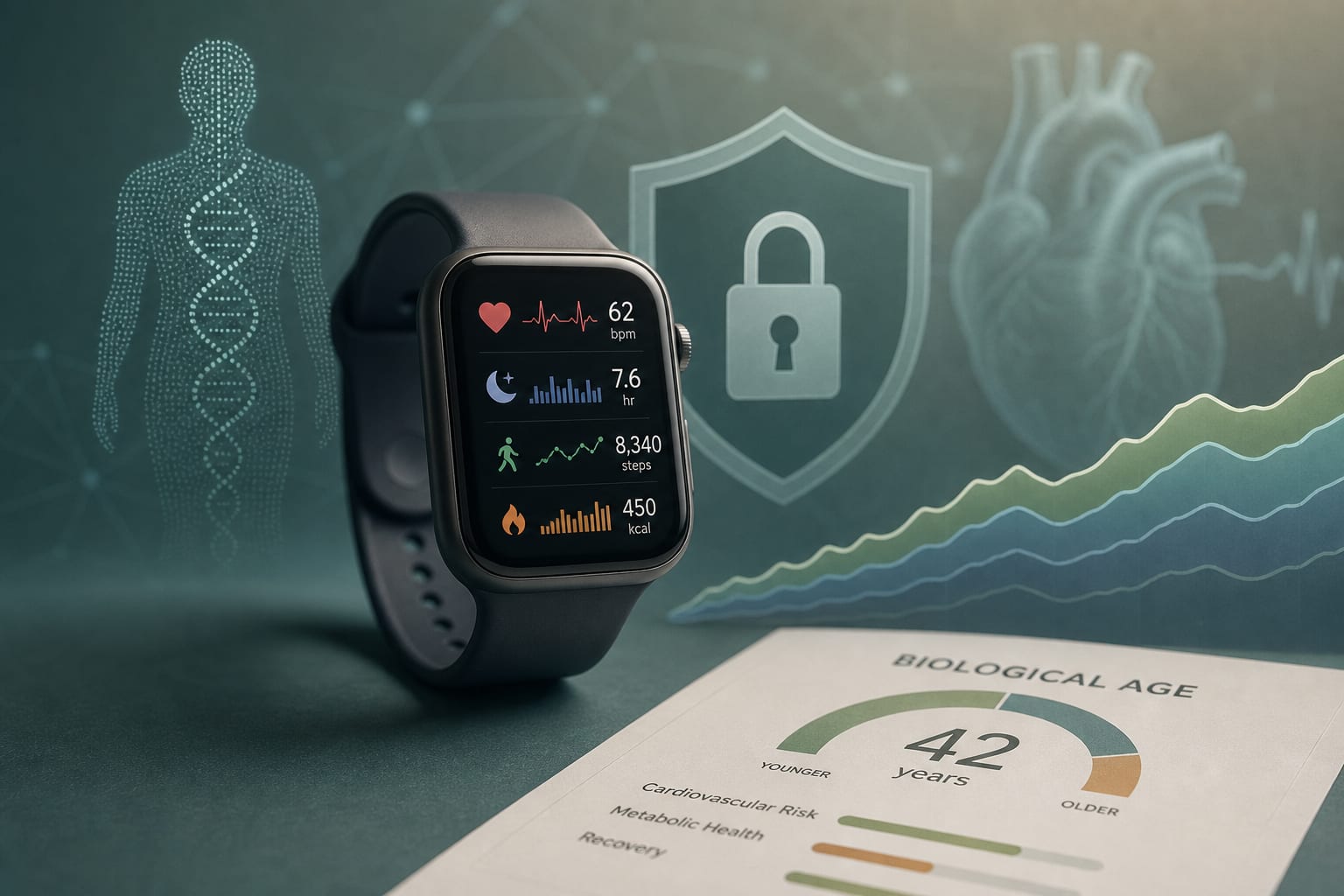
Wearable devices that estimate biological age provide insights based on proxy data, but they do not offer definitive health measures. The interpretation of these scores requires clinical context to avoid misrepresentation of health status.
Background
The rise of wearable technology has introduced biological aging indicators, such as heart rate variability and sleep patterns, that can influence health behaviors and perceptions. However, the accuracy and clinical relevance of these devices are often questioned, particularly as they simplify complex biological data into single scores. Understanding the limitations and potential of these devices is crucial for healthcare providers and patients alike.
Data Highlights
No numerical data provided in the article.
Key Findings
['Wearable biological age scores are based on proxy data such as sleep, heart rate, and activity.', 'Aging clocks can aid in prevention and behavior change but require clinical context for accurate interpretation.', 'New US regulations on wearable health devices raise concerns regarding health data privacy.', 'Consumer models risk oversimplifying complex biology into a single metric, potentially causing user anxiety.', 'Wearables may support behavior change, evidenced by increased physical activity in randomized trials.']Clinical Implications
Healthcare providers should be cautious when interpreting biological age scores from wearables, ensuring that patients understand these metrics are not definitive health indicators. Clinicians should continue to rely on validated clinical measurements for diagnosis and management.
Conclusion
While wearable devices offer valuable insights into health trends, their limitations must be acknowledged to prevent misinterpretation and anxiety among users. Continued research and clinical validation are essential for integrating these tools into healthcare.
Related Resources & Content
- The Pathologist, Your Biological Age? It's in the Blood, 2026 -- Title
- Frontiers in Digital Health, Achieving Clarity in Terminology for Digital Biomarker Studies, 2026 -- Title
- Brain, Epigenetic age acceleration in peripheral blood correlates with brain-MRI age acceleration, 2026 -- Title
- JACC, 2025 AHA/ACC Guideline for the Prevention, Detection, Evaluation, and Management of High Blood Pressure, 2025 -- Title
- FDA, General Wellness: Policy for Low Risk Devices, 2026 -- Title
- the ophthalmologist — Retinal Age as Disease Biomarker
- Wearable Activity Tracker–Based Interventions for Physical Activity, Body Composition, and Physical Function, PMC
- Accuracy of Smartwatches in the Detection of Atrial Fibrillation, JACC: Advances
- 2025 AHA/ACC/AANP/AAPA/ABC/ACCP/ACPM/AGS/AMA/ASPC/NMA/PCNA/SGIM Guideline for the Prevention, Detection, Evaluation, and Management of High Blood Pressure in Adults: A Report of the American College of Cardiology/American Heart Association Joint Committee on Clinical Practice Guidelines | JACC
- General Wellness: Policy for Low Risk Devices | FDA
- An Expert Consensus Statement on Biomarkers of Aging for Use in Intervention Studies - PMC
- Biological age measured by DNA methylation clocks and frailty: a systematic review and meta-analysis - PubMed
- NIH researchers conclude that taurine is unlikely to be a good aging biomarker | National Institutes of Health (NIH)
- Individual and additive effects of vitamin D, omega-3 and exercise on DNA methylation clocks of biological aging in older adults from the DO-HEALTH trial - PMC
This content is an AI-generated, fully rewritten summary based on a published scholarly article. It does not reproduce the original text and is not a substitute for the original publication. Readers are encouraged to consult the source for full context, data, and methodology.