Polysaccharides-gut microbiota interaction: mechanisms regulating the hepatocellular carcinoma immune microenvironment - Report - MDSpire

Polysaccharides-gut microbiota interaction: mechanisms regulating the hepatocellular carcinoma immune microenvironment

  • By

  • Wei Peng

  • Kai Xiong

  • Yuyang Zheng

  • Jiahan Zheng

  • Yuanyuan Zhong

  • Jihao Yang

  • Yuchuan Jiang

  • June 8, 2026

  • 0 min

Share

Interactions Between Polysaccharides and Gut Microbiota in HCC

Overview

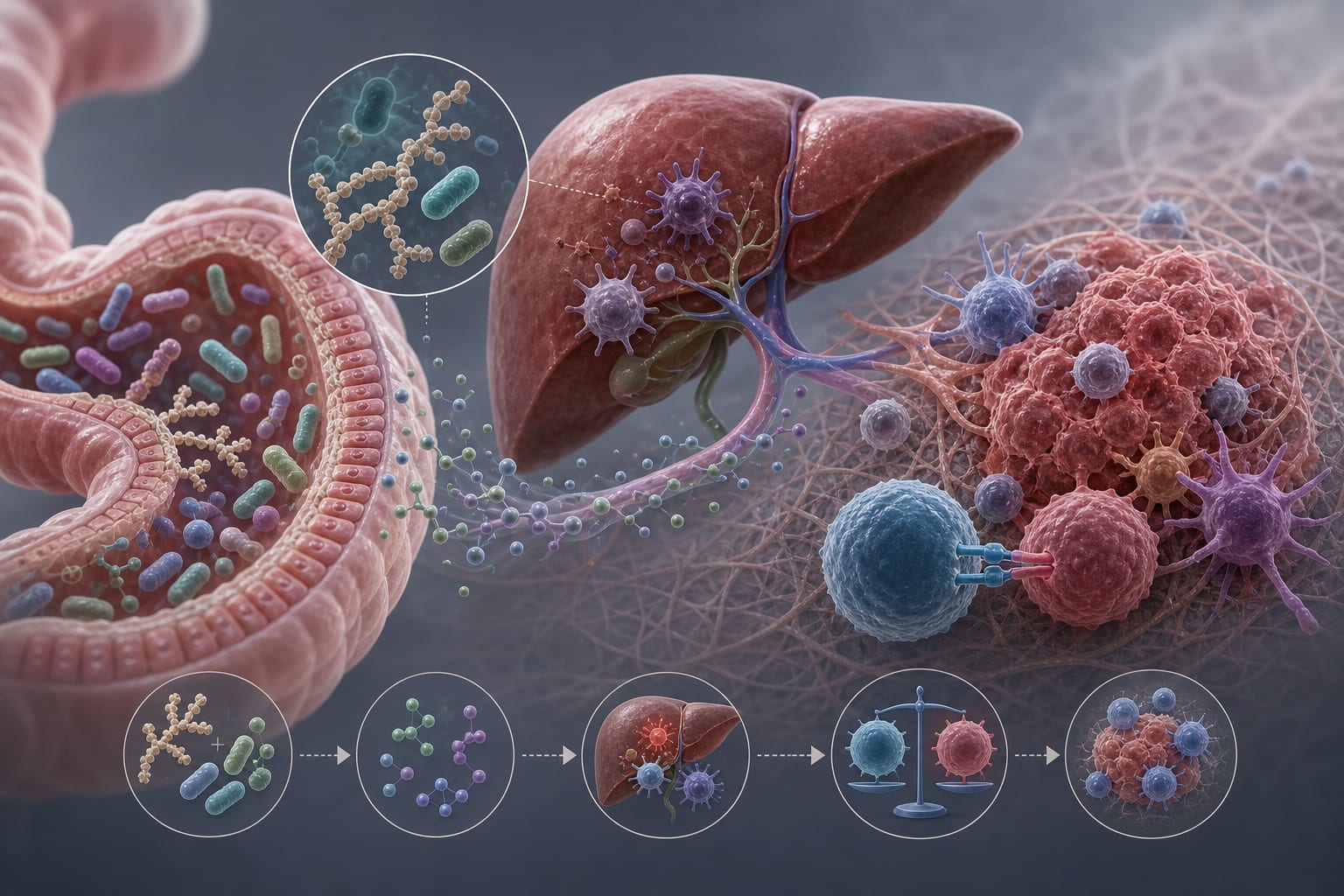
This review discusses how polysaccharide-gut microbiota interactions influence the immune microenvironment in hepatocellular carcinoma (HCC). It highlights the role of gut microbiota dysbiosis in promoting chronic inflammation and immunosuppression, which are critical in HCC progression.

Background

Hepatocellular carcinoma (HCC) is a leading cause of cancer-related mortality, with limited responses to immune checkpoint inhibitors (ICIs). The gut microbiota has been identified as a significant factor in modulating the immune response and tumor microenvironment in HCC through the gut-liver axis. Understanding these interactions may provide insights into new therapeutic strategies.

Data Highlights

No numerical data or trial data were provided in the source material.

Key Findings

  • Gut microbiota dysbiosis contributes to chronic hepatic inflammation and immunosuppression in HCC.
  • Polysaccharides can selectively enrich beneficial gut bacteria, such as Bacteroides and Akkermansia.
  • Microbial metabolites, including lipopolysaccharide and short-chain fatty acids, influence the hepatic tumor microenvironment.
  • Polysaccharides interact with intestinal immune cells via pattern recognition receptors, promoting immune modulation.
  • Challenges in utilizing polysaccharides include structural heterogeneity and undefined safe dose windows.

Clinical Implications

The interactions between polysaccharides and gut microbiota may offer new avenues for therapeutic strategies in HCC. Understanding these mechanisms could enhance the efficacy of existing treatments and inform the development of novel interventions.

Conclusion

Polysaccharide-based modulation of the immune microenvironment in HCC presents a promising area for further research and potential therapeutic development.
Related Resources & Content

  1. Frontiers in Immunology, 2026 -- The relationship between Gut Microbiota and Cancer Immune Response and Immunotherapy
  2. Gastric Cancer, 2021 -- Exploring the Connection Between Gut Microbiome and Gastric Cancer Development: Current Understanding and Insights
  3. Infection, 2024 -- Investigating Gut Barrier Dysfunction's Impact on Postoperative Outcomes Following Liver Transplantation: Insights into Pathophysiology and Treatment Options
  4. Journal of Gastrointestinal Surgery, 2021 -- The Impact of Intestinal-Derived Lipopolysaccharides and Gut Barrier Function on Fatty Liver Disorders
  5. Systemic Therapy for Advanced Hepatocellular Carcinoma: ASCO Guideline Update | Journal of Clinical Oncology, 2023
  6. Updated efficacy and safety data from IMbrave150: Atezolizumab plus bevacizumab vs. sorafenib for unresectable hepatocellular carcinoma - PubMed, 2022
  7. Frontiers, 2025 -- Emerging insights into the gut microbiota as a key regulator of immunity and response to immunotherapy in hepatocellular carcinoma
  8. Systemic Therapy for Advanced Hepatocellular Carcinoma: ASCO Guideline Update | Journal of Clinical Oncology
  9. Updated efficacy and safety data from IMbrave150: Atezolizumab plus bevacizumab vs. sorafenib for unresectable hepatocellular carcinoma - PubMed
  10. Frontiers | Emerging insights into the gut microbiota as a key regulator of immunity and response to immunotherapy in hepatocellular carcinoma

Original Source(s)

Related Content