HHS Urges Immediate Measures to Mitigate Risks of Excessive Screen Time and Safeguard Children Online
-
By
-
Assistant Secretary for Public Affairs (ASPA)
-
May 27, 2026
Clinical Report: HHS Urges Immediate Measures to Mitigate Risks of Excessive Screen Time
Overview
Revise to include direct attribution to the HHS advisory regarding its key findings.
Background
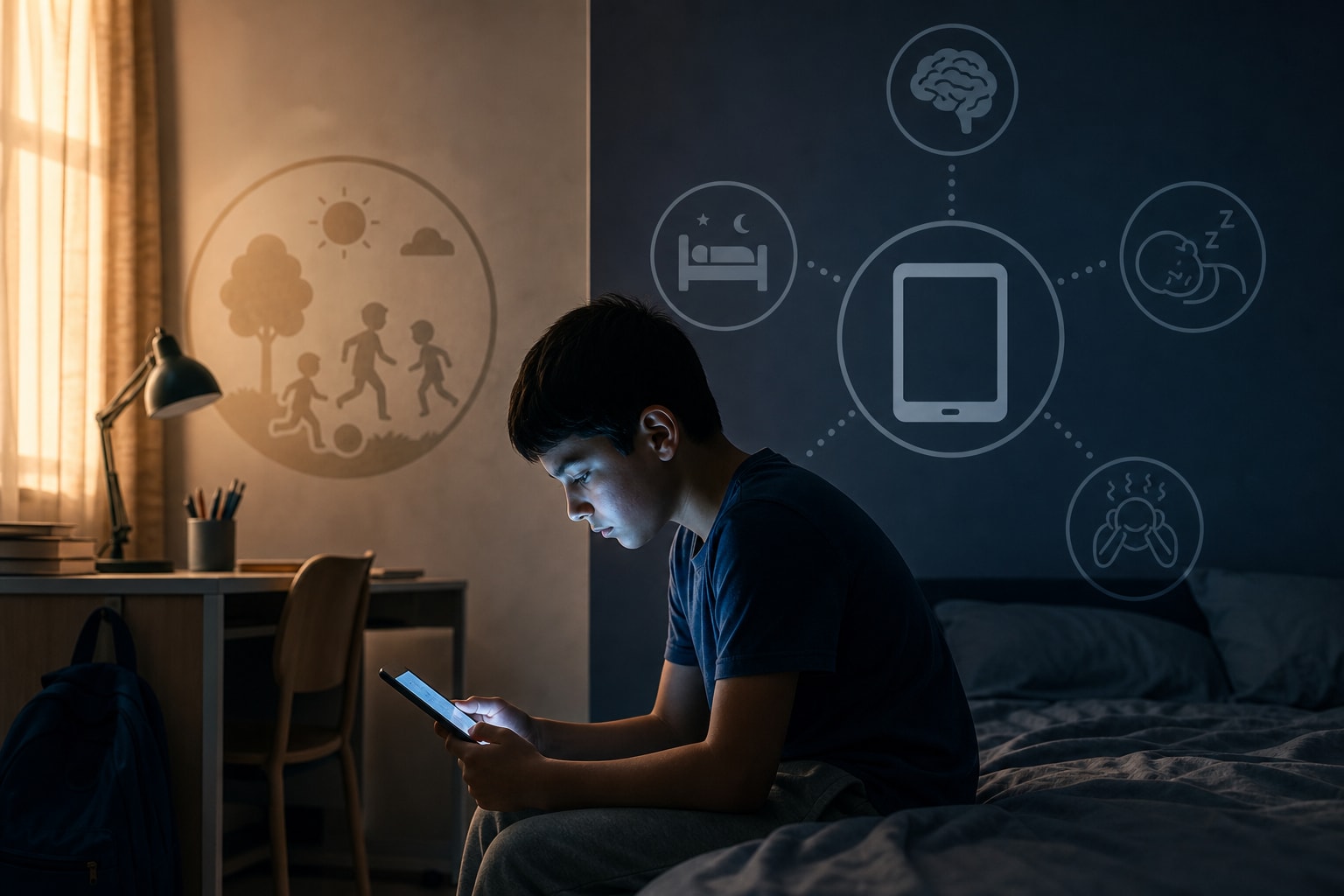
Excessive screen time has become a significant public health concern, particularly for children and adolescents. National estimates suggest that adolescents spend an average of seven to nine hours daily on entertainment screens, often late into the night. This prolonged exposure raises concerns about its impact on sleep, mental health, and overall well-being.
Data Highlights
No specific numerical data or trial results were provided in the source material.
Key Findings
- The Surgeon General's advisory highlights the risks associated with excessive screen time, including sleep disruption and mental health challenges.
- Adolescents are reported to spend an average of seven to nine hours a day on entertainment screens.
- Recommendations for schools include bell-to-bell cellphone restrictions and increased use of paper-based materials.
- Experts emphasize the importance of monitoring screen time to ensure it is beneficial and not harmful.
- The advisory calls for collaborative action from families, schools, and policymakers to address screen time issues.
Clinical Implications
Healthcare providers should be aware of the potential mental and physical health impacts of excessive screen time on children. It is essential to engage parents and educators in discussions about managing screen time effectively.
Conclusion
The advisory from HHS serves as a critical reminder of the need for proactive measures to mitigate the risks associated with excessive screen use among youth.
Related Resources & Content
- United States Department of Health and Human Services, HHS, 2026 -- Secretary Kennedy Announces HHS Action to Reduce Harmful Screen Use and Protect Children Online
- Stat News, 2026 -- Surgeon general’s office issues warning on screen time for children
- Ophthalmology Management, 2025 -- Digital Screen Time Increases Risk for Myopia
- The Harms of Screen Use | HHS.gov, 2026 -- Advisory and Toolkit
- optometric management — Myopia: Screen and Outdoor Time
- The Harms of Screen Use | HHS.gov
- Beyond screen time: Policy discusses how to approach immersive digital ecosystem | AAP News | American Academy of Pediatrics
- Health advisory on social media use in adolescence
- Toddler Screen Use Before Bed and Its Effect on Sleep and Attention: A Randomized Clinical Trial | Trials | JAMA Pediatrics | JAMA Network
- Electronic screen use and children's socioemotional problems: A systematic review and meta-analysis of longitudinal studies - PubMed
- Addictive Screen Use Trajectories and Suicidal Behaviors, Suicidal Ideation, and Mental Health in US Youths | Media and Youth | JAMA | JAMA Network
- Social Media Use Trajectories and Cognitive Performance in Adolescents | Adolescent Medicine | JAMA | JAMA Network
- Youth Mental Health and School Smartphone Bans: Early Evidence | NBER
- Active components in digital health interventions for sleep among adolescents: a systematic review and meta-analysis of randomized controlled trials | npj Digital Medicine
Based on findings from:
WTAS: HHS Calls For Urgent Action To Reduce Harmful Screen Use And Protect Children Online
Assistant Secretary for Public Affairs (ASPA). United States Department Of Health And Human Services, 2026.
https://www.hhs.gov/press-room/wtas-secretary-kennedy-announces-hhs-action-reduce-harmful-screen-use-protect-children-online.html
This content is an AI-generated, fully rewritten summary based on a published scholarly article. It does not reproduce the original text and is not a substitute for the original publication. Readers are encouraged to consult the source for full context, data, and methodology.