Metabolic reprogramming networks in the gastric cancer tumor microenvironment: an integrated axis of nutrient competition, metabolic crosstalk, and immunosuppression - Report - MDSpire
Advertisement
Metabolic reprogramming networks in the gastric cancer tumor microenvironment: an integrated axis of nutrient competition, metabolic crosstalk, and immunosuppression
Clinical Report: Networks of Metabolic Reprogramming in Gastric Cancer
Overview
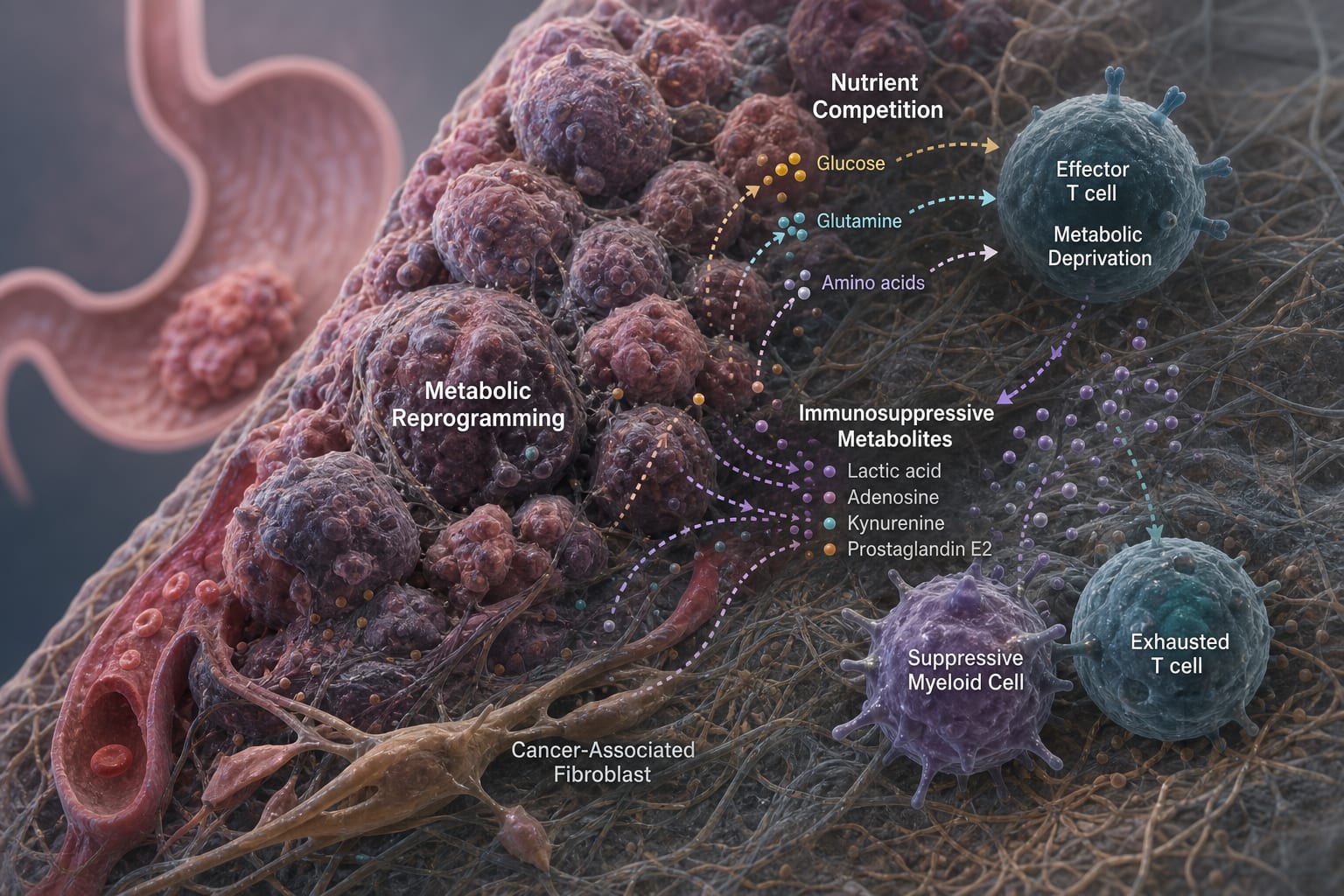
This review elucidates the complex interactions of nutrient competition, metabolic crosstalk, and immune suppression within the tumor microenvironment (TME) of gastric cancer.
Background
Gastric cancer is a leading cause of cancer-related morbidity and mortality worldwide, with treatment options limited for advanced stages. The tumor microenvironment significantly influences therapeutic outcomes, particularly in the context of immunotherapy.
Data Highlights
No numerical or trial data provided in the source material.
Key Findings
The TME of gastric cancer is characterized by hypoxia, acidosis, and nutrient deficiency.
Intense competition for nutrients between cancer and immune cells leads to metabolic deprivation in effector T cells.
Accumulation of immunosuppressive metabolites such as lactic acid and adenosine actively suppresses immune function.
Metabolic crosstalk within the TME reshapes the immunosuppressive niche through receptor signaling and epigenetic modifications.
Clinical Implications
A comprehensive understanding of the metabolic reprogramming in gastric cancer can inform therapeutic strategies.
Conclusion
The intricate network of metabolic interactions in the TME of gastric cancer plays a role in immune evasion and treatment resistance.