Clinical Report: Systemic Immune-Mediated Inflammatory Disorders in Pediatric Uveitis
Overview
This report investigates the association between pediatric uveitis and systemic immune-mediated inflammatory diseases (IMIDs), highlighting the need for comprehensive evaluations. The study emphasizes the importance of early diagnosis and management to prevent ocular complications.
Background
Pediatric uveitis is a significant intraocular inflammatory disorder that can lead to severe complications, including visual impairment. The association between pediatric uveitis and systemic diseases is notably higher than in adults, necessitating a thorough understanding of the underlying conditions. Early identification and treatment of IMIDs in children presenting with uveitis are crucial for improving long-term outcomes.
Data Highlights
No numerical data or trial data provided in the source material.
Key Findings
Pediatric uveitis has a higher association with systemic diseases compared to adult cases.
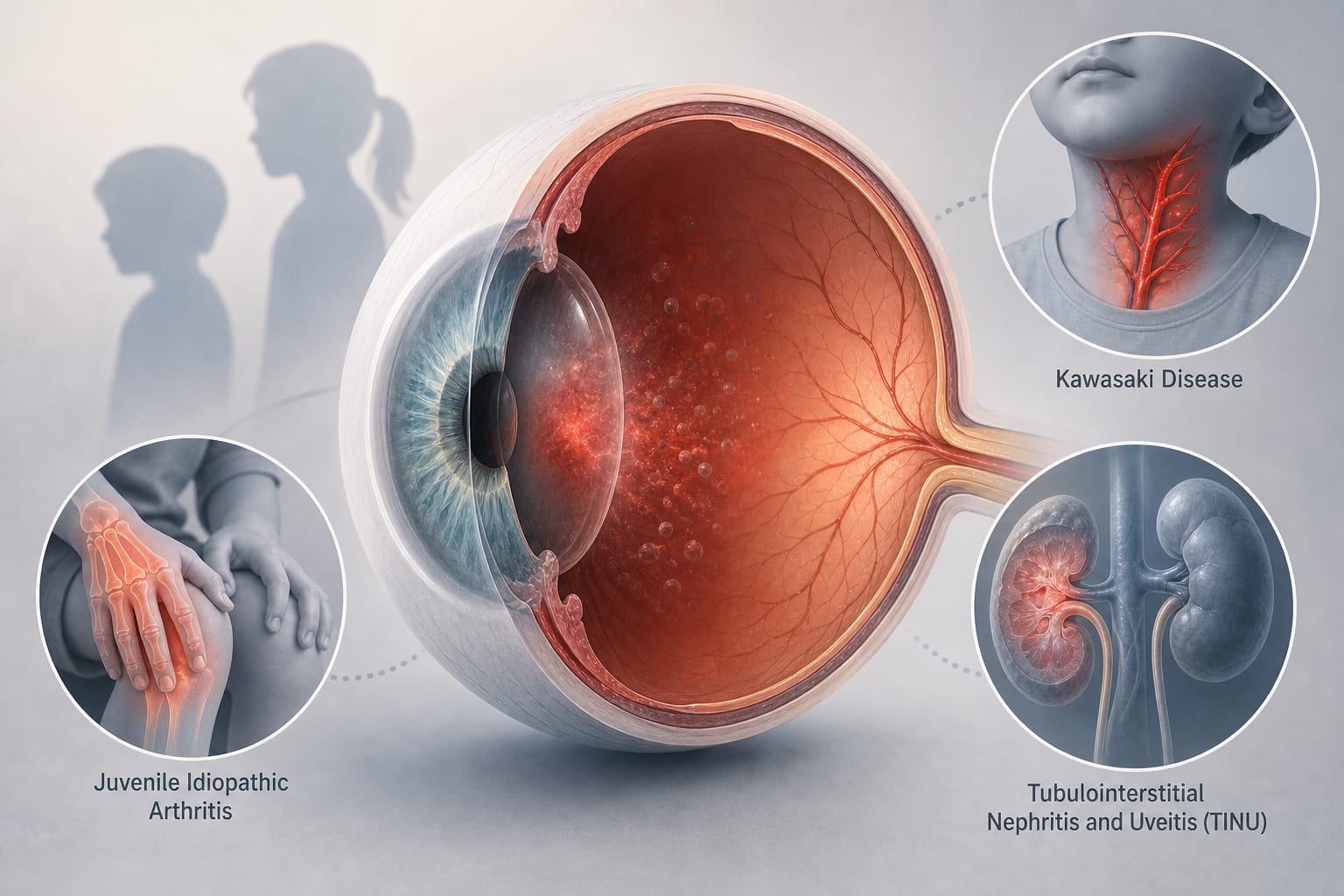
Common IMIDs associated with pediatric uveitis include juvenile idiopathic arthritis (JIA), Kawasaki disease (KD), and tubulointerstitial nephritis and uveitis syndrome (TINU).
Ocular symptoms may precede systemic manifestations in conditions like spondyloarthritis-associated uveitis and TINU.
Comprehensive systemic evaluation is essential for timely diagnosis and management of pediatric uveitis.
Early systemic immunosuppressive therapy is recommended to reduce ocular complications.
There is a lack of population-level data on the patterns of immunosuppressive therapy in pediatric uveitis patients.
Clinical Implications
Healthcare professionals should prioritize comprehensive evaluations for pediatric patients presenting with uveitis to identify potential systemic IMIDs. Early initiation of immunosuppressive therapy can mitigate the risk of severe ocular complications and improve patient outcomes.
Conclusion
Understanding the relationship between pediatric uveitis and systemic diseases is vital for effective management. Ongoing research is necessary to fill the gaps in knowledge regarding disease progression and treatment patterns.