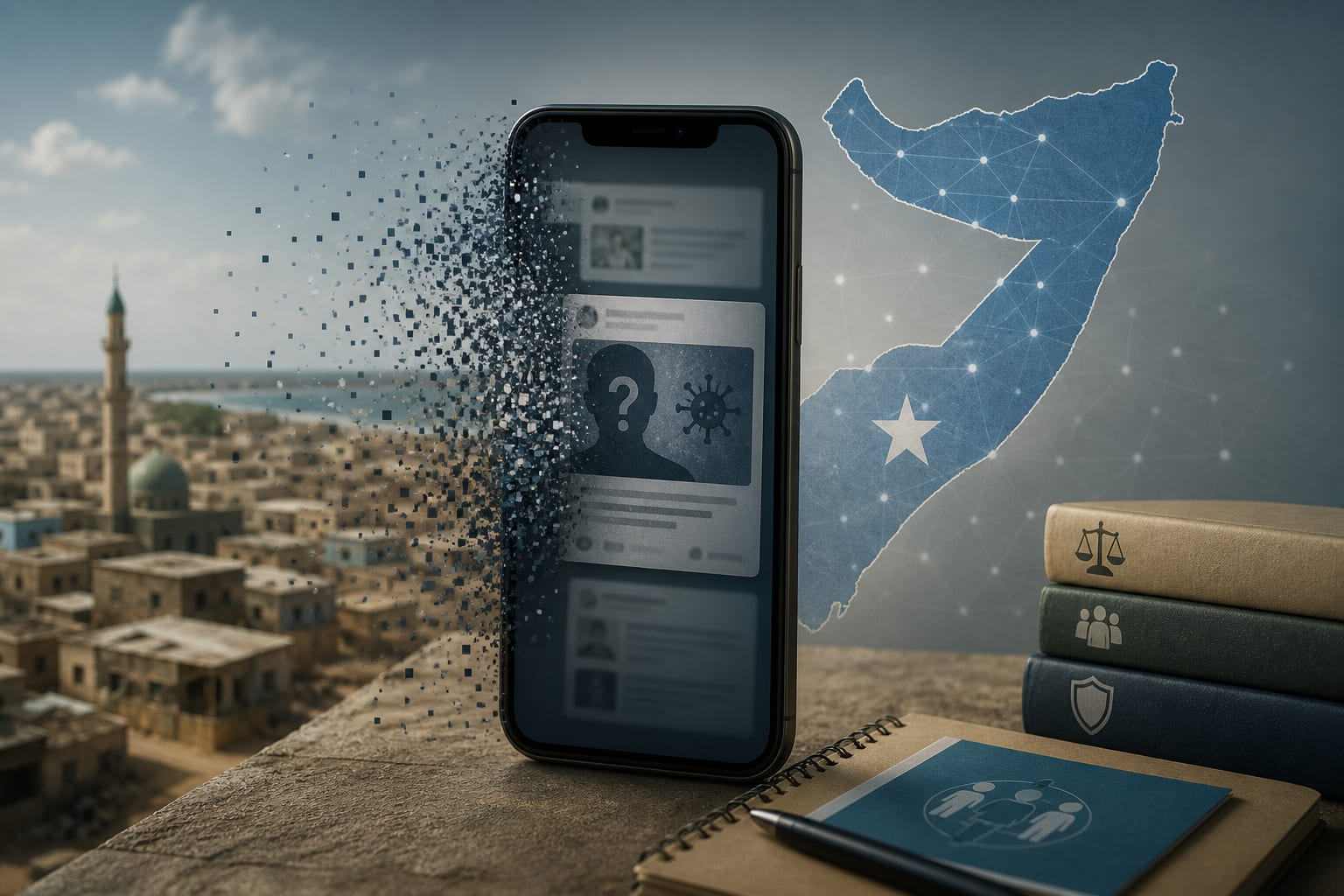
Clinical Report: The Impact of AI-Generated Health Misinformation in Somalia
Overview
AI-driven health misinformation poses significant risks to Somalia's health systems, exacerbated by low digital literacy and limited governance. The rapid digital expansion in the region has created an environment where misleading health narratives can proliferate.
Background
The intersection of rapid digital growth and low health literacy in Somalia highlights a vulnerability in public health communication. Misinformation complicates decision-making and undermines trust in health systems.
Data Highlights
No numerical or trial data provided in the source material.
Key Findings
AI-generated misinformation can be produced rapidly and tailored to specific audiences, increasing its potential impact.
Somalia's digital landscape lacks sufficient regulatory and educational safeguards to combat misinformation.
Misleading health narratives have spread extensively during public health emergencies, complicating vaccine uptake and treatment adherence.
Algorithmic tools on social media platforms may prioritize engagement over the accuracy of health information, increasing exposure to deceptive narratives.
Limited resources for natural language processing hinder the detection of misinformation in Somali-language contexts.
Clinical Implications
Healthcare professionals must be aware of the spread of misinformation in digital spaces where patients seek health information.
Conclusion
AI-generated health misinformation in Somalia presents challenges that require attention from scholars and policymakers.