Macrophage polarization in gynecologic malignancies: key signaling pathways and clinical perspectives - Report - MDSpire

Macrophage polarization in gynecologic malignancies: key signaling pathways and clinical perspectives

  • By

  • Qian He

  • Yali Chen

  • June 30, 2026

  • 0 min

Share

Clinical Report: Macrophage Polarization in Female Cancers and Signaling Pathways

Background

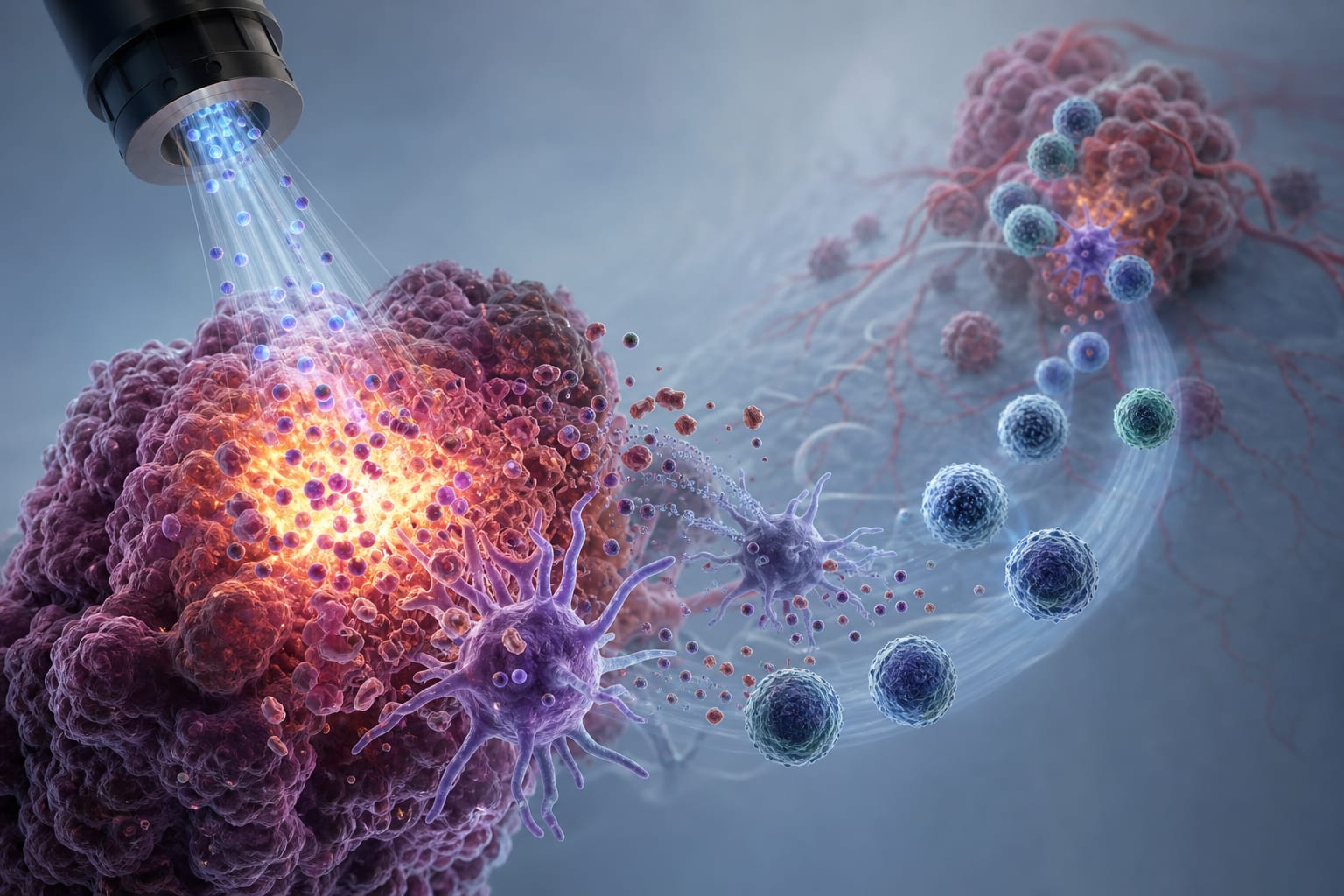
Gynecological malignancies, including ovarian, cervical, and endometrial cancers, pose a significant health burden for women globally. Tumor-associated macrophages (TAMs) are a major component of the tumor microenvironment (TME). Understanding the signaling pathways that regulate TAM polarization is essential for developing effective immunotherapies.

Data Highlights

No numerical data provided in the source material.

Key Findings

  • TAMs can be polarized into M1 and M2 phenotypes, influencing tumor progression and immune response.
  • M2-type macrophages secrete immunosuppressive factors that can inhibit M1 macrophage functions.
  • Recent studies indicate that M2-like TAM infiltration correlates with poor prognosis in ovarian and cervical cancers.
  • Nanoparticle-based drug delivery systems (NDDSs) may enhance the clinical translation of therapies targeting TAMs.
  • Single-cell RNA sequencing has revealed a complex landscape of macrophage subsets beyond the M1/M2 classification.

Clinical Implications

The modulation of TAM polarization is a topic of ongoing research in gynecological cancers.

Conclusion

Understanding TAM polarization mechanisms in gynecological malignancies is crucial for future therapeutic strategies.

Related Resources & Content

  1. Frontiers in Immunology, 2026 -- The Link Between Macrophage Polarization and Response to Radiotherapy in Cancers: Mechanisms and Therapeutic Opportunities
  2. Frontiers in Immunology, 2026 -- Macrophage polarization regulates bone homeostasis: a potential etiology and therapy for postmenopausal osteoporosis
  3. Frontiers in Immunology, 2026 -- 25HC regulates the polarization of CD163+ macrophages in the immune microenvironment of triple-negative breast cancer through the interferon pathway
  4. dana-farber — Immune Activity Shift a Key Early Step in Breast Cancer Formation
  5. ESGO-ESTRO-ESP Guidelines for Endometrial Carcinoma
  6. ESMO Clinical Practice Guideline Express Update on Epithelial Ovarian Cancer
  7. FDA Approves Pembrolizumab with Paclitaxel for Platinum-Resistant Epithelial Ovarian Cancer
  8. Unraveling the role of M2 TAMs in ovarian cancer dynamics: a systematic review | Journal of Translational Medicine | Springer Nature Link
  9. Clinicopathologic and prognostic significance of tumor-associated macrophages in cervical cancer: a systematic review and meta-analysis - PubMed
  10. Tumor-associated macrophages: orchestrators of the tumor microenvironment | American Journal of Physiology-Cell Physiology | American Physiological Society
  11. Targeting SPP1+ macrophages via the SPP1-CD44 axis reveals a key mechanism of immune suppression and tumor progression in ovarian cancer - ScienceDirect
  12. First-in-human phase I trial of the bispecific CD47 inhibitor and CD40 agonist Fc-fusion protein, SL-172154 in patients with platinum-resistant ovarian cancer - PubMed
  13. A phase I/II study of maplirpacept in combination with pegylated liposomal doxorubicin (PLD) in patients with platinum-resistant ovarian cancer (OC): Phase 1 results. | Journal of Clinical Oncology
  14. The differentiated SIRPα–IgG4 Fc fusion protein HCB101 in monotherapy and combination therapy. | Journal of Clinical Oncology
  15. Frontiers | Advance in therapies targeting tumor-associated macrophages in ovarian cancer

Original Source(s)

Related Content