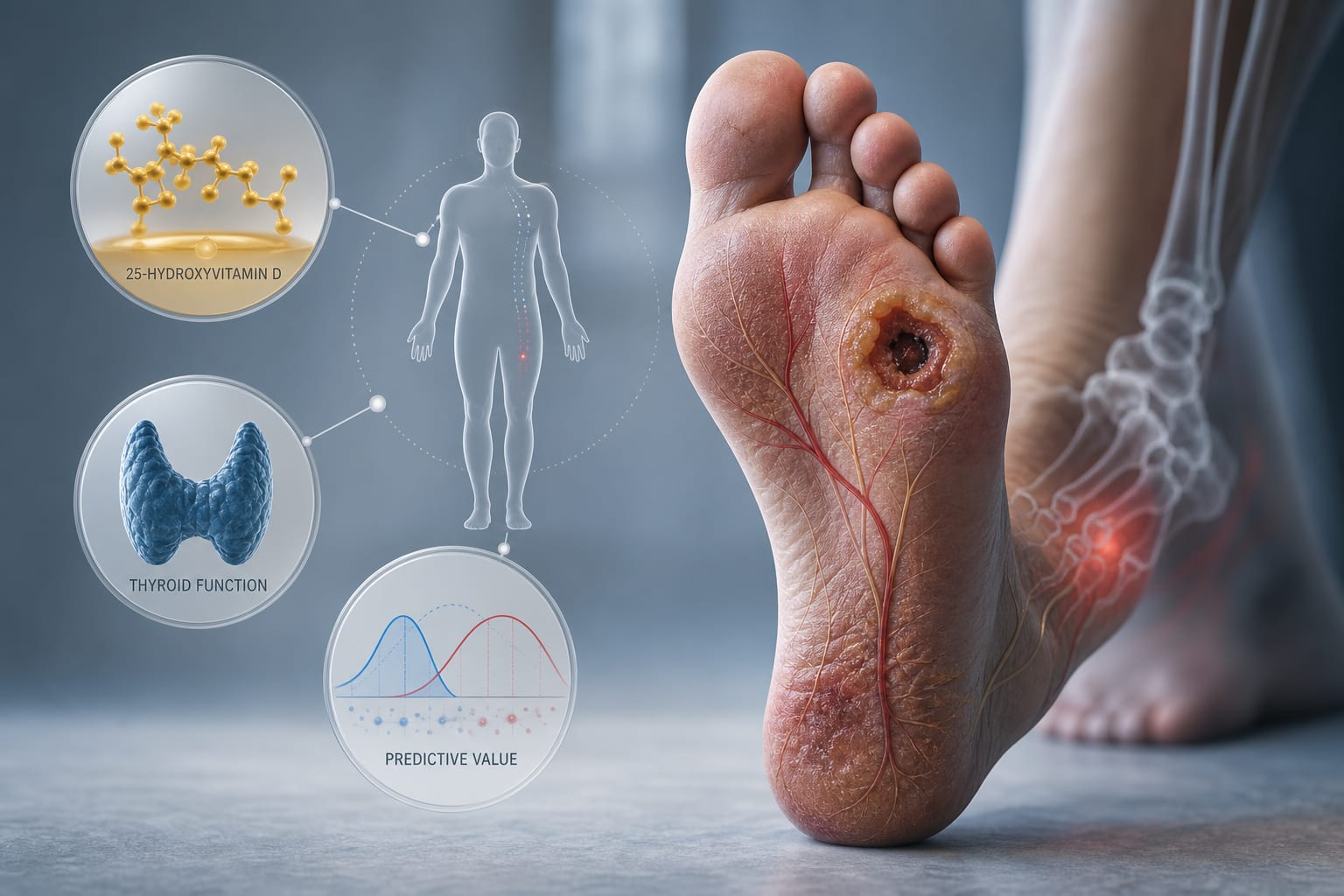
A preliminary study on the combined assessment of 25-hydroxyvitamin D and thyroid function for predicting diabetic foot risk and amputation in type 2 diabetes - Report - MDSpire
Conexiant’s news site is now MDSpire News. Learn more
Advertisement
An Initial Investigation into the Joint Evaluation of 25-Hydroxyvitamin D and Thyroid Function for Assessing the Risk of Diabetic Foot and Amputation in Individuals with Type 2 Diabetes
Clinical Report: Joint Evaluation of 25-Hydroxyvitamin D and Thyroid Function
Overview
This study investigates the differences in 25-hydroxyvitamin D levels and thyroid function between patients with diabetic foot and those with type 2 diabetes.
Background
Diabetic foot is a severe complication of type 2 diabetes, often leading to ulcers and amputations.
Data Highlights
Parameter
Diabetic Foot (DF)
Type 2 Diabetes (T2DM)
Serum 25OH-vitD
Lower
Higher
FT3 Levels
Lower
Higher
ESS Prevalence
Higher
Lower
Amputation Rate (ESS Group)
27.3%
8.8%
Key Findings
DF patients had significantly lower serum 25OH-vitD and FT3 levels compared to T2DM patients.
25OH-vitD deficiency (<20 ng/mL) was associated with a higher risk of diabetic foot (OR = 3.539).
FT3 was identified as an independent protective factor (OR = 0.493).
The combined predictive probability of 25OH-vitD and FT3 for diabetic foot was 0.701.
ESS group had lower 25OH-vitD levels and higher amputation rates compared to the euthyroid group.
Significant differences in CRP and TSH levels were observed among amputation groups.
Clinical Implications
The findings suggest that assessing both 25OH-vitD and thyroid function may provide valuable insights into the risk of diabetic foot and potential amputation. Clinicians should consider these markers in the evaluation of patients with type 2 diabetes.
Conclusion
This pilot study indicates a higher prevalence of 25OH-vitD deficiency and ESS in diabetic foot patients.
Nearly 40% of patients initiated thyroid hormone therapy within 2 years of hemithyroidectomy, with higher preoperative thyroid‐stimulating hormone levels and thyroid cancer identifying those at greatest risk.