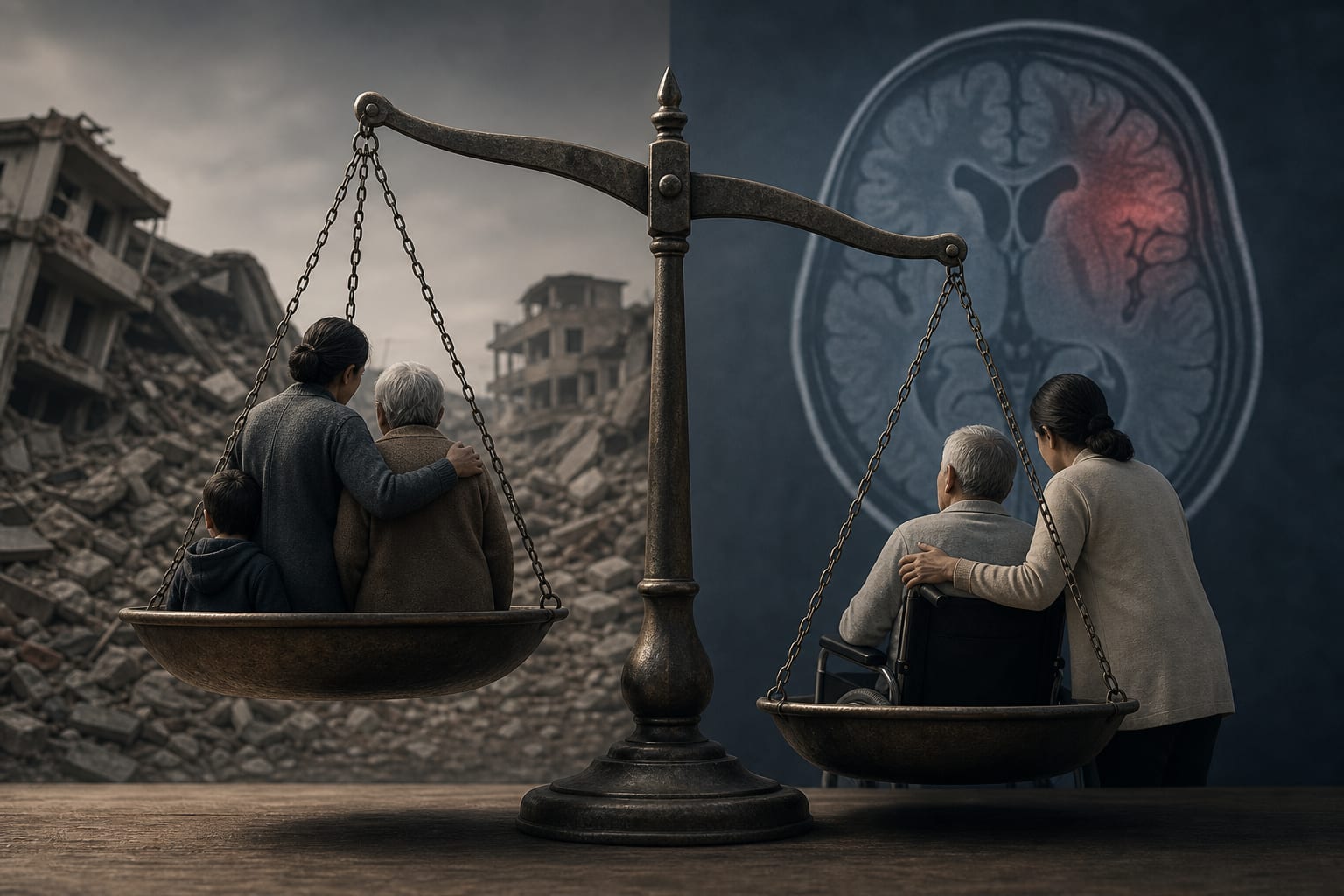
Psychological distress and caregiver burden among informal caregivers of patients with earthquake-related and stroke-related dependency: a comparative study - Report - MDSpire
Advertisement
Psychological distress and caregiver burden among informal caregivers of patients with earthquake-related and stroke-related dependency: a comparative study
Comparative Analysis of Psychological Distress and Caregiver Strain
Overview
This study compares the psychological burden experienced by informal caregivers of patients with dependency due to earthquake-related incidents and stroke. Findings indicate that caregiver burden is significant, but levels of psychological distress such as depression and anxiety do not differ significantly between both groups.
Background
Informal caregivers play a crucial role in supporting patients with dependency, often facing significant psychological and emotional challenges. Understanding the burden on these caregivers, especially in the context of disasters like earthquakes, is vital for ensuring adequate support and resources.
Data Highlights
Measure
Earthquake Caregivers
Stroke Caregivers
p-value
Caregiver Burden
Moderate
Moderate
0.026 (higher in males)
External Support
Higher
Lower
0.004
Depressive Symptoms
No significant difference
No significant difference
0.172
Anxiety Symptoms
No significant difference
No significant difference
0.172
Hopelessness Levels
No significant difference
No significant difference
0.834
Key Findings
Caregiver burden was significantly higher among male caregivers (p=0.026).
Caregivers of earthquake-related dependency patients reported more external support than stroke caregivers (p=0.004).
Overall caregiving was perceived as a moderate burden in both groups.
No significant differences were found in depressive symptoms, anxiety symptoms, and hopelessness levels between the two groups (p>0.05).
PTSD symptoms and caregiver burden in stroke caregivers showed moderate positive correlations with depression, anxiety, and hopelessness (all p<0.05).
In earthquake caregivers, caregiver burden was associated only with hopelessness (p=0.045).
Clinical Implications
Understanding the psychological distress faced by informal caregivers is essential for developing targeted support strategies. The findings suggest that enhancing social support for caregivers, particularly in post-disaster contexts, may improve their psychological outcomes.
Conclusion
Informal caregivers of patients with dependency due to earthquakes and strokes experience similar levels of psychological distress.
The partner in the next room, the hormone in the blister pack, the cat on the couch, the minute-long chair stand. Several new studies suggest the factor shaping outcomes may be the one clinicians aren’t routinely measuring.