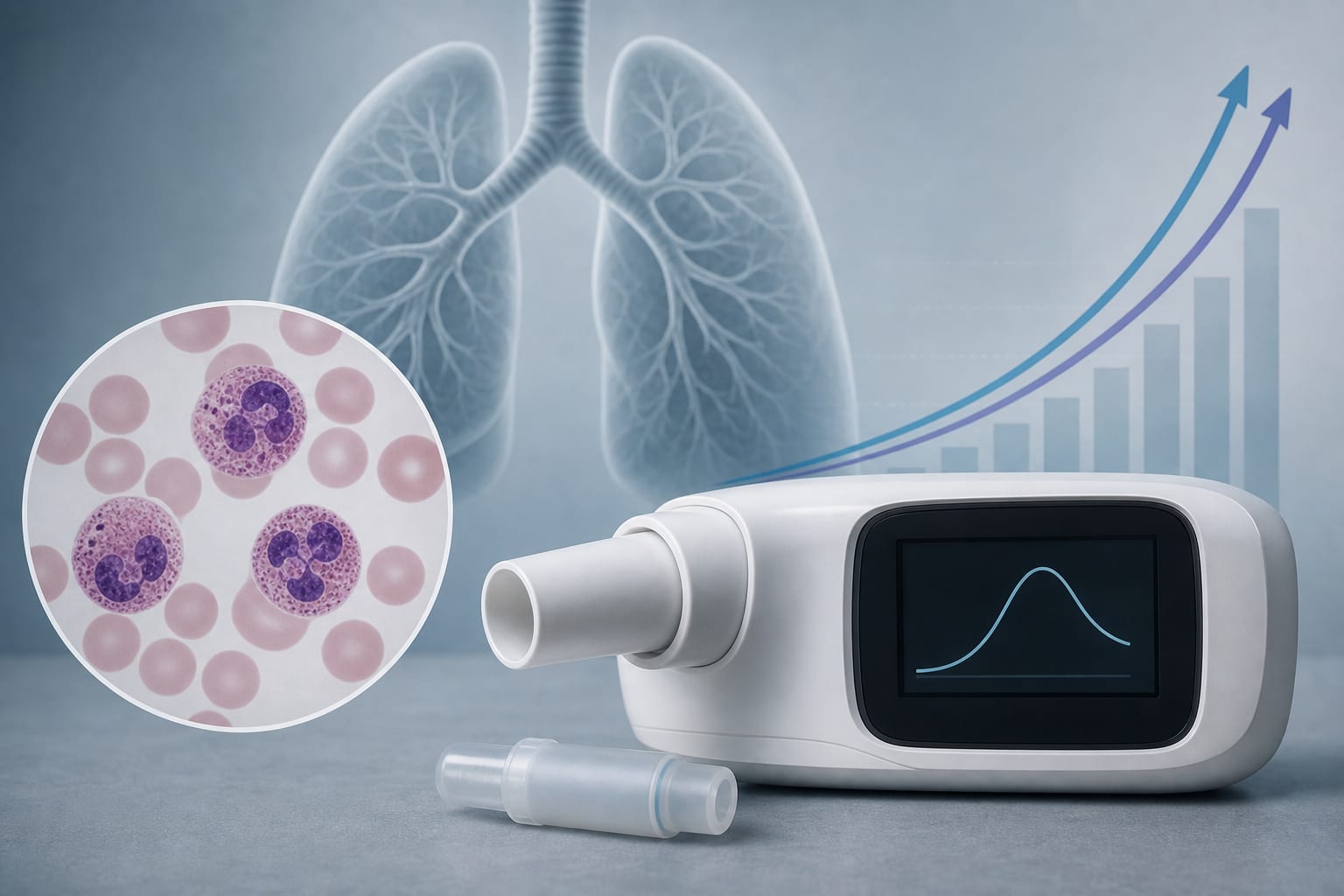
Baseline Eosinophil Levels and FeNO as Predictors of Exacerbations in Asthma and COPD
-
By
-
Debbie Bunch
-
June 15, 2026
Clinical Report: Baseline Eosinophil Levels and FeNO as Predictors of Exacerbations
Overview
This study investigates the predictive value of baseline eosinophil levels and fractional exhaled nitric oxide (FeNO) in forecasting exacerbations in asthma and COPD patients.
Background
Eosinophilic inflammation is implicated in approximately 20% of COPD cases. Understanding the role of eosinophils and FeNO can aid in the transition towards precision medicine in respiratory diseases.
Data Highlights
No numerical data provided in the source material.
Key Findings
- Baseline eosinophil levels and FeNO measurements are predictors of exacerbations in asthma and COPD.
- Approximately 20% of individuals with COPD exhibit eosinophilic inflammation.
- Elevated eosinophil counts and FeNO levels are linked to exacerbation risk.
- GOLD 2026 guidelines recommend considering ICS therapy based on eosinophil counts.
- Type 2 inflammation biomarkers, including eosinophils and FeNO, are recognized in asthma and COPD management.
Clinical Implications
Baseline eosinophil levels and FeNO should be considered in the assessment for exacerbation risk in asthma and COPD patients.
Conclusion
The study highlights the importance of eosinophil levels and FeNO in predicting exacerbations.
Related Resources & Content
- Frontiers in Medicine, 2026 -- Resident eosinophils in patients with chronic obstructive pulmonary disease: a pilot study
- Frontiers in Immunology, 2026 -- Is blood eosinophilia a treatable trait in chronic obstructive airway diseases?
- conexiant, 2026 -- Sex Does Not Modify Asthma Attack Predictors
- Global Strategy for Asthma Management and Prevention, 2025 -- Updated 2025
- Inflammatory and clinical risk factors for asthma attacks (ORACLE2), 2025 -- a patient-level meta-analysis of control groups of 22 randomised trials
- Infection — Eosinophil Levels in Peripheral Blood and Their Relationship with COVID-19 Severity: A Retrospective Analysis
- | Global Strategy for Asthma Management and Prevention --- | ---Updated 2025
- Inflammatory and clinical risk factors for asthma attacks (ORACLE2): a patient-level meta-analysis of control groups of 22 randomised trials - ScienceDirect
- https://goldcopd.org/wp-content/uploads/2025/11/KEY-CHANGES-GOLD-2026-10Nov2025.pdf
- Fractional exhaled nitric oxide in acute exacerbations of chronic obstructive pulmonary disease: A meta-analysis with meta-regressions - ScienceDirect
Based on findings from:
Eosinophil Counts, FeNO May Predict Asthma, COPD Exacerbations
Debbie Bunch. American Association For Respiratory Care (Aarc), 2026.
https://rccentral.aarc.org/eosinophil-counts-feno-may-predict-asthma-copd-exacerbations/
This content is an AI-generated, fully rewritten summary based on a published scholarly article. It does not reproduce the original text and is not a substitute for the original publication. Readers are encouraged to consult the source for full context, data, and methodology.