Integration of transcriptomic data reveals lipid metabolic heterogeneity and identifies GSTO1 as a therapeutic target in acute myeloid leukemia - Report - MDSpire

Integration of transcriptomic data reveals lipid metabolic heterogeneity and identifies GSTO1 as a therapeutic target in acute myeloid leukemia

  • By

  • Fangmin Zhong

  • Zihao Wang

  • Jialin Huang

  • Linfeng Jin

  • Fangyi Yao

  • Xiaozhong Wang

  • June 30, 2026

  • 0 min

Share

Clinical Report: Transcriptomic Analysis Uncovers Lipid Metabolic Diversity in AML

Overview

This study identifies lipid metabolic heterogeneity in acute myeloid leukemia (AML) and establishes a lipid metabolism-related prognostic signature (LMRS) that predicts patient outcomes.

Background

Acute myeloid leukemia (AML) is characterized by significant heterogeneity and poor prognosis, particularly in elderly patients. Understanding the molecular mechanisms and identifying new prognostic markers are crucial for improving treatment outcomes. Lipid metabolism has emerged as a key area of interest, as its dysregulation is linked to cancer progression and treatment resistance.

Data Highlights

SubtypeMetabolic ActivityPrognosis
C1LowBetter
C2ModerateIntermediate
C3HighWorst

Key Findings

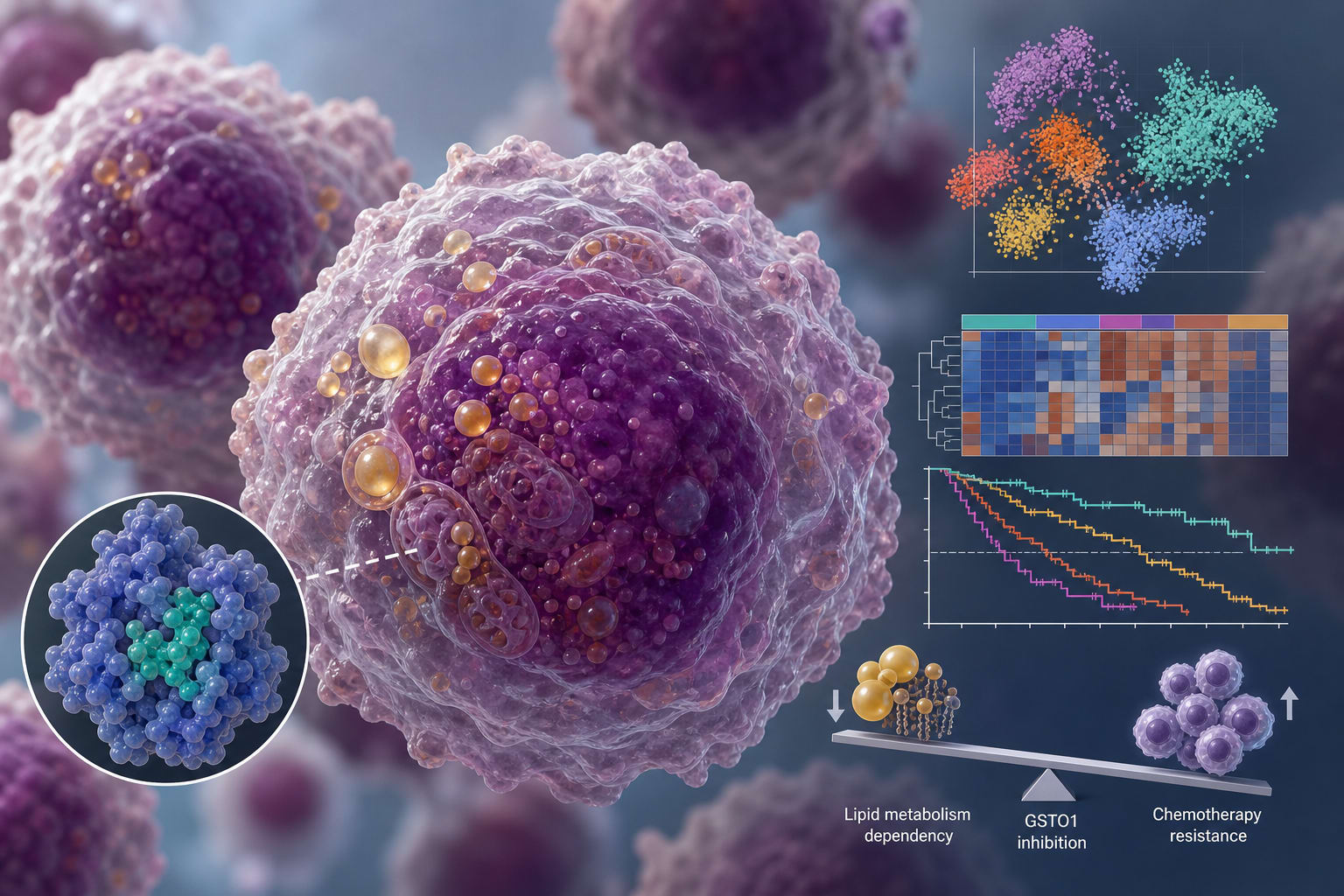
  • Three lipid metabolism-based subtypes (C1–C3) were identified in AML, with C3 showing the highest metabolic activity and worst prognosis.
  • A nine-gene lipid metabolism-related prognostic signature (LMRS) was developed, effectively stratifying patients into high- and low-risk groups.
  • LMRS demonstrated superior predictive accuracy over existing prognostic models.
  • Inhibition of GSTO1 induced apoptosis and increased reactive oxygen species (ROS) production in AML cells.
  • Single-cell analysis revealed significant upregulation of lipid metabolism pathways in AML malignant cells.

Clinical Implications

The identification of lipid metabolism subtypes and the development of the LMRS may assist clinicians in prognostic stratification of AML patients.

Conclusion

This study enhances the understanding of lipid metabolic diversity in AML and proposes GSTO1 as a therapeutic target.

Related Resources & Content

  1. Frontiers in Oncology, 2026 -- Identification of MTMR2 as an AML-associated candidate biomarker derived from lipid metabolism–related transcriptomic analysis
  2. Frontiers in Oncology, 2026 -- ATG16L1 and OPTN as a novel prognostic gene expression signature in acute myeloid leukemia survival
  3. Nature Cancer, 2026 -- Integrated proteogenomic and metabolomic profiling of acute myeloid leukemias to identify molecular subtypes and associated therapy targets
  4. NCCN Guidelines® Insights: Acute Myeloid Leukemia, Version 3.2026 - PubMed
  5. Long-term follow-up of VIALE-A: Venetoclax and azacitidine in chemotherapy-ineligible untreated acute myeloid leukemia - PubMed
  6. Targeting lipid metabolism in acute myeloid leukemia: biological insights and therapeutic opportunities | Leukemia
  7. Frontiers in Pediatrics — Transcriptome-Inferred metabolic subtypes define prognostic and immune ecosystems in osteosarcoma at single-cell resolution
  8. NCCN Guidelines® Insights: Acute Myeloid Leukemia, Version 3.2026 - PubMed
  9. Long-term follow-up of VIALE-A: Venetoclax and azacitidine in chemotherapy-ineligible untreated acute myeloid leukemia - PubMed
  10. Targeting lipid metabolism in acute myeloid leukemia: biological insights and therapeutic opportunities | Leukemia

Original Source(s)

Related Content