Clinical Report: Lactylation of Proteins in Myocardial Ischemia-Reperfusion Injury
Overview
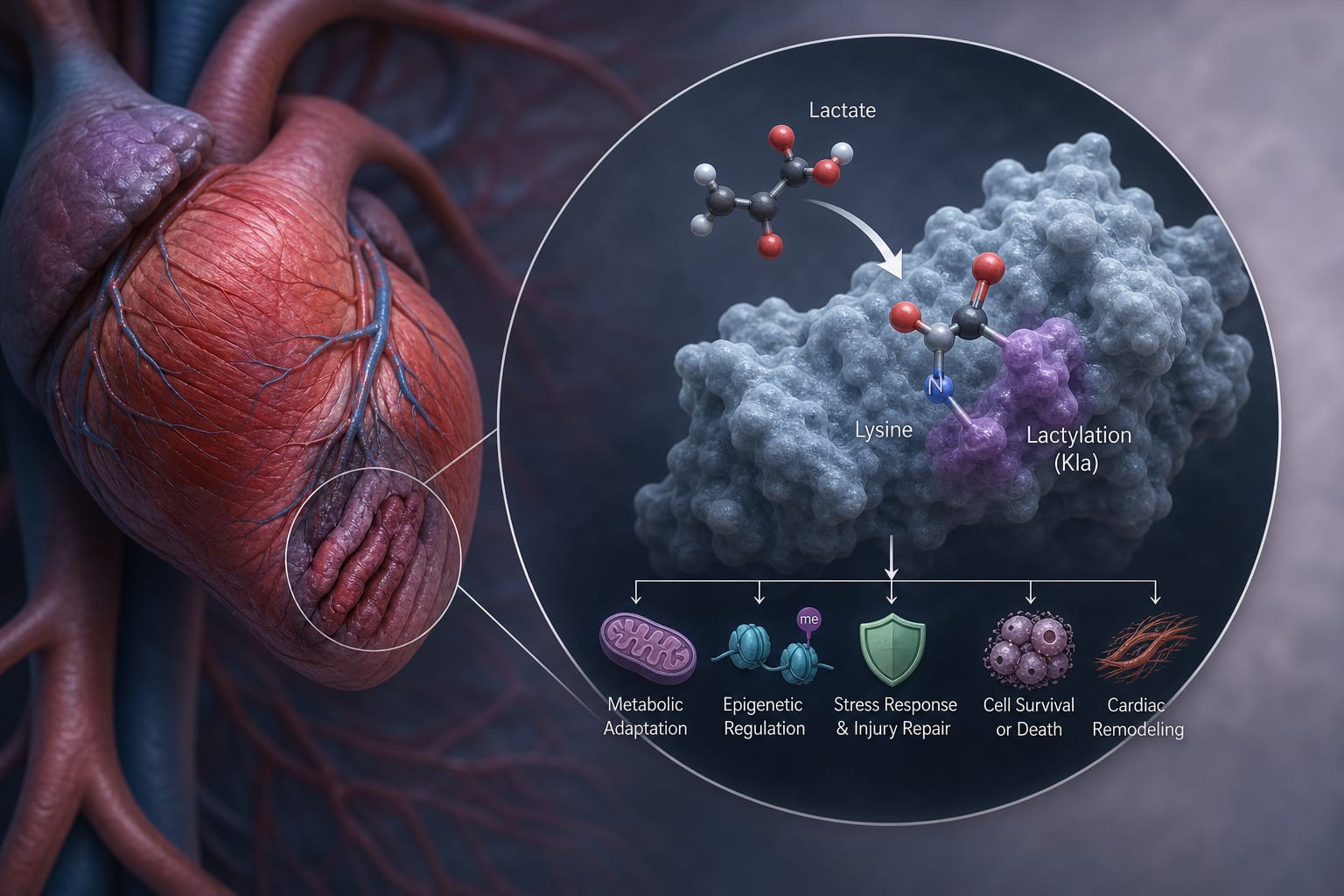
This review examines the role of protein lactylation (Kla) in myocardial ischemia-reperfusion injury (MIRI), highlighting its involvement in various cellular processes that may influence cardiomyocyte survival and injury repair during MIRI.
Background
Myocardial ischemia-reperfusion injury (MIRI) is a significant complication in cardiovascular therapy, particularly following reperfusion in coronary heart disease patients. Reperfusion can paradoxically exacerbate myocardial injury, leading to a critical need for effective therapeutic strategies. Understanding the mechanisms underlying MIRI, including the role of protein lactylation, is essential.
Data Highlights
No numerical data or trial results were provided in the source material.
Key Findings
Protein lactylation (Kla) is a post-translational modification linked to lactate metabolism.
Kla plays a role in regulating metabolic adaptation, injury repair, and stress responses in cardiomyocytes.
Reperfusion injury may account for up to 50% of total myocardial damage in acute myocardial infarction patients.
Kla is involved in regulating major death-related pathways, including apoptosis and inflammation, during MIRI.
The modification of proteins through Kla represents an adaptive mechanism in response to ischemic stress.
Clinical Implications
Further research is needed to explore the mechanistic pathways and potential interventions related to protein lactylation in clinical settings.
Conclusion
This review highlights the role of protein lactylation in myocardial ischemia-reperfusion injury.
Plasma proteomic models of more than 40 cell types were associated with incident Alzheimer's disease, amyotrophic lateral sclerosis, cancer, and mortality across three large cohorts.