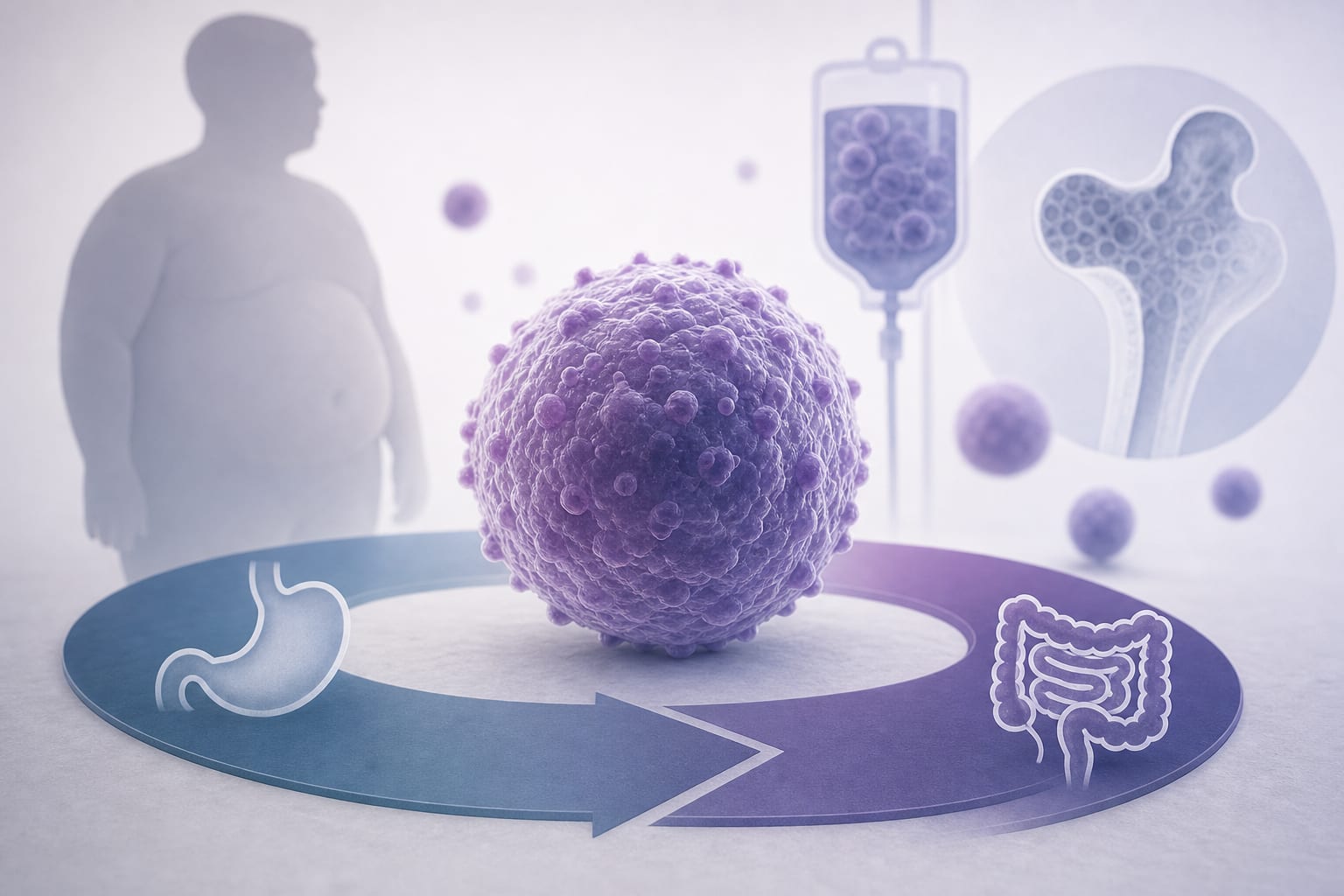
Opinion: a call for safe therapeutic and gastric interventions for adolescents and young adults with obesity and transplant-indicated leukemia - Report - MDSpire

Opinion: a call for safe therapeutic and gastric interventions for adolescents and young adults with obesity and transplant-indicated leukemia

  • By

  • Miriam B. Garcia

  • Paul Perales

  • David Santos

  • Ching-Wei D. Tzeng

  • Branko Cuglievan

  • Irtiza N. Sheikh

  • May 7, 2026

  • 0 min

Share

Clinical Report: Safe Therapeutic Approaches for Obese AYA Leukemia Patients

Overview

Obesity in adolescents and young adults (AYAs) with leukemia significantly impacts treatment outcomes, leading to increased morbidity and mortality. This report emphasizes the need for tailored interventions to manage obesity in AYAs requiring hematopoietic stem cell transplantation (HSCT).

Background

The intersection of obesity and leukemia in AYAs presents unique challenges, as obesity is associated with worse treatment outcomes and increased toxicity. Current literature highlights the need for effective management strategies to improve survival rates in this vulnerable population. Addressing obesity prior to HSCT may enhance the efficacy of treatment and reduce complications.

Data Highlights

StudyFindings
Data from 388 AYA patients46.6% were overweight/obese; higher non-relapse mortality (11.7% vs 2.8%)
Obesity and ALLHigher incidence of grade 3/4 hepatotoxicity (60.7% vs 42.2%)
Impact on HSCTHigher BMI linked to increased transplant-related mortality

Key Findings

  • Obesity in AYAs with leukemia correlates with higher treatment toxicity and poorer outcomes.
  • AYA patients with ALL who are overweight experience significantly higher rates of hepatotoxicity and hyperglycemia.
  • Data indicates a strong association between obesity and increased non-relapse mortality in AYA leukemia patients.
  • Higher BMI in pediatric and AYA patients undergoing HSCT is linked to increased transplant-related mortality.
  • Current practices are evolving to normalize drug dosing based on actual body weight to mitigate risks associated with obesity.

Clinical Implications

Healthcare providers should prioritize obesity management in AYAs with leukemia to improve treatment outcomes. Tailored pharmacological and surgical interventions may be necessary to optimize HSCT eligibility and reduce complications associated with obesity.

Conclusion

Addressing obesity in AYAs with leukemia is crucial for improving survival rates and minimizing treatment-related risks. A comprehensive approach to obesity management is essential in this population requiring HSCT.

Related Resources & Content

  1. Doney et al., Transplantation and Cellular Therapy, 2019 -- Impact of body mass index on outcomes of hematopoietic stem cell transplantation in adults
  2. Ghasoub et al., Frontiers in Oncology, 2025 -- A deep dive into the surgical and pharmacological considerations of obesity in chronic myeloid leukemia
  3. Bone Marrow Transplantation, 2025 -- Timing Considerations for High-Dose Chemotherapy in Overweight and Obese Individuals
  4. The ASCO Post, 2012 -- ASCO Issues New Guideline on Chemotherapy Dosing for Obese Patients
  5. The ASCO Post — ASCO Issues New Guideline on Chemotherapy Dosing for Obese Patients
  6. Bone Marrow Transplantation — Oral Presentations from the Nurses Group at the 49th Annual Conference of the European Society for Blood and Marrow Transplantation (Sessions NO001-NO015)
  7. Bone Marrow Transplantation Correspondence on BMI and Outcomes
  8. EBMT Handbook on Overweight and Obese HCT Recipients
  9. Hepatic Complications - The EBMT Handbook - NCBI Bookshelf

Original Source(s)

Related Content